In the intricate landscape of industrial automation and smart manufacturing, the unassuming proximity sensor plays a pivotal role. Among these, metal-sensing inductive proximity sensors are fundamental components, enabling machines to "see" and react to the presence of metallic objects without physical contact. Companies specializing in the design and manufacture of these devices are not merely component suppliers; they are enablers of efficiency, safety, and precision across a vast spectrum of applications.
The core technology behind these sensors is electromagnetic induction. A typical inductive proximity sensor generates an oscillating electromagnetic field from its sensing face. When a metallic object enters this field, eddy currents are induced within the metal, causing a change in the oscillation amplitude. The sensor's internal circuitry detects this change and triggers a solid-state output signal. This non-contact principle ensures remarkable reliability and longevity, as there is no mechanical wear. Leading companies in this field continuously refine this technology, pushing the boundaries of sensing distance, switching frequency, and environmental resilience.
The applications for metal-sensing proximity sensors are extraordinarily diverse. In automotive assembly lines, they ensure robotic arms correctly position engine blocks or detect the passage of chassis components. Within packaging machinery, they count cans or foil-lidded containers with unerring accuracy. In heavy machinery and construction equipment, robust sensors monitor the position of hydraulic cylinders or provide critical safety interlocks. Furthermore, the rise of the Industrial Internet of Things (IIoT) has driven sensor companies to innovate products with integrated intelligence. Modern sensors can now communicate diagnostic data, such as temperature fluctuations or potential coil degradation, proactively signaling for maintenance before a failure occurs, thereby minimizing costly downtime.
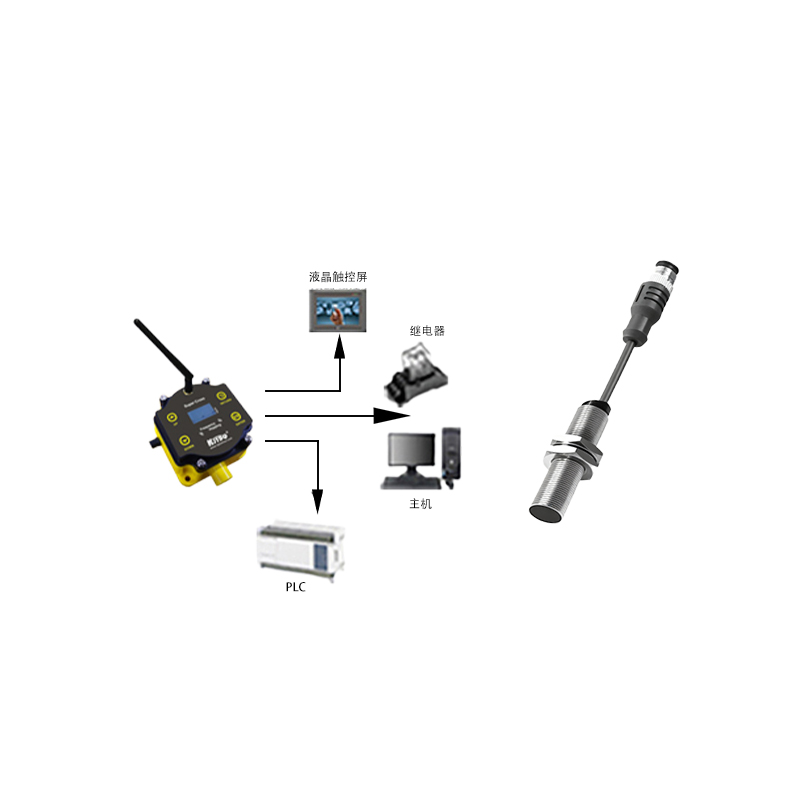
Choosing a reliable metal proximity sensor company involves evaluating several critical factors beyond basic specifications. Industry leaders distinguish themselves through deep application engineering expertise. They work closely with clients to solve unique challenges, such as detecting specific alloys at high speeds or operating in extreme temperatures and washdown environments common in food and beverage processing. Material science is another frontier; companies develop sensors with specialized housing materials like nickel-plated brass or stainless steel and advanced potting compounds to resist chemicals, cutting fluids, and physical impact.
Global standards and certifications are paramount. Reputable companies design their products to meet international standards like IEC 60947-5-2 and attain certifications for use in hazardous areas (ATEX, IECEx). This ensures interoperability and safety in global markets. Additionally, the supply chain robustness of a manufacturer is crucial. In an era of logistical uncertainty, companies with vertically integrated manufacturing and strategic component stockpiling provide customers with much-needed stability and consistent supply.
The future trajectory for these specialized companies is closely tied to broader industrial trends. The demand for miniaturization continues, requiring sensors that are smaller yet more powerful to fit into compact machinery. Energy efficiency is another key driver, leading to the development of low-power sensors suitable for battery-operated mobile equipment. Integration is perhaps the most significant trend. The next generation of sensors will not only detect presence but will also be equipped with capabilities to measure vibration, temperature, or even identify specific metal grades, feeding richer data streams into centralized control and analytics platforms.
Ultimately, the value provided by a premier metal induction proximity sensor company extends far beyond the physical unit. It encompasses the assurance of process reliability, the enhancement of operational safety, and the contribution to lean manufacturing goals by reducing waste and optimizing cycle times. As factories become smarter and more connected, the precision and data provided by these advanced sensing solutions form the essential sensory layer upon which the entire automated system depends. Their silent, reliable operation is a testament to the continuous innovation driving modern industry forward, making these specialized manufacturers indispensable partners in technological progress.