In the intricate world of automation and smart devices, the silent, unseen work of sensors forms the bedrock of functionality. Among these, proximity sensors have long been indispensable, acting as the digital eyes that detect the presence or absence of objects without physical contact. Today, a significant evolution is redefining their capabilities: the advent of burst sensing technology. This advancement is not merely an incremental improvement but a transformative leap, enabling proximity sensors to operate with unprecedented speed, efficiency, and intelligence.
Traditional proximity sensors, whether inductive, capacitive, or optical, typically operate in a continuous or periodically sampled mode. They constantly emit a sensing field—be it an electromagnetic field, a light beam, or ultrasonic waves—and monitor for changes indicating an object's presence. While reliable, this method can be power-intensive, generate excess heat, and sometimes lack the agility needed for ultra-fast processes. This is where burst mode technology creates a paradigm shift.
Burst mode, in essence, refers to a method where the sensor activates its sensing cycle in powerful, short-duration pulses or "bursts" rather than maintaining a constant emission. Imagine a lighthouse flashing its beam at precise intervals instead of shining continuously. This pulsed operation is the core of what we term "burst proximity sensing." The sensor sleeps or remains in a low-power state between bursts, conserving significant energy. When a burst is triggered, it delivers a high-intensity sensing signal, captures the return data with high resolution, processes it rapidly, and then returns to its quiescent state. This cycle repeats at a configurable frequency, which can be incredibly high, allowing for detection speeds measured in microseconds.
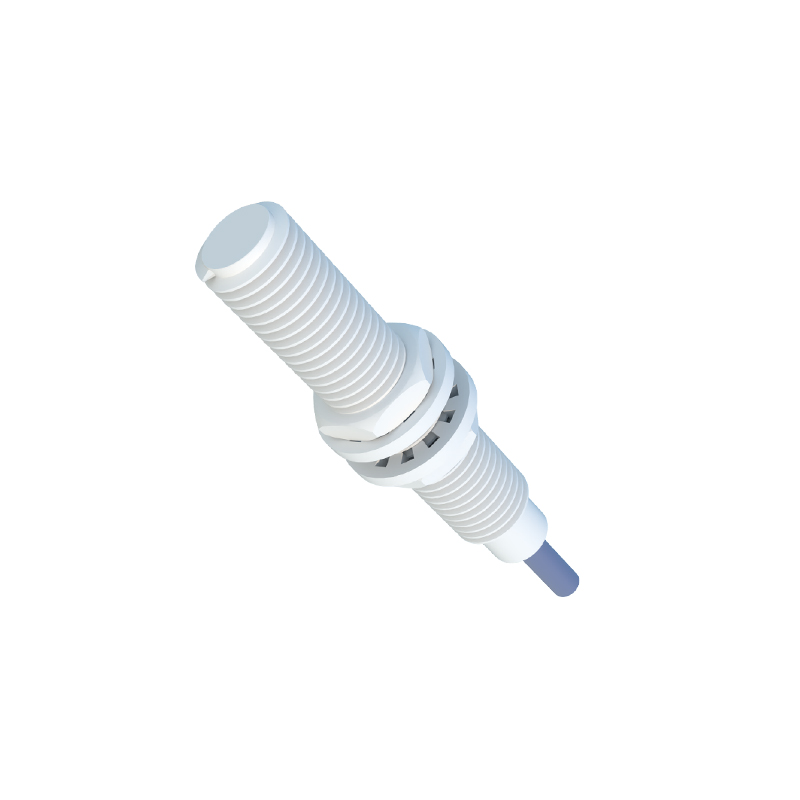
The benefits of integrating burst technology into proximity sensors are profound and multifaceted. First and foremost is dramatic power savings. By minimizing active time, these sensors are ideal for battery-operated and portable devices, extending operational life from months to years in some applications. Secondly, the high-intensity, short-duration burst reduces susceptibility to ambient noise and electromagnetic interference. The signal-to-noise ratio is improved because the relevant data is captured in a clear, distinct window, making the sensor more robust in electrically noisy industrial environments.
Furthermore, burst-enabled proximity sensors excel in high-speed applications. On fast-moving assembly lines, robotic arms, or in packaging machinery, the ability to detect an object's passage or position within a tiny time slice is critical. The rapid fire-and-read cycle of burst sensing ensures no event is missed, enhancing precision and throughput. This technology also minimizes sensor heating, a common issue with continuously active sensors, thereby improving long-term reliability and stability.
The applications are as diverse as the benefits. In consumer electronics, burst proximity sensors manage touchscreen behavior during calls with extreme efficiency, saving precious battery life in smartphones and tablets. In automotive systems, they enable sophisticated features like gesture control for infotainment systems or precise parking assistance, reacting instantly to a driver's hand movement or a nearby obstacle. Industrial automation leverages them for precise object counting, jam detection in high-speed conveyors, and ensuring safety in collaborative robot workspaces where human presence must be detected instantly and reliably.
Looking forward, the convergence of burst sensing with advancements in materials science and embedded intelligence paints an exciting picture. Future iterations may feature adaptive burst patterns, where the sensor intelligently adjusts its pulse frequency and power based on the environment or task. Integration with wireless IoT networks will allow these sensors to provide critical data in real-time while operating on minimal energy, powering the next generation of smart factories and sustainable cities.
In conclusion, the shift from continuous sensing to burst-mode operation represents a fundamental enhancement in proximity sensor technology. It addresses the core challenges of power consumption, speed, and reliability head-on. Burst proximity sensors are unleashing new levels of performance, enabling smarter, more efficient, and more responsive systems across every sector. They are not just detecting presence; they are doing so with a calculated, powerful burst of intelligence that defines the cutting edge of sensing technology.