In the realm of automation and smart interaction, proximity sensor technology stands as a fundamental enabler. These devices, often unseen, are the silent sentinels that detect the presence or absence of nearby objects without any physical contact. Their operation hinges on the emission of an electromagnetic field or a beam of radiation, such as infrared light, and the analysis of the return signal or changes in the field. The core principle is simple yet powerful: when an object enters the sensor's predefined detection zone, it perturbs the field or reflects the beam, triggering an electrical signal that can be interpreted by a control system. This non-contact detection offers immense advantages, including high reliability, long operational life due to the absence of mechanical wear, and the ability to function in harsh environments where dirt, oil, or moisture would compromise tactile switches.
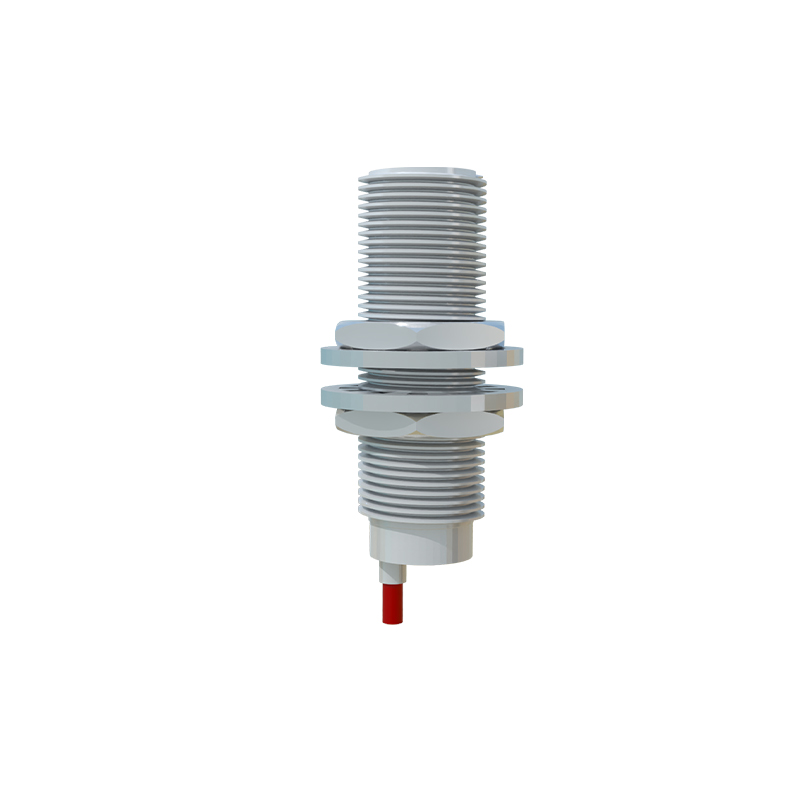
The landscape of proximity sensors is diverse, categorized primarily by their underlying sensing technology. Inductive proximity sensors are the workhorses of industrial automation. They generate an oscillating electromagnetic field and detect the eddy current losses induced when a metallic target enters the field. Consequently, they are ideal for detecting metals, especially ferrous ones, in applications like machine tooling, conveyor systems, and robotic arms. Capacitive proximity sensors, on the other hand, can detect both metallic and non-metallic materials—liquids, plastics, wood, or granules. They function by measuring changes in capacitance between the sensor's electrode and the ground plane when a target object alters the dielectric constant of the surrounding space. This makes them perfect for level detection in tanks, material handling, and presence detection of packaged goods.
Optical proximity sensors, including infrared (IR) types, utilize a light emitter and a receiver. In the diffuse reflective model, the sensor detects light reflected back from the target object. These are common in object counting, assembly line verification, and touchless faucets. Ultrasonic sensors employ sound waves beyond human hearing. They calculate distance by measuring the time delay between emitting a high-frequency pulse and receiving its echo. This technology excels in applications requiring precise distance measurement or detection of transparent objects and liquids, such as in automotive parking aids, tank level monitoring, and robotics. A more recent and sophisticated addition is the Time-of-Flight (ToF) sensor, which measures the round-trip time of a modulated light signal with extreme accuracy, enabling detailed 3D mapping and gesture recognition in consumer electronics and industrial metrology.
The proliferation of the Internet of Things (IoT) and Industry 4.0 has dramatically expanded the applications of proximity sensing. In consumer electronics, miniature IR proximity sensors are ubiquitous in smartphones to disable the touchscreen during a call, conserving power and preventing accidental inputs. They are also integral to automatic brightness adjustment and gesture-based controls. The automotive industry relies heavily on an array of ultrasonic and radar-based proximity sensors for Advanced Driver-Assistance Systems (ADAS), enabling features like blind-spot monitoring, automatic parking, and collision avoidance. In smart homes and buildings, capacitive sensors enable touchless light switches and faucets, promoting hygiene and energy efficiency, while passive infrared (PIR) sensors detect human presence for security and climate control.
Industrial environments continue to be the primary domain for robust proximity sensors. On automated production lines, inductive sensors ensure precise positioning of metal components, while capacitive sensors monitor the fill level of non-metallic raw materials in hoppers. In robotics, a combination of sensor types provides environmental awareness, allowing for safe human-robot collaboration and precise object manipulation. Looking forward, the evolution is towards greater miniaturization, enhanced intelligence, and sensor fusion. Modern sensors are becoming smarter, with integrated microprocessors that allow for programmability, self-diagnostics, and digital communication via protocols like IO-Link. This connectivity transforms them from simple binary switches into intelligent data points within a networked industrial ecosystem, providing valuable insights for predictive maintenance and process optimization. The future will likely see proximity sensors becoming even more integrated, energy-efficient, and capable, seamlessly blending into the fabric of an increasingly automated and interactive world.