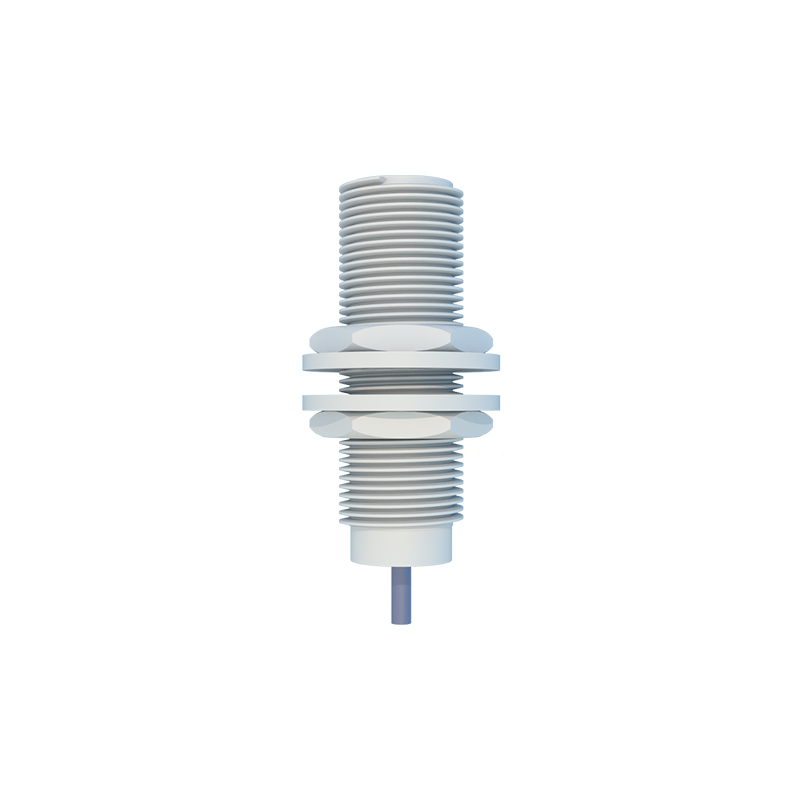
Proximity sensors are a fundamental component in modern automation and electronics, designed to detect the presence or absence of an object within a specific range without physical contact. Their non-contact nature makes them ideal for applications requiring high reliability, fast response, and minimal wear and tear. This article explores several common types of proximity sensors, explaining their working principles and typical use cases.
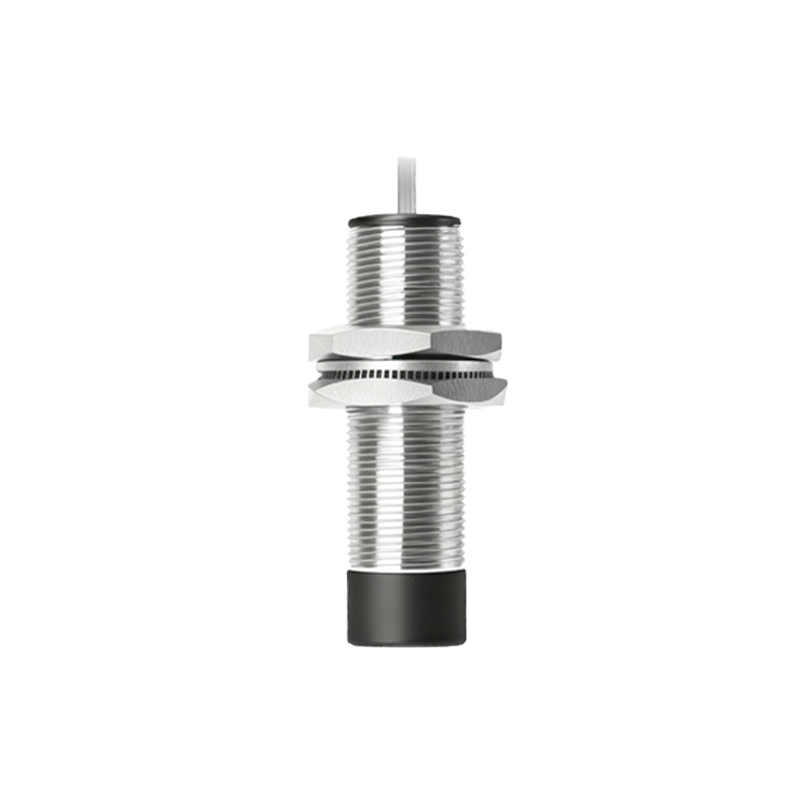
Inductive Proximity Sensors are among the most widely used types. They operate on the principle of electromagnetic induction. The sensor generates an oscillating electromagnetic field from its coil. When a metallic object enters this field, eddy currents are induced on the object's surface, causing a change in the oscillation amplitude. This change is detected by the sensor's circuitry, triggering an output signal. These sensors are highly reliable for detecting ferrous and non-ferrous metals, though their sensing range is limited, typically from a few millimeters to about 60 millimeters. Common applications include position sensing in machine tools, part detection on conveyor belts, and end-of-travel detection in automated systems. Their robustness makes them suitable for harsh industrial environments with dust, oil, or coolant.
Capacitive Proximity Sensors function by detecting changes in capacitance. The sensor's active face forms one plate of a capacitor, with the target object acting as the other plate. An oscillator circuit creates an electrostatic field. When an object enters this field, the capacitance increases, altering the oscillator's amplitude. Once this change reaches a threshold, the output state switches. A key advantage of capacitive sensors is their ability to detect a wide variety of materials, including metals, plastics, glass, wood, and even liquids or granular materials through non-metallic containers. This versatility makes them perfect for level detection in tanks, material handling, and presence detection of non-metallic objects. Their sensing range is similar to inductive sensors but can be influenced by the material's dielectric constant.
Ultrasonic Proximity Sensors use sound waves beyond the human hearing range (typically 20 kHz to 200 kHz). They emit ultrasonic pulses and measure the time it takes for the echo to return after bouncing off a target object. By calculating this time-of-flight, the sensor can determine the distance to the object. These sensors are excellent for detecting objects regardless of their material, color, or transparency. They are also effective in challenging environments with dust, fog, or smoke where optical sensors might fail. Typical applications include distance measurement, object profiling, liquid level sensing in large tanks, and collision avoidance in automated guided vehicles (AGVs). Their main limitations include a slower response time compared to inductive or capacitive sensors and potential interference from extreme temperature gradients or air turbulence.
Photoelectric Sensors, while sometimes categorized separately, are a crucial form of proximity detection. They consist of a light emitter (usually an LED) and a receiver. They operate in three main modes for proximity sensing: Through-beam (separate emitter and receiver), Retro-reflective (target reflects light back to a receiver in the same housing using a reflector), and Diffuse (or proximity) mode, where the target itself reflects light back to the receiver. Diffuse mode sensors are true proximity sensors. They are highly effective for detecting small objects, offer long sensing ranges (up to several meters for some models), and can detect virtually any material. Applications are vast, including packaging, material handling, assembly line counting, and door safety systems. Their performance can be affected by environmental factors like ambient light, dust, and the target object's color or reflectivity.
Magnetic Proximity Sensors, specifically Reed Switches and Hall Effect sensors, detect the presence of a magnetic field. Reed switches contain two ferromagnetic reeds sealed in a glass tube. When a magnet approaches, the reeds attract and close the contact. Hall Effect sensors produce a voltage change when exposed to a magnetic field. These sensors are simple, cost-effective, and consume very little power. They are primarily used for detecting the position of moving parts, such as in cylinder position sensing, door/window security alarms, and speed sensing in automotive applications. Their operation is not affected by non-magnetic materials like dirt or oil, but they require a magnet to be attached to the target.
Choosing the right proximity sensor depends on several factors: the target material, required sensing distance, environmental conditions (temperature, contaminants), response speed, electrical output needs, and installation constraints. Inductive sensors are the default for metals in industrial settings. Capacitive sensors handle diverse materials, including non-metals. Ultrasonic sensors solve problems with challenging environments or varying object properties. Photoelectric sensors offer versatility and long range. Magnetic sensors provide simple, low-power solutions for positional feedback.
In conclusion, proximity sensors are indispensable tools that enable precise, reliable, and contactless detection across countless industries, from manufacturing and automotive to consumer electronics and building automation. Understanding the strengths and limitations of each type is the first step toward designing efficient, safe