In the world of industrial automation and process control, reliably detecting the presence or level of a liquid is a fundamental task. While float switches and conductive probes have been staples for decades, proximity sensors offer a non-contact, versatile, and often more robust solution. This technology is increasingly favored for its precision, lack of moving parts, and ability to function with a wide variety of liquids without direct contamination.
The core principle behind using a proximity sensor for liquid detection is based on the change in the sensor's field or signal when a liquid medium enters its detection range. Unlike detecting solid metals, liquids interact differently depending on the sensor type. The two most common technologies applied are capacitive and ultrasonic proximity sensors.
Capacitive proximity sensors operate by generating an electrostatic field. All materials have a dielectric constant, which is a measure of how well they can store electrical energy in an electric field. Air has a low dielectric constant (approximately 1), while most liquids, especially water-based ones, have a significantly higher value. When the liquid approaches the active face of the capacitive sensor, it alters the capacitance of the sensor's oscillator circuit. This change is detected, triggering an output signal. A key advantage is that capacitive sensors can detect virtually any material, including conductive liquids like water or acids, and non-conductive liquids like oils, fuels, or solvents. They are ideal for detecting liquids through non-metallic tank walls (like plastic or glass), enabling true non-invasive level control. Sensitivity adjustment allows tuning out the container wall to focus solely on the liquid content.
Ultrasonic proximity sensors, on the other hand, use sound waves. They emit high-frequency ultrasonic pulses and measure the time it takes for the echo to return from a target—in this case, the liquid surface. The time-of-flight calculation provides a precise distance measurement, making ultrasonic sensors excellent for continuous level monitoring rather than just point-level detection. They are unaffected by the liquid's color, transparency, or conductivity and work well with foamy or turbulent surfaces, though vapors and heavy foam can sometimes attenuate the signal. These sensors are mounted at the top of a tank, pointing down towards the liquid.
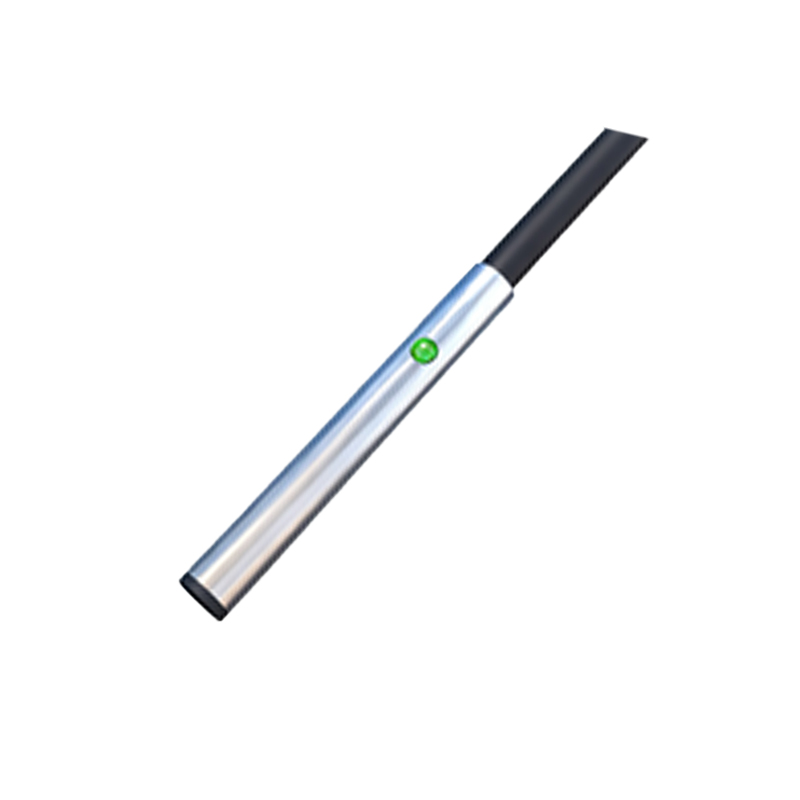
The applications for liquid detection with proximity sensors are vast. In manufacturing, they ensure coolant levels are maintained in CNC machines. In the food and beverage industry, they control filling levels for bottles and tanks, often with sensors rated for hygienic (e.g., IP69K) conditions. Water treatment plants use them to monitor chemical dosing tanks and sump levels. In automotive applications, they check brake fluid or windshield washer reservoirs. The non-contact nature prevents sensor fouling, a critical benefit when dealing with viscous, sticky, or corrosive liquids.
Selecting the right sensor requires careful consideration of several factors. First, identify the liquid's properties: Is it conductive or non-conductive? Is it corrosive? What is its dielectric constant? For capacitive sensors, a higher dielectric constant means easier detection. Next, consider the container: Is it metallic or non-metallic? Can the sensor be mounted inside, on the outside wall, or at the top? The required output is also crucial: a simple on/off switch (point level) or a continuous analog signal (continuous level). Environmental conditions like temperature extremes, pressure, steam, or the presence of vapors will dictate the sensor's housing material and ingress protection (IP) rating. For hygienic applications, sensors with smooth surfaces and specific certifications (like EHEDG or 3-A) are necessary.
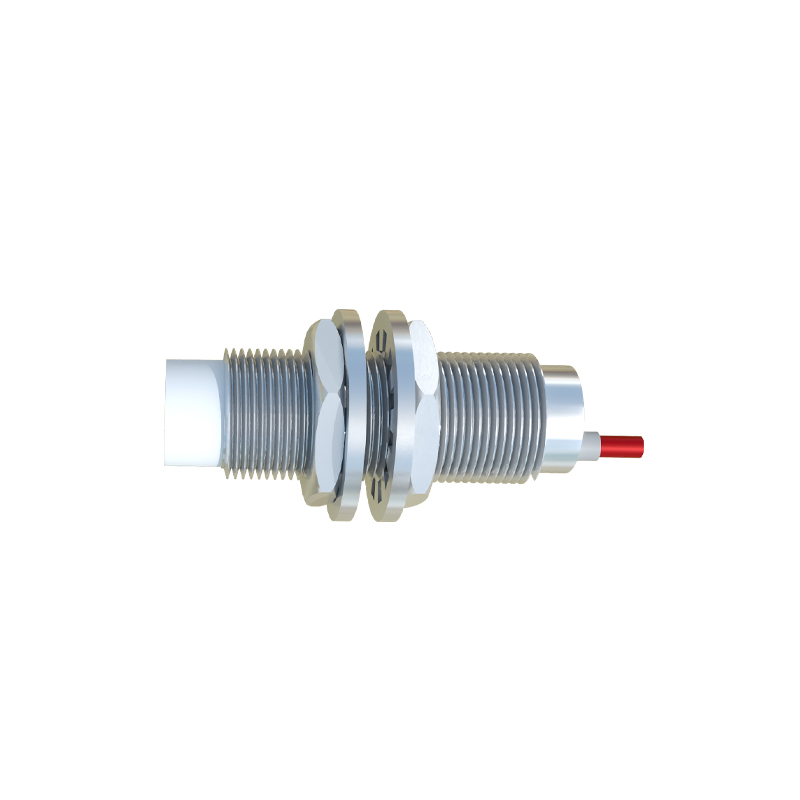
Installation and calibration are final, critical steps. For capacitive sensors mounted outside a plastic tank, the initial setup involves adjusting the sensitivity potentiometer until the sensor reliably triggers with the liquid present and does not trigger when it is absent. Ultrasonic sensors require a stable mounting position and may need programming for the tank's full and empty distances. Ensuring the sensor is not affected by agitators, inflow streams, or internal structures that could cause false readings is essential for reliable operation.
In conclusion, proximity sensors provide a sophisticated, reliable, and maintenance-friendly method for liquid detection and level control. By understanding the operational principles of capacitive and ultrasonic technologies and carefully matching the sensor to the specific application parameters, engineers can achieve highly reliable automation, reduce downtime, and improve process safety across countless industries. The move towards non-contact sensing continues to grow, driven by the need for hygiene, precision, and operational efficiency in fluid handling processes.