In the world of industrial automation, precision, reliability, and durability are non-negotiable. Among the myriad components that keep modern production lines humming, the M18 proximity sensor stands out as a ubiquitous and critical workhorse. Characterized by its standardized 18mm cylindrical threaded barrel, this sensor type has become a global industry standard for non-contact object detection. Its widespread adoption is no accident; it represents an optimal balance of size, performance, and versatility for countless applications.
At its core, an M18 proximity sensor is a solid-state electronic device designed to detect the presence or absence of a target object without physical contact. It achieves this by emitting an electromagnetic field or a beam of electromagnetic radiation (like infrared light) and monitoring for changes in the field or the return signal. The absence of moving parts contacting the target translates to exceptionally long service life, high operational speed, and resistance to wear and tear. The robust threaded metal housing, typically made of stainless steel or nickel-plated brass, provides excellent resistance to mechanical impacts, vibrations, and harsh environmental conditions commonly found in factories.
The functionality of M18 sensors is primarily defined by their underlying technology. The two most prevalent types are inductive and capacitive. Inductive M18 proximity sensors are the kings of metal detection. They generate an oscillating electromagnetic field from a coil at the sensing face. When a metallic object enters this field, it induces eddy currents within the metal, causing a change in the oscillation amplitude. The sensor's circuitry detects this change and triggers a switching output. These sensors are ideal for detecting ferrous metals (like steel and iron) and non-ferrous metals (like aluminum, copper, and brass), though sensing ranges vary with material type. Common applications include counting metal parts on a conveyor, confirming the position of a machine tool slide, or detecting a metal flag on a rotating shaft for speed measurement.
Capacitive M18 sensors, on the other hand, can detect a much wider range of materials, including metals, plastics, glass, wood, cardboard, and even liquids. They function by generating an electrostatic field. Any object with a dielectric constant different from air that enters this field alters the capacitance of the sensor's circuit, triggering the output. This makes them perfect for applications like monitoring fill levels in non-metallic containers (detecting the presence of liquid or powder), detecting plastic bottle caps on an assembly line, or sensing the presence of wood panels.
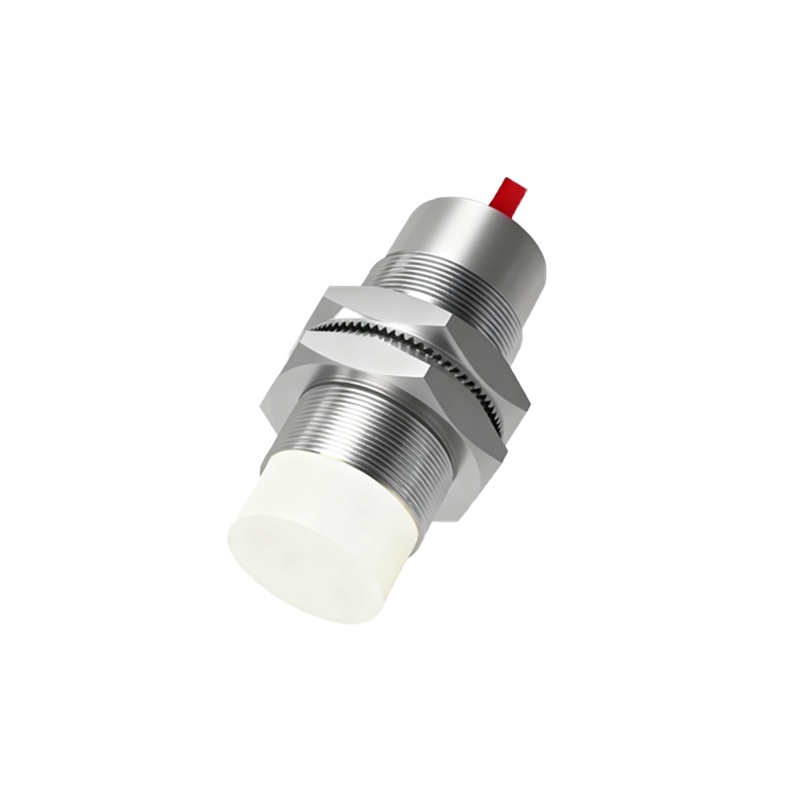
Beyond sensing technology, several key specifications dictate the selection of an M18 sensor for a specific task. Sensing distance, often denoted as 'Sn', is a nominal value under standardized conditions. For a standard inductive M18 sensor, this is typically 5mm or 8mm. It's crucial to note that the effective sensing distance can be reduced when detecting non-ferrous metals or when installed in flush-mounted conditions. The output configuration is another vital choice. Sensors come with discrete outputs, either as NPN (sinking) or PNP (sourcing) transistor outputs, which must match the input card of the connected programmable logic controller (PLC). Others may provide analog current (4-20mA) or voltage (0-10V) outputs proportional to the distance to the target. Connection is usually via a pre-attached 2-meter cable or a quick-disconnect M12 connector for easy replacement.
Environmental ratings are paramount for reliability. The Ingress Protection (IP) rating, such as IP67 or IP69K, indicates the level of protection against dust and water. An IP67-rated M18 sensor can withstand temporary immersion, making it suitable for washdown areas in food and beverage plants. Temperature range, resistance to chemicals like oils and coolants, and shielding from electrical noise are also critical selection factors.
The application spectrum for M18 proximity sensors is vast. In automotive manufacturing, they verify the presence of engine blocks or wheel hubs. In packaging machinery, they detect labels, boxes, or product positions to synchronize operations. In material handling, they serve as limit switches for automated guided vehicles (AGVs) or position feedback for linear actuators. Their robust design allows them to thrive in dirty, wet, or oily environments where optical sensors might fail.
Proper installation and setup are the final steps to ensuring optimal performance. Maintaining the correct gap between the sensor face and the target is essential. For inductive sensors, factors like target material, size, and shape can affect the sensing range. It is also important to consider mounting; non-flush mountable sensors require clearance around the sensing face, while flush-mountable types can be embedded in metal without affecting operation. Always ensure the sensor's electrical specifications align with the power supply and load to prevent damage.
In conclusion, the M18 proximity sensor is a testament to elegant, standardized engineering solving complex industrial problems. Its consistent form factor allows for interchangeable use across machine platforms, while the variety of sensing principles