In the world of sensing technology, infrared (IR) sensors and laser sensors are two prominent tools used across various industries. While both serve the purpose of detection and measurement, they operate on fundamentally different principles, leading to distinct advantages, limitations, and ideal use cases. Understanding these differences is crucial for engineers, designers, and hobbyists to select the appropriate technology for their specific needs.
Infrared sensors function by detecting infrared radiation, which is a form of electromagnetic radiation with wavelengths longer than visible light but shorter than microwaves. All objects with a temperature above absolute zero emit some level of infrared radiation. Passive IR (PIR) sensors, commonly found in motion detectors for security lights or alarms, detect changes in this ambient IR radiation caused by a moving object, typically a human body. Active IR sensors, on the other hand, incorporate an IR LED that emits an infrared beam. The sensor then detects the reflection or interruption of this beam. These are widely used in object detection, proximity sensing, and line-following robots. The primary strengths of IR sensors lie in their simplicity, low cost, and low power consumption. They are effective for short-range detection and are non-invasive. However, their performance can be significantly affected by environmental factors such as ambient light (especially sunlight, which contains IR), dust, fog, and the color or reflectivity of the target object. Their range and accuracy are generally lower compared to laser-based systems.

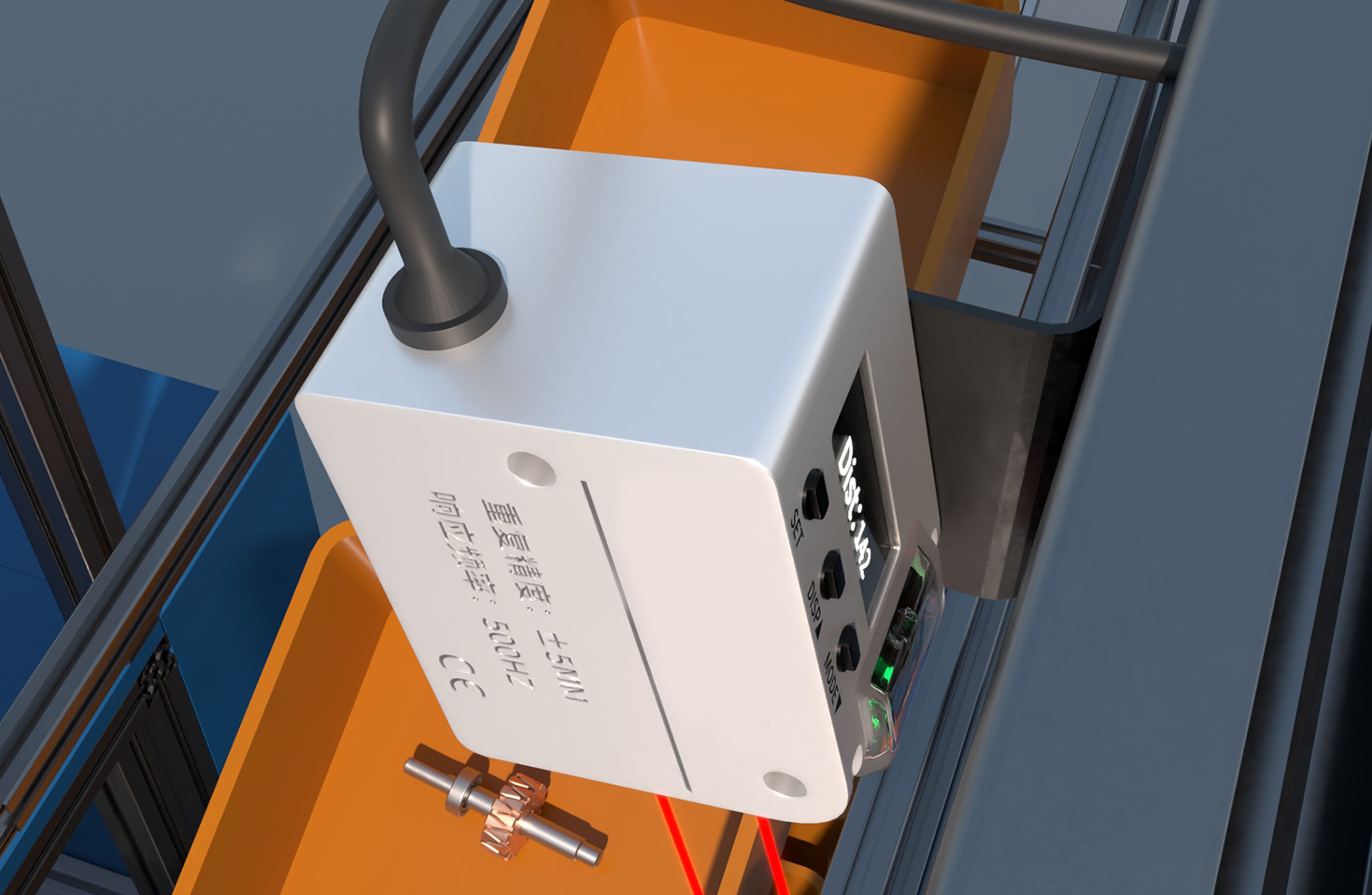
Laser sensors, specifically laser distance or displacement sensors, utilize a focused beam of coherent light. The most common types operate on the time-of-flight (ToF) or triangulation principle. In ToF, the sensor calculates distance by measuring the time it takes for a laser pulse to reflect off a target and return. Triangulation sensors use a laser point and a receiver at a known angle to determine position with high precision. Laser sensors excel in applications demanding high accuracy, long range, and resolution. They can measure distances, detect minute displacements, and profile objects with sub-millimeter precision. Their focused beam is less susceptible to interference from ambient light and can perform well in challenging environments, though extreme conditions like heavy fog or direct sunlight on the receiver can still pose challenges. The drawbacks of laser sensors include a higher cost, greater complexity, and higher power requirements than basic IR sensors. Safety is also a consideration, as certain laser classes require precautions to prevent eye damage.
The choice between an IR sensor and a laser sensor hinges on the application's requirements. For cost-sensitive, short-range presence detection—such as in automatic doors, touchless faucets, or simple obstacle avoidance for small robots—an IR sensor is often perfectly adequate and economical. In home security for motion detection, PIR sensors are the standard due to their reliability for detecting human movement within a defined area.

Conversely, laser sensors are the preferred choice for precision tasks. In industrial automation, they are used for precise positioning of robotic arms, measuring part dimensions, and controlling assembly processes. In logistics, laser scanners read barcodes from a greater distance and with higher speed and accuracy than IR scanners. Lidar (Light Detection and Ranging) systems, which use laser pulses to create 3D maps, are foundational for autonomous vehicles, surveying, and archaeology. Applications requiring exact measurements over several meters, such as construction layout or warehouse inventory management, also benefit from laser technology.
In summary, infrared sensors offer a low-cost, energy-efficient solution for basic presence and proximity detection over short ranges, albeit with environmental sensitivities. Laser sensors provide high-precision, long-range measurement and profiling capabilities at a higher cost and complexity. The decision is not about which technology is superior overall, but which is optimal for the specific parameters of range, accuracy, environmental conditions, and budget. As both technologies continue to evolve, their respective domains of application become more refined, driving innovation in automation, safety, and data collection across countless fields.