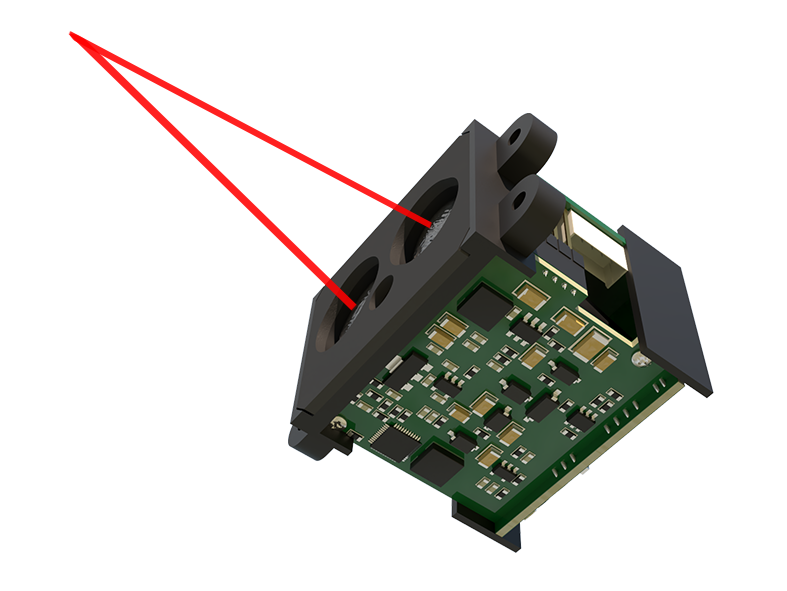
In the realm of precision measurement and industrial automation, laser displacement sensors have emerged as indispensable tools. These non-contact devices provide high-accuracy, high-speed measurements of distance, position, thickness, and vibration by projecting a laser beam onto a target object and analyzing the reflected light. Unlike traditional contact probes, they eliminate the risk of damaging delicate surfaces and enable measurements on hot, moving, or inaccessible targets. The core technology typically relies on one of two principles: triangulation or time-of-flight (TOF). Triangulation sensors, ideal for short to medium ranges with micron-level resolution, use a laser diode, a receiving lens, and a position-sensitive detector (PSD) or CMOS/CCD array. The laser spot's position on the detector shifts proportionally to the target's distance. Time-of-flight sensors, suited for longer ranges, calculate distance by measuring the round-trip time of a pulsed laser beam.
The applications of laser displacement sensors span numerous industries. In automotive manufacturing, they ensure precise gap and flush measurements between body panels. In electronics, they verify the coplanarity of semiconductor leads and the thickness of wafer coatings. The metal and plastics industries rely on them for continuous thickness monitoring of sheets and films during production. Furthermore, they are pivotal in robotics for precise guidance and positioning, and in civil engineering for monitoring structural deformations of bridges or buildings. Their ability to perform high-speed, repetitive measurements makes them perfect for inline quality control, where they can instantly detect outliers and trigger corrective actions without halting the production line.
Selecting the appropriate laser displacement sensor requires careful consideration of several key parameters. Measurement range, often specified as a distance from the sensor head, defines the operational window. Resolution, the smallest detectable change in distance, determines the sensor's fineness. Linearity error indicates the deviation from a perfect straight-line response across the range. Spot size is critical as it affects the ability to measure small features or uneven surfaces; a smaller spot allows for higher lateral resolution. The target's surface properties—color, material, roughness, and inclination—significantly influence performance. Highly reflective or transparent materials often require specialized sensors with diffuse reflection or through-beam configurations. Environmental factors like ambient light, temperature fluctuations, dust, and vibrations must also be accounted for, potentially necessitating protective housings or filters.
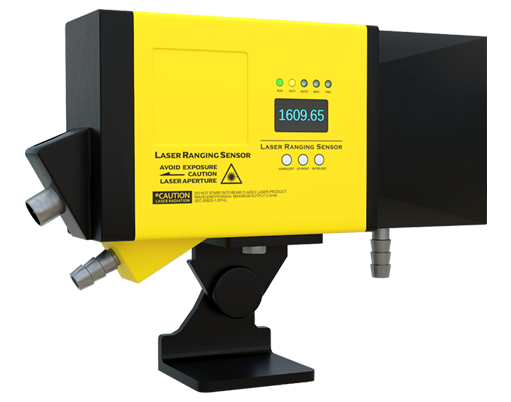
Modern advancements continue to push the boundaries of this technology. Confocal chromatic sensors offer exceptional performance on transparent or multi-layered materials. Blue laser models provide superior stability on organic materials like rubber or resin, which often absorb red laser light. High-speed models with sampling rates in the hundreds of kilohertz capture rapid vibrations. Integration with industrial networks (EtherCAT, PROFINET, IO-Link) and smart features like built-in logic and data processing are becoming standard, facilitating easier implementation within Industry 4.0 frameworks. When integrating a sensor, proper mounting, alignment, and calibration against a known standard are crucial for achieving specified accuracy. Regular maintenance, primarily keeping the lens clean, ensures long-term reliability.
In conclusion, laser displacement sensors are a cornerstone of modern metrology. By offering a blend of non-contact operation, high precision, and robust speed, they solve complex measurement challenges across diverse sectors. A thorough understanding of their operating principles, application demands, and selection criteria empowers engineers and technicians to harness their full potential, driving improvements in product quality, manufacturing efficiency, and process automation. As technology evolves, these sensors will undoubtedly become even more versatile and integral to intelligent manufacturing systems.