Laser sensors are a cornerstone of modern automation, robotics, and measurement systems. Their precision and speed are unparalleled for tasks ranging from object detection and distance measurement to quality control and 3D scanning. However, their reliance on coherent light makes them susceptible to various forms of interference, which can degrade performance, introduce errors, or cause complete system failure. Understanding the sources and nature of this interference is critical for designing robust systems and ensuring reliable operation in real-world environments.
The primary cause of interference for laser sensors is ambient light. While sensors are designed to filter out broad-spectrum light and detect only their specific laser wavelength, intense sources can overwhelm the receiver. Sunlight is the most common and potent offender, especially for sensors operating outdoors or near windows. Direct sunlight contains a broad spectrum, including the specific wavelengths used by many industrial lasers (e.g., 650nm red or 850nm infrared). This can saturate the photodiode, rendering the sensor temporarily "blind." Similarly, other artificial light sources like halogen lamps, LED lighting, or even other laser systems operating at nearby wavelengths can create noise, reducing the signal-to-noise ratio and measurement accuracy.
A more subtle and challenging form of interference is optical crosstalk. This occurs when the laser beam from one sensor is detected by the receiver of another nearby sensor. In dense industrial setups with multiple sensors, such as on packaging lines or in automated warehouses, the reflected beam from one target can easily stray into the field of view of a neighboring sensor. This leads to ghost readings, false triggers, and unpredictable behavior. The risk is particularly high with diffuse reflection sensors, which are designed to detect light scattered from a surface.
Environmental factors constitute another major category. Particulates like dust, smoke, fog, or steam can scatter and attenuate the laser beam. This scattering reduces the amount of light returning to the receiver, potentially causing a drop-out where the sensor fails to detect an object that is present. In some cases, particulates can also reflect enough light to create a false positive, indicating an object where there is none. Furthermore, vibrations from machinery can cause misalignment of the sensor or its target, leading to intermittent signal loss. Temperature fluctuations can affect the wavelength output of the laser diode and the performance of the electronic components, introducing drift in measurements over time.
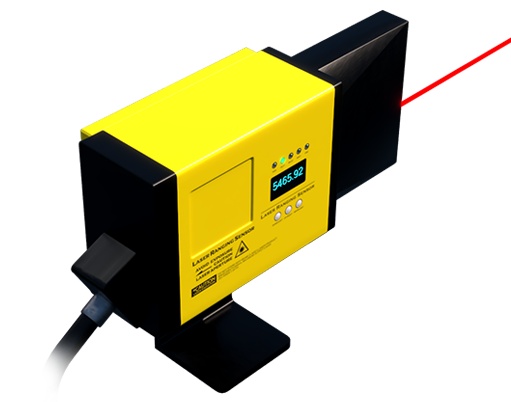
Electrical interference, often termed electromagnetic interference (EMI), is a non-optical but equally disruptive force. Laser sensors, especially their sensitive receiver circuits and communication lines, can be affected by strong electromagnetic fields generated by motors, variable frequency drives (VFDs), welding equipment, or radio transmitters. This EMI can induce spurious currents in sensor wiring, corrupting the analog signal or digital communication. Symptoms include erratic readings, communication dropouts, or unexplained resets.
The effects of these interferences are not merely academic; they have direct operational consequences. In a manufacturing context, a sensor blinded by sunlight or crosstalk might fail to detect a part on a conveyor, causing a production stoppage or passing a defective product. A distance-measuring sensor affected by dust could provide an inaccurate reading, leading to a robotic arm misplacing a component. In safety-critical applications like light curtains or laser scanners for personnel protection, any interference is unacceptable as it could compromise the safety barrier.

Fortunately, a multi-layered approach can effectively mitigate interference. The first line of defense is proper sensor selection and installation. Choosing a sensor with a modulated laser beam and synchronous detection is highly effective against ambient light. These sensors pulse their laser at a specific high frequency and the receiver is tuned to only amplify signals at that same frequency, effectively filtering out constant or differently modulated light sources like sunlight or standard room lighting. For environments with high risk of crosstalk, sensors with a "teach-in" function for a unique pulse code or those operating in a controlled pulsed mode can be selected to ignore signals from other units.
Physical installation strategies are equally important. Positioning sensors to avoid direct sightlines to windows or bright lights, using shades or baffles, and ensuring lenses are kept clean are simple yet effective steps. To minimize crosstalk, sensors should be angled so their beams do not intersect, and a sufficient physical separation should be maintained. Using polarized lenses can also help, as the receiver can be set to only detect light with a specific polarization matching the emitted beam, rejecting scattered light with altered polarization.

Shielding and grounding are paramount for combating electrical interference. Sensor cables should be routed away from power cables, especially those feeding motors or drives. Using shielded cables with the shield properly grounded at the controller end can drain away induced EMI. In electrically noisy environments, ferrite cores clamped onto the cable near the sensor and controller can suppress high-frequency noise.
Finally, system-level design and software can provide additional robustness. Implementing redundancy, such as using two independent sensors for critical detection tasks, can ensure reliability. Software filters can be applied to sensor readings to smooth out transient noise spikes, and diagnostic features built into modern sensors can alert operators to declining signal strength or high ambient light levels, allowing for proactive maintenance before a failure occurs.
In conclusion, while laser sensors are powerful tools, their performance is not immune to the chaotic conditions of industrial and outdoor settings. Interference from light, environment, and electricity is a persistent challenge. By systematically understanding the sources—ambient light, crosstalk, particulates, and EMI—engineers and technicians can implement a comprehensive strategy of careful sensor selection, intelligent installation, proper shielding, and smart system design. This proactive approach transforms a potentially fragile sensing point into a reliable and trustworthy component, ensuring the continuity and accuracy of automated processes.