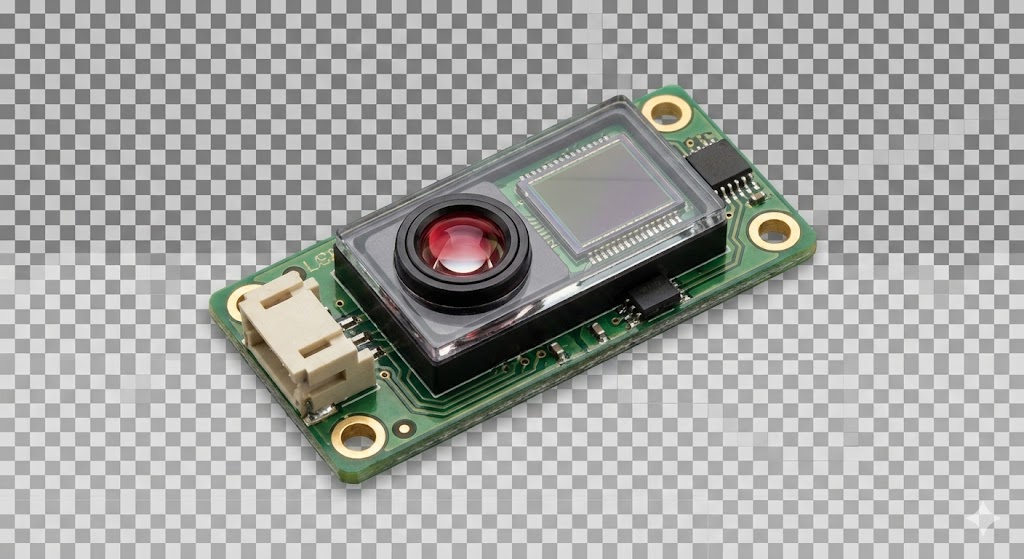
Laser sensors have become indispensable tools across a vast spectrum of industries, from advanced manufacturing and robotics to autonomous vehicles and consumer electronics. When considering the integration of this technology, one of the most common and critical questions is: "How much does a laser sensor cost?" The answer is not straightforward, as laser sensor prices span a remarkably wide range, from under fifty dollars to tens of thousands. This price variation is not arbitrary; it is a direct reflection of the underlying technology, performance specifications, and intended application. Understanding the key factors that drive these costs is essential for making an informed purchasing decision.
At the most fundamental level, the core technology and measurement principle significantly influence the price. Basic laser photoelectric sensors, used for simple presence detection or object counting, are the most affordable. These often utilize a simple through-beam or diffuse reflective principle and offer limited range and precision. Moving up the price ladder, you encounter laser distance sensors. Technologies like Time-of-Flight (ToF) are popular for mid-range applications, offering a good balance of speed, range, and cost. However, for high-precision requirements in the micron or sub-micron range, laser triangulation sensors are the standard. These systems, which use a precise angled receiver to calculate distance based on the laser spot's position, involve more complex optics and calibration, commanding a higher price. The most expensive segment includes interferometric sensors and specialized LiDAR (Light Detection and Ranging) systems used for 3D mapping, metrology, and autonomous navigation, where extreme accuracy, long range, and environmental robustness are paramount.
Performance specifications are the primary levers of cost. Measurement Range and Accuracy share an inverse relationship; achieving sub-micron accuracy over a long distance (e.g., several meters) requires exceptional engineering and components, drastically increasing the price. A sensor accurate to 1mm over 10m will be far less expensive than one accurate to 0.01mm over 1m. Measurement Speed or Sampling Rate is another critical factor. A sensor capturing 10 measurements per second is suitable for static or slow-moving objects, but high-speed production lines or dynamic robotics may require rates of 10,000 Hz or more, necessitating faster processors and specialized components. Laser Class and Wavelength also matter. Standard Class 2 red lasers are common and cost-effective. However, applications requiring high visibility in ambient light, working with specific materials (like glass or transparent objects), or needing eye-safe operation over longer distances may use Class 1 blue lasers or specialized infrared wavelengths, which add to the cost.
The Environmental Rating (IP, NEMA) and construction materials directly impact durability and price. A sensor designed for a clean, climate-controlled laboratory will cost less than an identical-performance unit housed in a stainless-steel casing with an IP67 or IP69K rating for washdown environments, extreme temperatures, or exposure to chemicals. Outputs and Connectivity add layers of cost. Basic models with a simple digital switch output are inexpensive. Sensors with analog outputs (0-10V, 4-20mA), multiple discrete I/O, or industrial fieldbus protocols (EtherNet/IP, PROFINET, EtherCAT) include more electronics and certification costs. Modern sensors with integrated IoT capabilities, like direct Wi-Fi or cloud connectivity, represent a premium segment.

Finally, the Brand, Support, and Certification play a significant role. Established manufacturers with a long history in precision measurement often charge a premium for their proven reliability, extensive calibration certificates, global technical support, and compliance with industry-specific standards (e.g., FDA for food, ATEX for hazardous areas). While generic or lesser-known brands may offer lower upfront costs, they might lack the long-term support, documentation, or reliability needed for critical applications.
In conclusion, navigating the laser sensor market requires a clear definition of your application needs. Prioritize the essential specifications—necessary accuracy, speed, range, and environmental protection—and avoid paying for unnecessary ultra-high performance. The goal is to find the sensor that provides the right performance at the best value, ensuring a successful and cost-effective integration into your system. Always consider the total cost of ownership, which includes not just the purchase price, but also installation, calibration, maintenance, and potential downtime.