Proximity switch sensors, often simply called proximity sensors, are non-contact electronic devices designed to detect the presence or absence of an object within a specific range without any physical contact. Their robust construction and reliable operation make them indispensable in industrial automation, automotive systems, security applications, and consumer electronics. Understanding their internal construction is key to appreciating their functionality and selecting the right type for a given application.
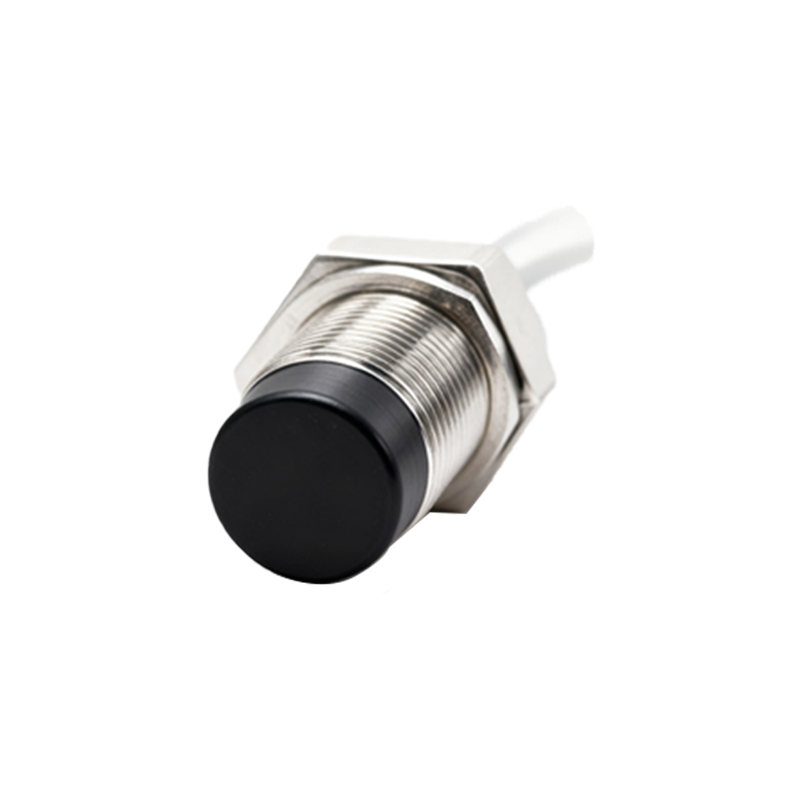
The fundamental construction of a proximity sensor can be broken down into several core components, housed within a typically cylindrical or rectangular casing made of metal (like brass or stainless steel) or high-grade plastic. The choice of material depends on the required environmental protection (IP rating) and the need for shielding against electromagnetic interference.
At the heart of the sensor is the sensing element. This differs based on the underlying technology. The most common types are inductive, capacitive, and photoelectric.
In an inductive proximity sensor, the key internal component is a coil of wire wound around a ferrite core, forming an oscillator circuit. When an alternating current passes through this coil, it generates an oscillating electromagnetic field at the active face of the sensor. This field is contained within the sensor's housing. When a metallic object (the target) enters this field, eddy currents are induced on the surface of the object. These eddy currents draw energy from the oscillator, causing a reduction in the amplitude of oscillation. A dedicated evaluation circuit continuously monitors this amplitude. Once the amplitude drop exceeds a predefined threshold, the circuit triggers a change in the sensor's output state (e.g., from OFF to ON). The sensing range is influenced by the coil design, the oscillator frequency, and the metal type.

A capacitive proximity sensor shares a similar housing but uses a different sensing principle. Its front sensing face acts as one plate of a capacitor. The internal circuit, often involving an RC oscillator, charges this plate to create an electrostatic field. When any object (metallic or non-metallic, liquid or solid) with a different dielectric constant than air approaches, it alters the capacitance of the system. This change in capacitance affects the oscillation condition. The subsequent evaluation circuit detects this shift and switches the output. Internally, it may include a sensitivity adjustment potentiometer to fine-tune the response to different materials.
While not always classified strictly as "proximity switches," photoelectric sensors operate on a similar non-contact principle. Their construction involves an infrared or visible light emitter (usually an LED) and a photodetector (phototransistor or photodiode) housed in the same unit (for diffuse reflective types) or in separate units (for through-beam types). The internal circuitry modulates the emitted light to avoid interference from ambient light. The receiver circuit detects the presence or absence of the light beam, triggering the output switch.
Beyond the sensing element, the internal electronic circuitry is crucial. This typically includes:
Oscillator: Generates the high-frequency field (inductive/capacitive) or modulates the light (photoelectric).
Demodulator/Amplifier: Converts the sensed signal into a usable DC voltage level.
Trigger/Schmitt Trigger Circuit: Provides a clean, sharp switching action at a precise point, eliminating false triggering due to signal fluctuations (hysteresis).
Output Stage: This is the switching component that controls the external load. Common output types include:
NPN (Sinking): The output acts as a switch to ground.
PNP (Sourcing): The output acts as a switch to the positive voltage supply.
Analog (0-10V, 4-20mA): Provides a continuous signal proportional to the distance.
The output device is often a transistor (for DC sensors) or a triac/relay (for AC sensors).
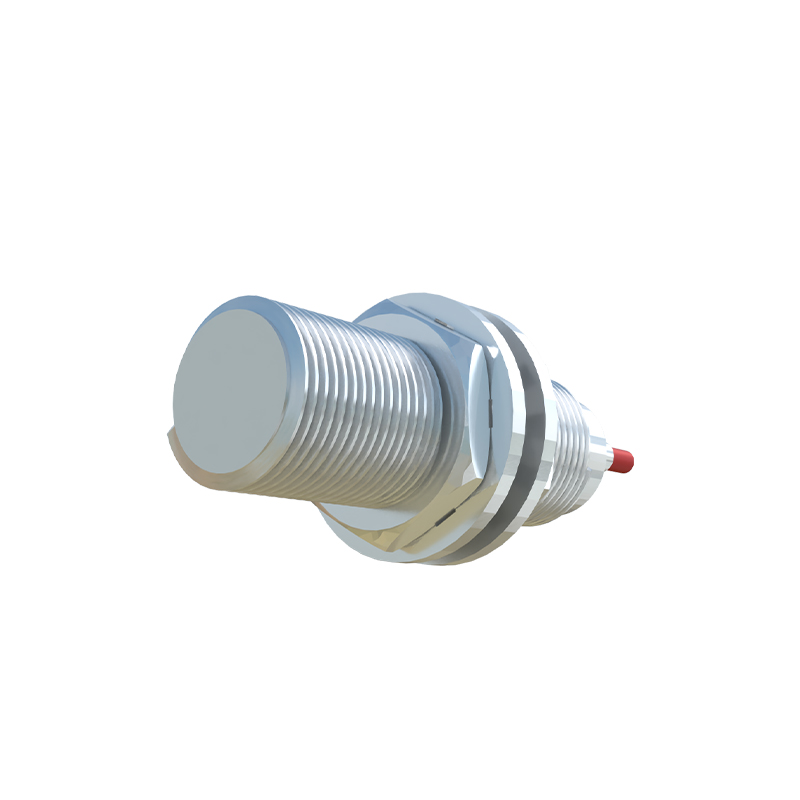
All these components are protected and connected via a printed circuit board (PCB) sealed within the housing. The housing itself features a threaded barrel (e.g., M8, M12, M18, M30) for easy mounting and often has an LED indicator to show power and output status. The wires exit via a cable or a quick-disconnect connector.
The construction prioritizes durability. The sensing face is often made of a wear-resistant material like PTFE (Teflon) or a specific plastic compound that allows the electromagnetic field or light to pass through while protecting the internal components from physical damage, chips, coolants, or oils.
In summary, the construction of a proximity switch sensor is a sophisticated integration of a sensing element (coil, capacitor, or LED/photodetector), signal conditioning electronics, and a robust mechanical housing. This design enables it to perform millions of reliable detection cycles in challenging environments, forming the silent workhorses of modern automated systems.
SEO