In the realm of industrial automation, scientific research, and advanced manufacturing, the demand for precise, reliable, and robust sensing technology is paramount. Among the most critical components meeting this demand are high-power laser detection sensors. These sophisticated devices go beyond simple presence detection, offering unparalleled accuracy in measuring distance, position, thickness, and even the composition of materials under challenging conditions. Unlike their low-power counterparts, high-power laser sensors are engineered to penetrate adverse environments—such as dust, steam, intense ambient light, or long measurement ranges—where other optical methods might fail.
The core principle of a high-power laser detection sensor revolves around the emission of a focused, high-intensity laser beam towards a target. The sensor then analyzes the interaction of this beam with the target. The two most prevalent technologies are based on time-of-flight (ToF) and triangulation principles. In ToF sensors, the device calculates the distance by precisely measuring the time it takes for the laser pulse to travel to the target and back. This method is exceptionally effective for long-range measurements, often spanning several meters, and is commonly used in logistics, mining, and bulk material level monitoring. Triangulation-based sensors, on the other hand, use a laser point projected onto the target. A receiving lens at a known angle captures the reflected light's position on a sensitive detector (like a CCD or PSD). Any change in the target's distance causes a shift in the light's position on the detector, allowing for micron-level resolution. This makes them ideal for precision tasks in electronics assembly, robotics, and quality control.

The defining characteristic of "high-power" in this context is not merely about raw output but about the signal-to-noise ratio. By emitting a more powerful laser beam, these sensors ensure that a sufficient amount of coherent light returns to the receiver, even if the target has low reflectivity (like black rubber or matte surfaces) or when environmental interference scatters the beam. This results in stable, repeatable readings where lesser sensors would produce erratic data. Key performance specifications include measuring range, resolution, repeatability, response time, and the laser's wavelength. Class 2 or Class 3R lasers are typical, necessitating appropriate safety measures and labeling in accordance with international standards.
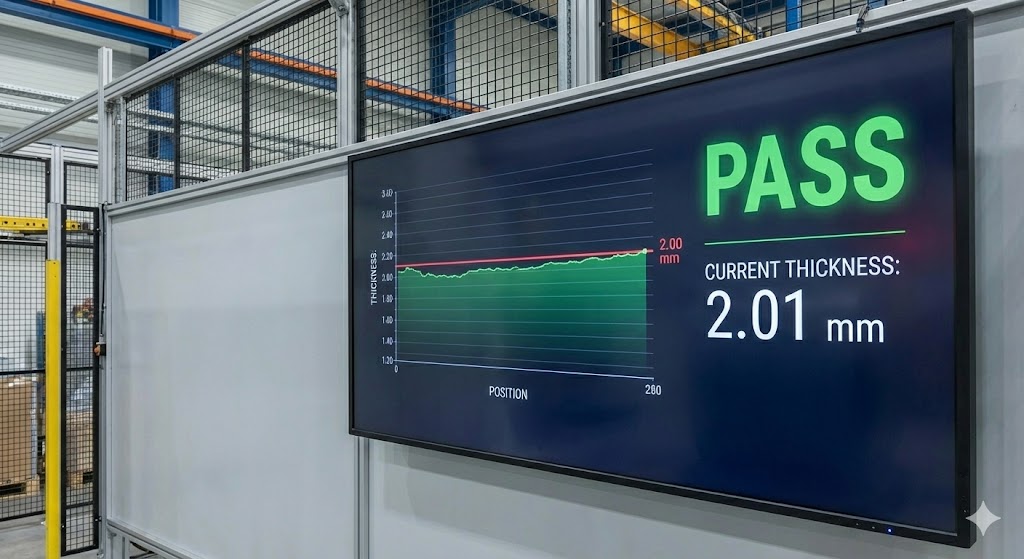
The applications for high-power laser detection sensors are vast and growing. In automotive manufacturing, they are indispensable for robot guidance, weld seam tracking, and inspecting panel gaps with extreme precision. In the metals industry, they monitor the thickness of hot rolled steel or the diameter of cables during production. Aerospace utilizes them for aligning large components and inspecting surface profiles. Furthermore, they are crucial in agricultural automation for guiding harvesters and in logistics for pallet dimensioning and warehouse automation. Their ability to perform non-contact measurement prevents damage to both the sensor and delicate objects, a significant advantage over mechanical probes.
Selecting the right high-power laser sensor requires a careful analysis of the application's specific needs. Engineers must first define the primary parameter: is it distance, displacement, or presence? Next, consider the operating environment—factors like temperature extremes, dust, vibration, and ambient light will dictate the required ingress protection (IP) rating and housing material. The target's properties are equally critical; its color, surface texture (glossy or matte), and material composition directly affect reflectivity and may require sensors with adjustable sensitivity or specialized filters. Finally, integration aspects such as output signals (analog, digital, IO-Link), communication protocols, and physical mounting constraints must align with the existing control system. Consulting with sensor specialists during the planning phase can prevent costly misapplications and ensure optimal performance.

As technology advances, the future of high-power laser detection sensors points towards greater intelligence and miniaturization. Integration with AI and machine learning algorithms will enable predictive maintenance and more complex pattern recognition directly at the sensor level. Furthermore, developments in laser diode and detector technology promise even higher power efficiencies and faster response times. For industries striving towards Industry 4.0 and smart factory concepts, these sensors are not just tools but foundational elements that provide the critical data necessary for autonomous decision-making, enhanced quality assurance, and unprecedented operational efficiency. Their role in enabling precision, safety, and automation across diverse sectors continues to expand, solidifying their status as a cornerstone of modern industrial innovation.