In the world of industrial automation and machinery control, sensors act as the critical eyes and ears of a system. Among the most fundamental and widely used are limit sensors and proximity sensors. While their names are sometimes used interchangeably in casual conversation, they serve distinct purposes and operate on different principles. Understanding the difference between a limit sensor and a proximity sensor is key to selecting the right component for reliability, safety, and efficiency.
A limit sensor, often called a limit switch, is a fundamental electromechanical device. Its primary function is to detect the physical presence or absence of an object by making direct physical contact. The classic design involves an actuator arm or plunger. When a moving part of a machine, such as a robotic arm, a conveyor cart, or a garage door, touches this actuator, it mechanically triggers an internal switch. This switch changes state—typically opening or closing an electrical circuit—to send a signal to the machine's controller. That signal essentially says, "I have reached my designated limit; stop or change direction." Limit sensors are renowned for their simplicity, robustness, and high repeatability. They are the workhorses in applications requiring precise end-point detection, like defining the travel boundaries of a linear actuator, confirming the closed position of a safety guard, or initiating a sequence change in a packaging machine. Their physical contact nature makes them highly reliable for detecting solid objects, but it also means they are subject to mechanical wear over time.
In contrast, a proximity sensor performs its detection duty without any physical contact. It identifies the presence of a target object within a specified range through an emitted field or beam. This non-contact operation is its defining characteristic, leading to advantages like no mechanical wear, faster response times, and the ability to detect fragile or easily marred materials. Proximity sensors come in several primary types based on their sensing technology. Inductive proximity sensors are the most common in industrial settings for detecting metallic objects, typically ferrous metals like steel. They generate an electromagnetic field, and when a metal object enters this field, it causes a change that the sensor detects. Capacitive proximity sensors can detect both metallic and non-metallic materials (like plastic, wood, glass, or liquids) by sensing changes in capacitance. Ultrasonic proximity sensors use sound waves to measure distance to an object, making them suitable for level detection or uneven surfaces. Photoelectric sensors use a beam of light (visible or infrared) and detect its interruption or reflection to sense an object.
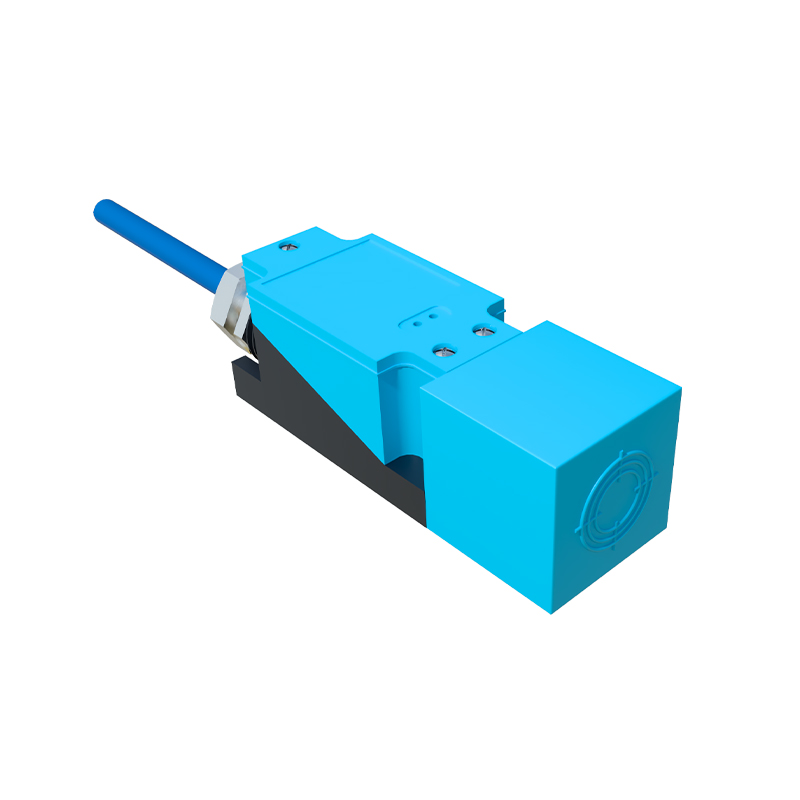
The choice between a limit sensor and a proximity sensor hinges on the application's specific demands. Choose a limit switch when you need a cost-effective, physically robust solution for end-of-travel positioning, where direct contact is acceptable or even desirable for positive confirmation. Their audible "click" and tactile feedback can be beneficial for manual operations or maintenance. Opt for a proximity sensor in environments where contact is impossible or undesirable—such as with delicate products, high-speed operations, or in dirty/wet conditions where mechanical parts might jam. They are ideal for object counting, non-contact position verification, or detecting objects through non-metallic barriers.
In modern complex machinery, it is common to see both technologies working in harmony. A production line might use robust limit switches at the hard endpoints of a sliding gate for safety, while employing inductive proximity sensors on the same line to count metallic components on a conveyor belt without touching them. Another system might use a capacitive sensor to detect the fill level of a liquid in a tank, while limit switches confirm the open/closed status of the inlet and outlet valves.
Maintenance considerations also differ. Limit switches require periodic inspection for mechanical wear on the actuator and contacts. Proximity sensors, while free from mechanical wear, must be kept clean from debris that could interfere with their field or beam and should be checked for proper alignment. Environmental factors like temperature, humidity, and the presence of chemicals can influence the selection and longevity of both types.
Ultimately, both limit sensors and proximity sensors are indispensable tools in automation. The limit sensor provides a straightforward, contact-based sentinel for physical boundaries. The proximity sensor offers a versatile, non-contact solution for a wider range of materials and faster-paced operations. By clearly understanding their operational principles—physical actuation versus field disturbance—engineers and technicians can deploy them effectively to create safer, more efficient, and more intelligent automated systems. The correct sensor in the right place ensures not just functionality, but also enhances operational safety and reduces downtime.