Capacitive proximity sensors are widely used in industrial automation, consumer electronics, and safety systems due to their non-contact detection capabilities. Unlike inductive sensors that detect metals, capacitive sensors can sense a variety of materials, including liquids, plastics, and organic substances. The output of these sensors is a critical aspect that determines their integration into control systems. This article delves into the types, characteristics, and practical considerations of capacitive proximity sensor outputs.
Most capacitive proximity sensors provide either a digital (discrete) or analog output signal. Digital outputs are typically in the form of a switch-like signal, often referred to as a PNP (sourcing) or NPN (sinking) configuration. In a PNP setup, the sensor outputs a positive voltage (usually 12-24V DC) when an object is detected within its sensing range. Conversely, NPN outputs connect to ground upon detection. These digital signals are straightforward and commonly interface with programmable logic controllers (PLCs), relays, or microcontrollers to trigger actions like activating a warning light or stopping a conveyor belt.
Analog outputs, on the other hand, offer a continuous signal that varies with the distance or material properties of the target object. Common analog output types include 0-10V DC, 4-20 mA, or even I²C and SPI in more advanced sensors. For instance, a 4-20 mA output might increase linearly as an object moves closer, allowing for precise distance measurement or material level monitoring in tanks. This continuous data is valuable in process control applications where granularity is essential, such as in food processing or pharmaceutical manufacturing.
The output performance of a capacitive sensor is influenced by several factors. Sensing range, typically from a few millimeters to several centimeters, defines how close an object must be to trigger the output. Environmental conditions like humidity, temperature, and the presence of contaminants can affect capacitance and thus the output stability. Many modern sensors include compensation circuits or shielding to minimize false triggers from non-target materials. Additionally, response time—the delay between detection and output change—is crucial in high-speed applications. Most sensors offer response times in the millisecond range, ensuring rapid system reactions.
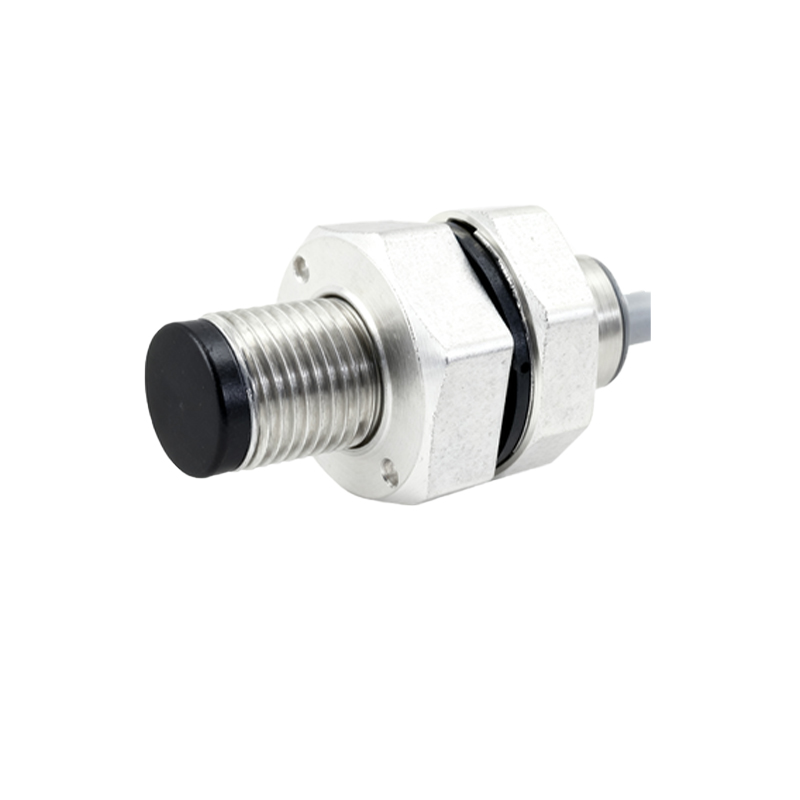
When integrating a capacitive sensor, understanding its output wiring is essential. A standard three-wire sensor includes power (brown wire), ground (blue wire), and output (black wire) connections, while four-wire versions may have separate wires for analog and digital outputs. Proper grounding and shielding help reduce electrical noise, especially in industrial settings with motors or variable frequency drives. It's also important to match the output type with the input requirements of the receiving device to avoid damage or malfunction.
In practice, capacitive sensor outputs enable diverse applications. In automotive assembly, they detect fluid levels or verify component presence. In consumer devices like smartphones, they enable touchscreens or proximity-based screen dimming. For material handling, analog outputs monitor granular substances in silos, preventing overflows. Regular calibration and testing ensure output accuracy over time, as factors like sensor wear or environmental drift can degrade performance.
In summary, the output of a capacitive proximity sensor is a versatile interface that bridges detection and control. Whether digital or analog, it must be selected based on the application's needs for precision, speed, and compatibility. By considering factors like output type, environmental resilience, and wiring, users can optimize sensor performance for reliable operation in various industries. As technology advances, smart sensors with digital communication outputs are becoming more prevalent, offering enhanced diagnostics and integration capabilities for the Industrial Internet of Things (IIoT).