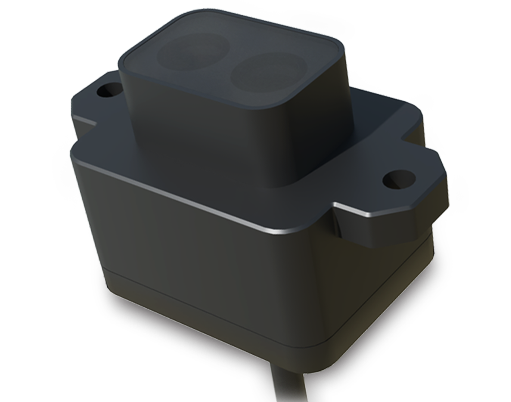
Laser sensors have become indispensable components in modern industrial automation, offering unparalleled precision for measurement, detection, and positioning tasks. A critical, yet often overlooked, aspect of their operation is command counting. This process refers to the sensor's internal mechanism for registering, processing, and responding to discrete instructions or signal events from a programmable logic controller (PLC) or other host system. Mastering command counting is essential for optimizing system reliability, data accuracy, and overall operational efficiency.
At its core, a laser sensor operates by emitting a focused beam of light and analyzing the reflected signal. Commands from the control system dictate its behavior—such as initiating a measurement, changing sensitivity, or toggling an output. Each of these actions constitutes a "command." The sensor's firmware includes a counter or logging function that tallies these incoming instructions. This count serves multiple vital purposes. Primarily, it allows for real-time monitoring and diagnostics. By tracking the number of commands issued, engineers can verify that the automation sequence is executing correctly. A discrepancy between expected and actual command counts can be an early indicator of communication errors, missed cycles, or potential hardware issues in the control loop.
Furthermore, command counting is integral to data synchronization and integrity. In high-speed applications, like assembly line sorting or robotic pick-and-place, sensors must take measurements at precise moments triggered by specific commands. The command count ensures that each sensor reading is accurately associated with the correct product or machine cycle. Without this synchronization, data becomes misaligned, leading to incorrect decisions, such as rejecting good parts or accepting defective ones. Advanced sensors often provide access to this count value via industrial communication protocols like IO-Link, EtherNet/IP, or PROFINET, enabling seamless integration into supervisory control and data acquisition (SCADA) systems for centralized monitoring.
Implementing effective command counting requires careful configuration. Key parameters typically include defining what constitutes a countable command—whether it's every digital input pulse, a specific serial communication string, or a change in operating mode. Filtering mechanisms are also crucial to prevent false counts from electrical noise or signal bounce. Modern laser sensors offer programmable debounce filters and window comparators that ensure only valid, stable commands are registered. Additionally, engineers must consider the counter's reset conditions. Counters may be set to reset automatically upon reaching a preset value, upon a master reset command, or at scheduled intervals, depending on the application's logging and reporting needs.
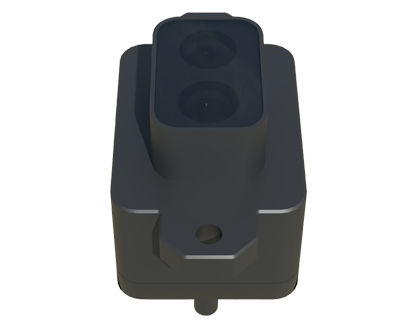
The practical benefits of leveraging command counting are substantial in predictive maintenance and process optimization. By analyzing historical command count data alongside performance metrics, trends can emerge. A gradual increase in the command count required to achieve a stable reading might indicate lens contamination or declining emitter performance. Similarly, an abnormal spike in commands per unit time could signal a mechanical fault causing repeated triggering. This data-driven insight allows for maintenance to be scheduled proactively, minimizing unplanned downtime. Moreover, by analyzing the command count efficiency, processes can be refined to eliminate unnecessary instructions, streamlining the control logic and reducing cycle times for greater throughput.
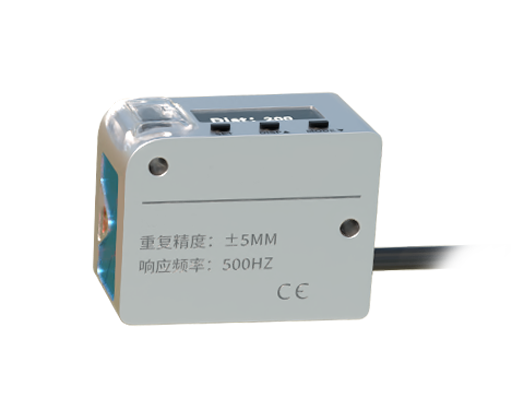
In conclusion, laser sensor command counting is far more than a simple tally. It is a sophisticated diagnostic and synchronization tool that underpins reliable automation. By providing a verifiable audit trail of control interactions, it ensures data fidelity, enables advanced diagnostics, and supports continuous process improvement. As industries move towards increasingly connected and data-intensive Industry 4.0 environments, a deep understanding of fundamental operational aspects like command counting will remain a key differentiator in building robust, efficient, and intelligent automated systems.