In the world of automation and smart technology, proximity sensors are the unseen sentinels. These devices detect the presence or absence of an object within a specific range without any physical contact. Their ability to provide non-contact sensing makes them indispensable in countless applications, from consumer electronics to heavy industrial machinery. This article delves into the core principles, various types, and practical uses of these essential components.
At its heart, a proximity sensor works by emitting a field or beam of electromagnetic radiation, often infrared light, or by using an electromagnetic field. When an object enters this field, it causes a change in the signal. The sensor's circuitry detects this change and converts it into an electrical signal that can trigger an action, such as turning on a light, stopping a motor, or sending data to a controller. The key advantage is the lack of physical contact, which eliminates mechanical wear and tear and allows for high-speed operation and detection of delicate objects.
Several primary types of proximity sensors dominate the market, each with its own working principle and ideal use case.
Inductive Proximity Sensors are among the most common in industrial settings. They generate an oscillating electromagnetic field. When a metallic object enters this field, it induces eddy currents within the object, which in turn dampens the oscillation. The sensor detects this damping and switches its output state. These sensors are robust, reliable, and excellent for detecting metals, but they do not work with non-metallic materials.
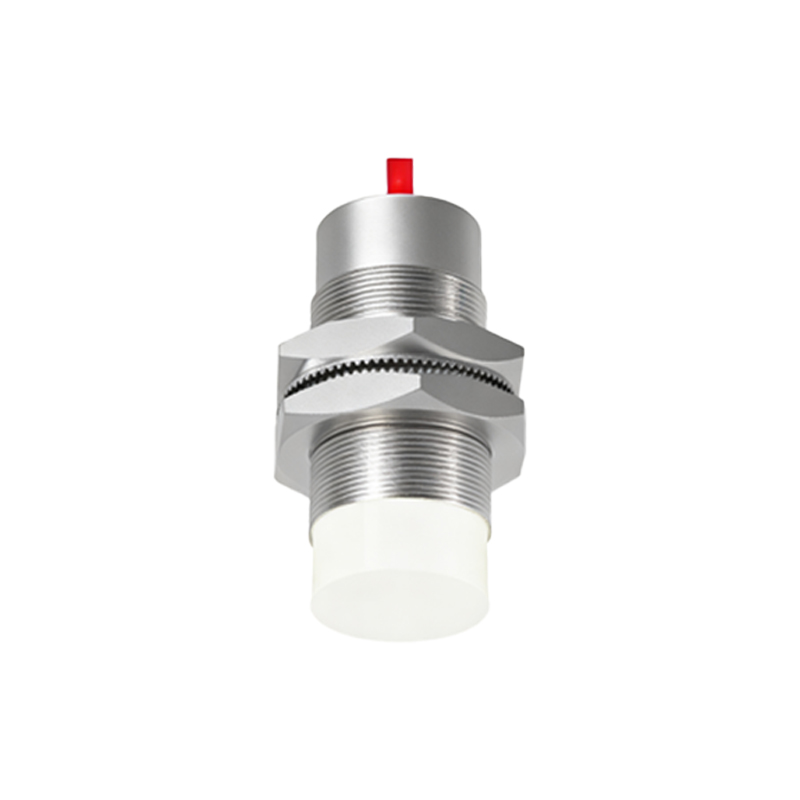
Capacitive Proximity Sensors can detect both metallic and non-metallic objects, including liquids, powders, and plastics. They function by generating an electrostatic field. The presence of any object with a dielectric constant different from air alters the capacitance of the sensor's circuit, triggering detection. This makes them versatile for applications like liquid level sensing or detecting wood, glass, or cardboard.
Photoelectric Sensors, or photoeyes, use light beams. An emitter sends out a beam of light (visible, infrared, or laser), and a receiver detects it. The presence of an object is sensed either by the interruption of the beam (through-beam), by the reflection from the object back to a receiver housed in the same unit (retro-reflective), or by the diffusion of light from the object back to the receiver (diffuse reflective). They offer long sensing ranges and can detect virtually any material.
Ultrasonic Proximity Sensors operate similarly to sonar. They emit high-frequency sound waves and measure the time it takes for the echo to return after bouncing off an object. By calculating this time-of-flight, they can determine the object's distance. These sensors are effective for detecting objects of various materials, shapes, and colors, and are commonly used for level measurement and in challenging environments with dust or vapor.
The applications for proximity sensors are vast and varied. In the automotive industry, they are used for parking assistance systems, detecting obstacles around a vehicle. On smartphone screens, a small proximity sensor turns off the display during a call to prevent accidental touches. In manufacturing, they are crucial for position sensing, counting objects on a conveyor belt, and ensuring machine safety by detecting if a guard door is open. They also play roles in consumer appliances, robotics for object avoidance, and aerospace for gear position monitoring.
When selecting a proximity sensor, key specifications must be considered. Sensing range, or the maximum distance at which the sensor can reliably detect a standard target, is paramount. The type of output (digital ON/OFF or analog) must match the control system. Environmental factors like temperature, humidity, and the presence of chemicals can affect performance, so choosing a sensor with an appropriate ingress protection (IP) rating is essential. Finally, the size and mounting style must fit the mechanical design of the application.
In conclusion, proximity sensors are fundamental enabling technologies for automation and interactive devices. By understanding the distinct characteristics of inductive, capacitive, photoelectric, and ultrasonic types, engineers and designers can select the optimal sensor to enhance efficiency, safety, and functionality in their systems. Their non-contact nature ensures reliability and longevity, solidifying their role as a cornerstone of modern electromechanical design.