In the realm of automation, robotics, and smart systems, laser sensor modules have become indispensable components. These devices, which utilize laser technology for precise detection and measurement, offer unparalleled accuracy, speed, and reliability compared to many traditional sensing methods. At their core, laser sensor modules operate by emitting a focused beam of coherent light—the laser—towards a target. The sensor then analyzes the properties of the reflected or scattered light, such as its time-of-flight, triangulation angle, or intensity change, to determine critical parameters like distance, presence, displacement, or profile of the object.
The fundamental working principles can be categorized into several main types. Time-of-Flight (ToF) sensors calculate distance by measuring the time it takes for a laser pulse to travel to the target and back. Triangulation-based sensors use a laser emitter, a receiving lens, and a position-sensitive detector; the position of the reflected laser spot on the detector changes with the target's distance, allowing for high-resolution measurements. Another common type is the laser contrast sensor, which detects the presence or edge of an object based on the intensity of the reflected light from different surfaces. Each principle caters to specific needs regarding range, resolution, and environmental robustness.

The applications of laser sensor modules are vast and continuously expanding. In industrial automation, they are crucial for precise positioning on assembly lines, robotic guidance, weld seam tracking, and fill level control in containers. The consumer electronics industry relies on them for features like facial recognition and autofocus in smartphones. Autonomous vehicles and drones use LiDAR (Light Detection and Ranging) systems, which are essentially arrays of laser sensors, to map their surroundings in 3D. Furthermore, they play key roles in logistics for dimensioning packages, in healthcare for diagnostic equipment, and in construction for alignment and leveling.
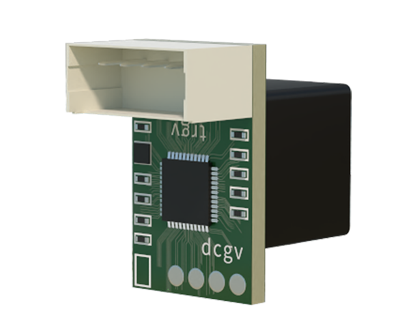
Selecting the right laser sensor module requires careful consideration of several technical parameters. The measuring range defines the minimum and maximum distances the sensor can handle accurately. Resolution indicates the smallest change in distance the sensor can detect. The spot size of the laser beam affects the minimum detectable object size and edge detection capability. Response time is critical for high-speed applications. Environmental factors like ambient light, dust, fog, and the target's surface properties (color, reflectivity, material) can significantly impact performance. Therefore, sensors with specialized filters, robust housings (IP ratings), and adjustable sensitivity are often necessary for challenging conditions.
When integrating a laser sensor, safety is paramount. Even low-power laser modules require attention. Most industrial laser sensors are classified as Class 1 or Class 2, meaning they are safe under normal operating conditions. However, users must never look directly into the laser beam and should follow all manufacturer guidelines. Proper alignment and secure mounting are also essential for consistent and reliable operation.
The future of laser sensor technology points towards even greater miniaturization, lower power consumption, and enhanced intelligence. The integration of AI algorithms directly with sensor data will enable smarter, adaptive sensing capable of object classification and predictive analysis. As costs continue to decrease, their adoption will proliferate into new domains, from advanced human-machine interfaces to intricate agricultural monitoring, solidifying their role as a cornerstone of modern sensing technology.
For engineers and system integrators, understanding the capabilities and limitations of different laser sensor modules is key to unlocking their full potential. By matching the sensor's specifications to the application's demands—considering precision, speed, environment, and cost—one can build systems that are not only functional but also efficient and future-proof. The laser sensor, a marvel of photonics, continues to illuminate the path toward more automated and intelligent solutions across all industries.