In the world of industrial automation, process control, and advanced robotics, the ability to measure distance, detect presence, and gauge dimensions with unwavering accuracy is paramount. This is where laser sensor technology shines, and among the leading innovators in this field stands NAIS (New Automotive Industry Sensor), a brand synonymous with precision and reliability. NAIS laser sensors represent a sophisticated fusion of optical engineering and electronic intelligence, designed to meet the rigorous demands of modern manufacturing and beyond.
At its core, a NAIS laser sensor operates by emitting a focused beam of coherent light—a laser—towards a target. The sensor then analyzes the reflected light. Different models utilize various principles to translate this reflection into a precise measurement. The most common types include time-of-flight sensors, which calculate distance based on the time it takes for the laser pulse to return, and triangulation sensors, which use the position of the reflected spot on a receiver to determine distance with exceptional accuracy at close ranges. This fundamental technology allows NAIS sensors to perform non-contact measurement, eliminating wear and tear and enabling inspection of delicate, hot, or moving objects that would be impossible to touch.

The applications for NAIS laser sensors are vast and varied. On fast-paced assembly lines, they are the eyes of quality control, verifying component heights, checking for proper part placement, and ensuring precise fill levels in bottling operations. In logistics and warehousing, they facilitate automated guided vehicle (AGV) navigation, palletizing, and dimensioning packages for shipping. The robotics industry relies heavily on these sensors for precise positioning, obstacle avoidance, and enabling complex pick-and-place tasks. Beyond traditional industry, they find use in agricultural automation, medical device manufacturing, and even security systems.
What truly sets NAIS laser sensors apart are their engineered features tailored for industrial environments. Many models boast high IP ratings (Ingress Protection), making them resistant to dust and water jets, crucial for washdown areas in food and pharmaceutical production. They offer exceptional resistance to ambient light interference, ensuring stable operation under bright factory lighting. Advanced models feature programmable logic controllers (PLCs) and digital interfaces like IO-Link, allowing for easy integration into Industry 4.0 networks and enabling predictive maintenance by transmitting sensor health data. Their compact housings are designed for easy mounting in space-constrained applications.
Choosing the right NAIS laser sensor depends on several key parameters. The *measuring range* defines the minimum and maximum distances the sensor can accurately cover. The *repeatability* or precision specifies how consistently the sensor can take the same measurement under identical conditions, often down to micrometer levels. The *response time* is critical for high-speed applications, determining how quickly the sensor can take a reading and send a signal. Finally, the *output type*—whether analog (4-20mA, 0-10V), discrete (PNP/NPN), or serial communication—must be compatible with the host control system.
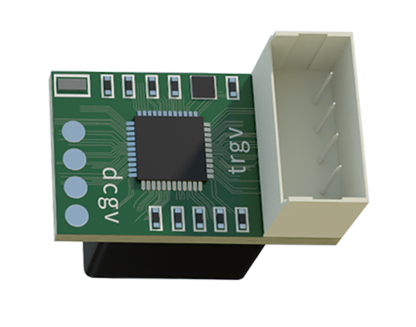
The integration of a NAIS laser sensor into an automated system is typically straightforward. Following proper mounting and alignment to ensure the laser beam strikes the target correctly is the first step. Configuration, often via a simple teach-in button or software, sets the sensing window or thresholds. Finally, connecting the output to a PLC or controller completes the setup. Regular maintenance is minimal but should include keeping the lens clean and verifying calibration periodically to ensure long-term accuracy.
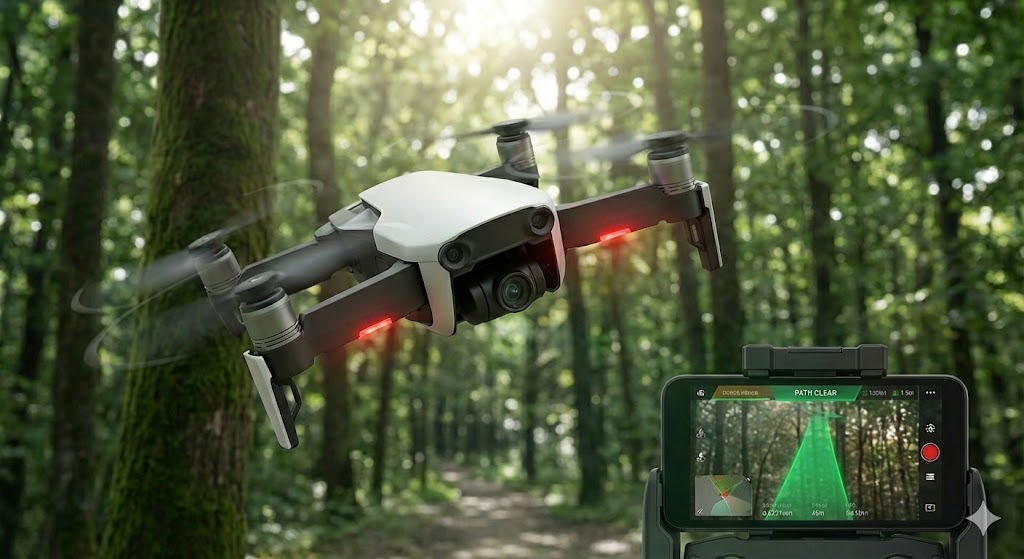
Looking ahead, the evolution of NAIS laser sensor technology continues. Trends point towards even smaller form factors, higher precision, and enhanced connectivity features. The integration of multi-pixel technology and profile measurement capabilities is expanding their role from simple distance measurement to complex 2D and 3D contour inspection. As smart factories and the Internet of Things (IoT) become the standard, NAIS sensors are poised to be critical data points, providing the reliable, real-time information necessary for agile and efficient production.
In conclusion, NAIS laser sensors are more than just measurement devices; they are fundamental enablers of automation, quality, and efficiency. Their robust design, technological sophistication, and proven reliability make them a trusted choice for engineers and system integrators worldwide. By delivering precise, non-contact sensing in challenging environments, they help bridge the gap between mechanical processes and digital control, driving innovation across countless industries.