The evolution of laser distance sensor technology represents a significant leap forward in precision measurement and automation. These sensors, which operate on the principle of Time-of-Flight (ToF), phase-shift analysis, or triangulation, have become indispensable tools across a diverse range of industries. The core of their functionality lies in emitting a focused laser beam towards a target and calculating the distance based on the time or phase difference of the reflected signal. Recent years have witnessed remarkable progress in their development, driven by demands for higher accuracy, greater reliability, and miniaturization.
A primary focus of contemporary research and development is enhancing measurement precision and range. Engineers are integrating more stable laser diodes with narrower wavelengths and employing advanced signal processing algorithms. These algorithms effectively filter out ambient noise—such as stray light from other sources or environmental interference—resulting in sub-millimeter accuracy even at extended ranges. For long-range applications like topographic surveying or crane positioning, eye-safe Class 1 lasers with high power efficiency are being developed, allowing for safe operation over distances exceeding several hundred meters.
Miniaturization and power efficiency are equally critical drivers. The advent of sophisticated micro-electro-mechanical systems (MEMS) has enabled the production of incredibly compact sensor modules. These modules consume minimal power, making them ideal for integration into portable devices, drones, and battery-operated autonomous robots. The reduction in size does not come at the cost of performance; instead, it opens new avenues for application in consumer electronics, such as smartphones with advanced autofocus capabilities or augmented reality systems that map physical spaces.

The robustness and adaptability of laser sensors in harsh environments have seen substantial improvement. Modern sensors are housed in enclosures with higher Ingress Protection (IP) ratings, safeguarding them against dust, moisture, and mechanical shock. Furthermore, developers are creating sensors capable of reliably measuring distances to challenging surfaces. Traditional sensors might struggle with transparent materials like glass, highly reflective metals, or low-reflectivity dark objects. Innovations in adaptive sensitivity and multi-echo detection allow the sensor to distinguish the true target reflection from spurious ones, ensuring consistent performance on virtually any material.
Software integration and connectivity form the backbone of modern sensor systems. Today's laser distance sensors are no longer isolated measurement tools but intelligent nodes within larger Internet of Things (IoT) ecosystems. They come equipped with various digital interfaces (e.g., USB, Ethernet, RS-485, or industrial fieldbuses like PROFINET) and can output data in standardized protocols. This allows for seamless integration into programmable logic controllers (PLCs), industrial PCs, and cloud-based monitoring platforms. Advanced models feature onboard data logging and pre-processing, reducing the computational load on the central control system.
The application spectrum of these advanced sensors is vast and growing. In industrial automation, they are pivotal for precise positioning of robotic arms, conveyor belt monitoring, and inventory management in smart warehouses through volumetric scanning. The construction industry utilizes them for alignment, leveling, and monitoring structural deformations with unparalleled accuracy. In the automotive sector, they are key components in Advanced Driver-Assistance Systems (ADAS), enabling features like adaptive cruise control and collision avoidance by accurately gauging the distance to surrounding vehicles and obstacles. Even in agriculture, laser sensors guide autonomous tractors and monitor crop growth.
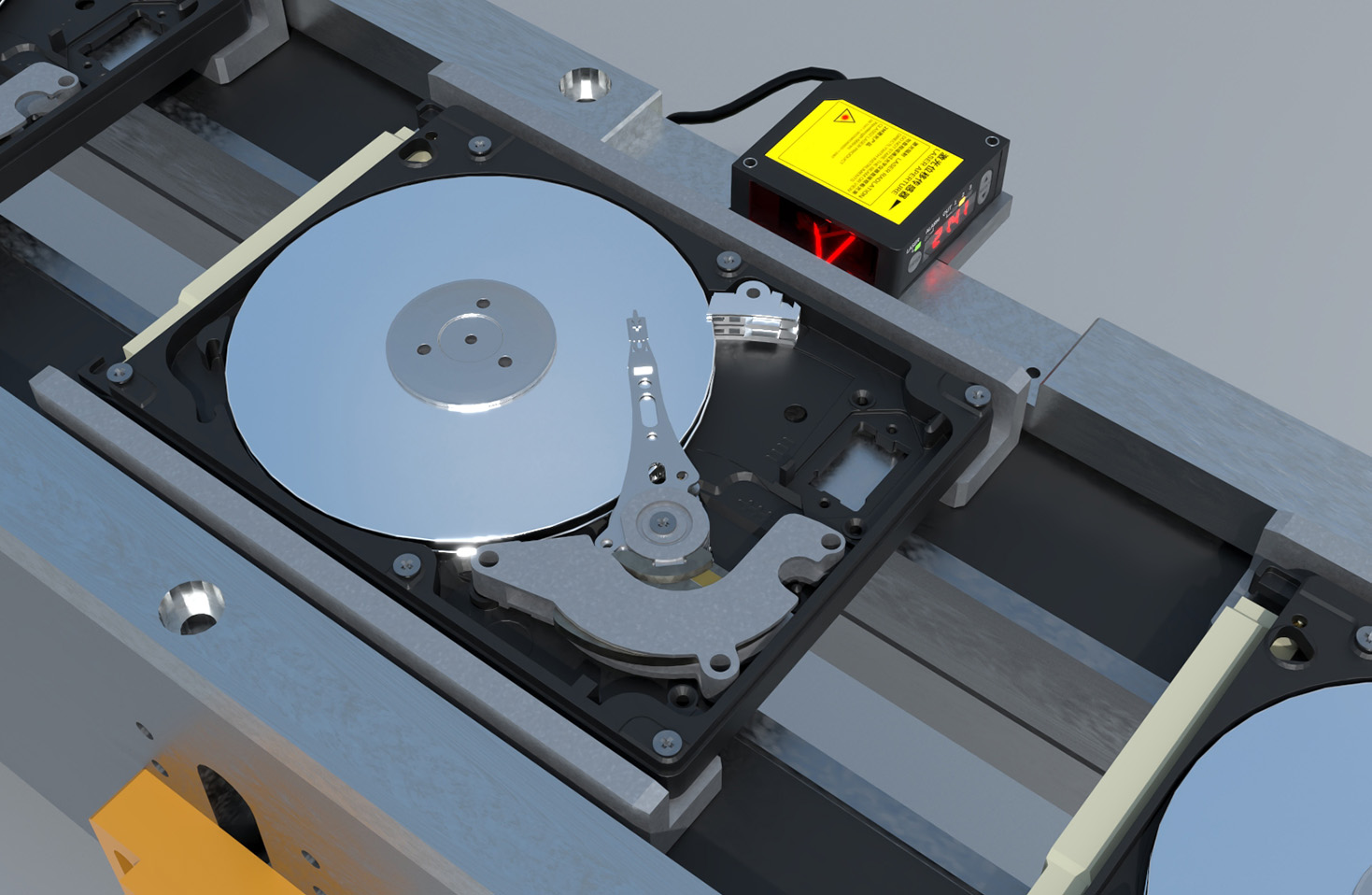
Looking ahead, the trajectory of laser distance sensor development points towards greater intelligence and multi-functionality. The convergence of sensor data with artificial intelligence and machine learning algorithms will enable predictive analytics and more complex decision-making at the edge. For instance, a sensor on a manufacturing line could not only measure a part's dimensions but also identify defects by analyzing the reflection pattern. Furthermore, the development of solid-state LiDAR (Light Detection and Ranging) arrays, which use numerous laser points to create high-resolution 3D point clouds, is blurring the lines between simple distance measurement and full environmental modeling. This progress ensures that laser distance sensors will remain at the forefront of technological innovation, providing the essential eyes for machines in an increasingly automated world.
