Laser sensor optics represents a critical intersection of photonics, electronics, and precision engineering, enabling a vast array of modern technological applications. At its core, this technology utilizes the coherent and monochromatic properties of laser light to measure, detect, and analyze objects or environmental conditions with exceptional accuracy. The fundamental principle involves emitting a focused laser beam towards a target. The interaction of this light with the target—whether through reflection, scattering, absorption, or modulation—is then captured and interpreted by a sensitive optical receiver. This process translates physical phenomena into quantifiable electrical signals.
The optical components within a laser sensor are paramount to its functionality. Key elements typically include the laser diode as the light source, various lenses for beam shaping and focusing, optical filters to isolate specific wavelengths, and photodetectors like photodiodes or CCD/CMOS sensors. The laser diode generates light, which is then collimated into a tight, parallel beam. Lenses focus this beam onto a precise point, enhancing spatial resolution. Optical filters are crucial for eliminating ambient light interference, ensuring the sensor detects only the relevant laser signal. Finally, the photodetector converts the returning light photons into an electrical current, the strength and timing of which are analyzed by onboard processing circuitry.

Several measurement principles define different sensor types. Time-of-Flight (ToF) sensors calculate distance by measuring the round-trip time for a laser pulse to reflect off a target. Triangulation sensors use a known geometric arrangement between the laser emitter, a receiver, and the target point to determine distance through trigonometric calculations, offering high precision at close ranges. Laser Doppler Vibrometry measures the frequency shift in reflected laser light caused by a vibrating surface, enabling non-contact vibration analysis. Confocal sensors use precise chromatic or spatial filtering to achieve extremely high axial resolution, often used for thickness measurement and surface profiling.
The applications of laser sensor optics are profoundly diverse, spanning industrial, commercial, scientific, and consumer domains. In industrial automation, these sensors are workhorses for precise non-contact distance measurement, object detection on assembly lines, and robot guidance. They enable quality control through high-speed dimensional gauging and surface defect inspection. LiDAR systems, which are essentially advanced ToF laser scanners, are foundational for autonomous vehicles, creating real-time 3D maps of the environment. In consumer electronics, laser sensors provide autofocus capabilities in smartphones and enable gesture recognition. Environmental monitoring utilizes laser-based LiDAR for atmospheric studies and topographic mapping. Furthermore, they are indispensable in scientific research for particle analysis, biomedical imaging, and precision alignment in experimental setups.
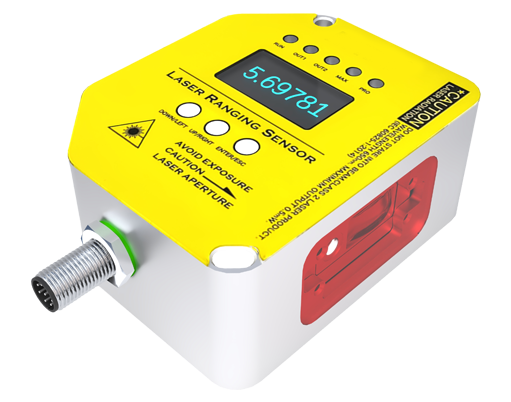
Selecting and implementing the right laser sensor requires careful consideration of several parameters. The required measurement range, resolution, and accuracy are primary drivers. The target's surface properties—such as color, reflectivity, and texture—can significantly affect signal strength; dark or absorbent surfaces may require sensors with higher output power or specialized algorithms. Environmental factors like ambient light, dust, fog, or temperature extremes must be accounted for, often necessitating protective housings or specific optical filters. The sensor's response speed, or sampling rate, must match the dynamics of the application, whether it's high-speed manufacturing or slow environmental monitoring.
Future advancements in laser sensor optics point towards greater miniaturization, enhanced intelligence, and multi-functional integration. Developments in Vertical-Cavity Surface-Emitting Lasers (VCSELs) are enabling smaller, more efficient sensor arrays. The integration of Artificial Intelligence and machine learning directly at the sensor edge allows for smarter data interpretation, anomaly detection, and adaptive performance. Furthermore, the fusion of data from laser sensors with other sensing modalities like cameras or radar is creating more robust and comprehensive perception systems. As the underlying optoelectronic components continue to evolve, laser sensors will become even more pervasive, precise, and powerful, solidifying their role as a cornerstone of modern sensing technology.
In conclusion, laser sensor optics is a dynamic and essential field that translates the unique properties of laser light into actionable data. From factory floors to autonomous vehicles and research laboratories, these systems provide the eyes for machines, enabling levels of precision, speed, and reliability unattainable by other means. A solid understanding of their optical principles, types, and application considerations is key to leveraging their full potential in an increasingly automated and data-driven world.