In industrial and field applications, laser distance sensors are frequently exposed to harsh environmental conditions, with mechanical shock and vibration being among the most significant challenges to their performance and longevity. The ability of a sensor to withstand these forces is not merely an added feature but a critical determinant of its reliability and accuracy in real-world operations. This article delves into the principles, design strategies, and practical considerations behind shock and vibration resistance in modern laser distance sensors.
The core measurement principle of a laser distance sensor, typically based on time-of-flight or phase-shift measurement, involves precise optical and electronic components. A sudden shock or persistent vibration can misalign optical elements like the laser diode, lens, or receiver. Even micron-level displacements can introduce significant measurement errors. Furthermore, vibrations can cause resonant frequencies within the sensor's housing or internal PCB, leading to signal noise, temporary failure, or permanent damage to solder joints and sensitive ICs.
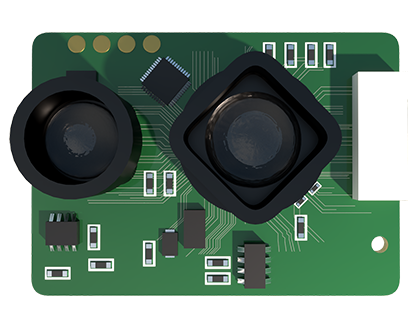
Manufacturers employ a multi-faceted engineering approach to mitigate these effects. The first line of defense is mechanical design. Robust, die-cast aluminum housings are standard for high-end industrial sensors, providing a rigid structure that dampens external forces. Internal components are often mounted using shock-absorbing materials like silicone gaskets or specialized elastomers. Critical sub-assemblies, such as the optical block, may be isolated from the main housing using passive damping systems or active isolation platforms in extreme cases.

Electronically, the design focuses on stability. Printed Circuit Boards (PCBs) are secured with additional brackets and screws to prevent flexing. Components are selected not only for their electrical specifications but also for their mechanical robustness, often favoring surface-mount technology (SMT) with stronger solder joints. Advanced sensors incorporate solid-state components with no moving parts, inherently increasing their resistance to vibration. Signal processing algorithms play a equally vital role. Digital filtering techniques, such as adaptive averaging or Kalman filters, are implemented in the sensor's firmware to distinguish between true measurement signals and noise induced by vibration, thereby stabilizing the output.
The industry quantifies this resilience through standardized testing protocols. Key metrics include:
* Shock Resistance: Measured in g-forces (e.g., 100g for 11ms per IEC 60068-2-27). This tests the sensor's ability to survive sudden impacts from drops or collisions.
* Vibration Resistance: Defined by frequency ranges and amplitudes (e.g., 10-55 Hz at 1.5mm amplitude per IEC 60068-2-6). This tests performance under continuous oscillatory forces, such as those on a moving vehicle or machinery.
When selecting a sensor for a demanding environment, it is crucial to match these specifications to the application. A sensor on a mining excavator will face different shock profiles than one on a high-speed packaging line. Consulting the manufacturer's datasheet for specific IEC or MIL-STD test results is essential. Environmental sealing (IP or NEMA ratings) often correlates with robust construction, but it is not a direct indicator of mechanical ruggedness.
In practice, proper installation is as important as intrinsic design. Using the recommended mounting hardware, ensuring the mounting surface is stable and rigid, and avoiding long unsupported cable runs that can transmit vibration are all critical steps. Regular maintenance checks for loose fasteners or signs of physical damage can prevent premature failure.
Ultimately, the shock and vibration resistance of a laser distance sensor is a testament to its quality and intended application scope. It represents a complex integration of mechanical, electronic, and software engineering aimed at preserving measurement integrity where it matters most. As automation expands into more dynamic and unpredictable environments, this characteristic will continue to be a primary differentiator, ensuring that precise distance data remains available even when the going gets tough.