In today's fast-paced industrial and environmental monitoring landscape, the demand for precise, reliable air quality measurement tools is at an all-time high. Among these, laser dust sensors have emerged as a critical component for detecting and quantifying particulate matter (PM) in various settings. For businesses and projects operating on tight schedules, the availability of these sensors for immediate shipment is not just a convenience—it's a necessity. This article delves into the technology behind laser dust sensors, their applications, and the significant advantages of sourcing them from suppliers with ready stock.
Laser dust sensors operate on the principle of light scattering. A laser diode emits a focused beam of light into a detection chamber. When airborne particles pass through this beam, they scatter the light in multiple directions. A photodetector, positioned at a specific angle (typically 90 degrees), measures the intensity of this scattered light. This signal is then processed by sophisticated algorithms to calculate the particle concentration, often providing real-time data on PM1.0, PM2.5, and PM10 levels. This method, known as laser scattering or optical particle counting, offers high accuracy and fast response times compared to traditional methods, making it the gold standard for many applications.
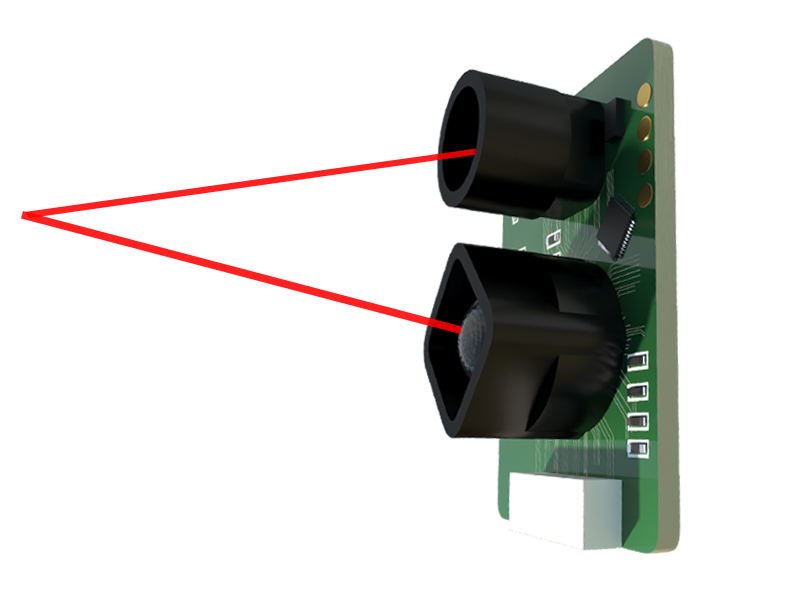
The applications for these sensors are vast and growing. In the industrial sector, they are indispensable for monitoring workplace air quality, ensuring compliance with occupational health and safety standards, and protecting workers from harmful dust exposure in settings like manufacturing plants, woodshops, and mining operations. For smart home and building automation, integrated laser dust sensors enable HVAC systems to adjust ventilation based on actual air quality, improving energy efficiency and occupant comfort. Environmental monitoring stations rely on them for tracking urban pollution, while the consumer electronics market incorporates them into air purifiers and wearable devices to provide users with personalized air quality data.
Procuring these sensors from a supplier with consistent inventory offers undeniable benefits. The most immediate advantage is the elimination of project delays. Long lead times can halt progress, increase costs, and miss critical deadlines. With sensors available for immediate dispatch, integration and deployment can proceed without interruption. This is particularly crucial for urgent projects, maintenance replacements, or pilot programs requiring quick validation. Furthermore, reputable suppliers with ready stock often have robust supply chains and quality assurance processes. Customers gain access to the latest sensor models, which feature improvements in accuracy, lower power consumption, and enhanced communication protocols like UART, I2C, or PWM. Reliable inventory also suggests a supplier's commitment to customer support, ensuring that technical assistance, datasheets, and integration guides are readily available.

When selecting a laser dust sensor from stock, several key specifications should guide the decision. Sensitivity and range are paramount; the sensor must accurately detect the expected particle concentration levels in its target environment. Particle size detection capability (e.g., 0.3 to 10 microns) should match the application's needs. Operational lifespan is another critical factor, as the laser diode and components degrade over time—high-quality sensors offer thousands of hours of stable operation. Environmental durability, including operating temperature and humidity ranges, ensures reliable performance in diverse conditions. Finally, the physical form factor and output interface must be compatible with the host system's design.
In conclusion, the strategic importance of real-time particulate matter monitoring continues to expand across industries. The laser dust sensor, with its precision and reliability, sits at the heart of this capability. Sourcing these essential components from a supplier that maintains substantial inventory translates directly into operational efficiency, cost control, and project agility. It empowers engineers, product developers, and facility managers to implement air quality solutions promptly, ensuring safer environments, smarter systems, and compliance with evolving regulations. For any project where air quality data is critical, choosing a readily available laser dust sensor is a decisive step toward success.