Proximity sensors are fundamental components in modern automation, robotics, and consumer electronics. Their primary function is to detect the presence or absence of an object within a specified range without physical contact. However, the true utility of these sensors lies in their output signal, which is the electrical language they use to communicate with control systems like PLCs (Programmable Logic Controllers), microcontrollers, or other processing units. Understanding the different types of proximity sensor outputs is crucial for selecting the right sensor for an application and ensuring reliable system integration.
The output of a proximity sensor is not a simple "on/off" signal in all cases. It varies significantly based on the sensor's technology and intended use. The most common classification is between digital (discrete) and analog outputs.
Digital Outputs
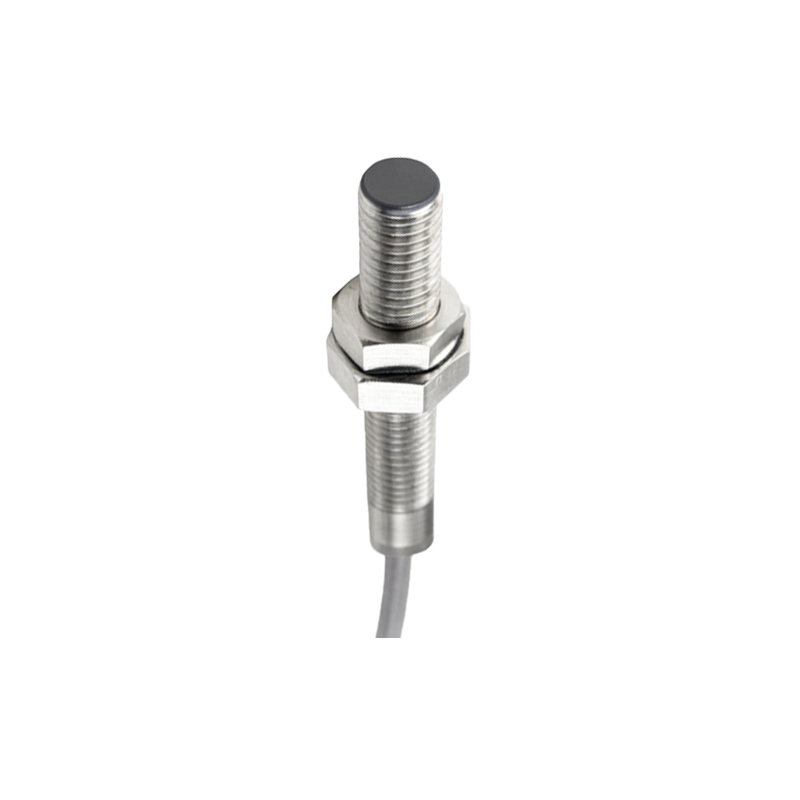
Digital outputs provide a clear, binary signal: either ON (object detected) or OFF (no object detected). This is the most prevalent output type, especially in industrial counting, positioning, and limit-switch applications. Digital output sensors are further categorized by their switching configuration and the type of electrical signal they produce.
The two primary switching configurations are Normally Open (NO) and Normally Closed (NC). A Normally Open switch remains open (non-conducting) when no target is present and closes (conducts) when a target is detected. Conversely, a Normally Closed switch is closed in its resting state and opens upon detection. The choice depends on fail-safe requirements of the circuit.
In terms of electrical signal, the dominant types are:
1. NPN (Sinking) Output: An NPN sensor switches the negative (ground) side of the load. The load (e.g., a PLC input) is connected to the positive voltage supply. When activated, the sensor connects the load to ground, completing the circuit and allowing current to flow into the sensor's output terminal. This is a common standard in Europe and Asia.
2. PNP (Sourcing) Output: A PNP sensor switches the positive side of the load. The load is connected to ground. When activated, the sensor provides the positive voltage to the load, allowing current to flow out from the sensor's output terminal. This configuration is often preferred in North America.
Mixing up NPN and PNP wiring is a frequent installation error that prevents the system from functioning. Some modern sensors offer programmable or selectable NPN/PNP outputs for greater flexibility.
Analog Outputs
Analog output sensors provide a continuously variable signal that is proportional to the distance between the sensor and the target. Instead of just signaling presence, they measure how far away an object is. This output is typically a voltage (e.g., 0-10V) or current (e.g., 4-20mA) signal.
Voltage Output (e.g., 0-10V): The output voltage changes linearly with distance. At the minimum sensing range, the output might be 0V, and at the maximum range, it might be 10V. This is susceptible to electrical noise over long cable runs.
Current Output (e.g., 4-20mA): This is a robust industrial standard where 4mA typically represents the minimum sensing distance and 20mA the maximum. The "live zero" (4mA) allows the system to distinguish between a valid low reading and a sensor fault or broken wire (0mA). Current signals are highly resistant to electrical interference and voltage drop over long distances.
Analog sensors are essential for applications requiring precision measurement, such as monitoring roll diameters, controlling tension, or positioning machinery where exact distance feedback is needed.
Specialized Outputs
Beyond basic digital and analog, some sensors feature more advanced communication outputs:
IO-Link: This is a point-to-point serial communication protocol that is becoming a standard for sensor connectivity. An IO-Link sensor provides not just a switched signal but a digital data stream. This allows for detailed parameter configuration (e.g., setting sensing ranges, hysteresis), advanced diagnostics (e.g., operating temperature, signal strength), and transmission of precise measured values, all over a standard 3-wire cable.
Push-Pull Output: This type combines aspects of NPN and PNP. It can both source (provide positive voltage) and sink (connect to ground) current. This makes it highly versatile and compatible with both NPN and PNP input modules, simplifying inventory and installation.
Relay Output: These sensors have an integrated electromechanical relay that can switch higher AC or DC loads (like motors or solenoids) directly, acting as a self-contained proximity switch.
Selecting the Right Output
Choosing the correct output depends entirely on the application's requirements.
Use a digital (NPN/PNP) output for