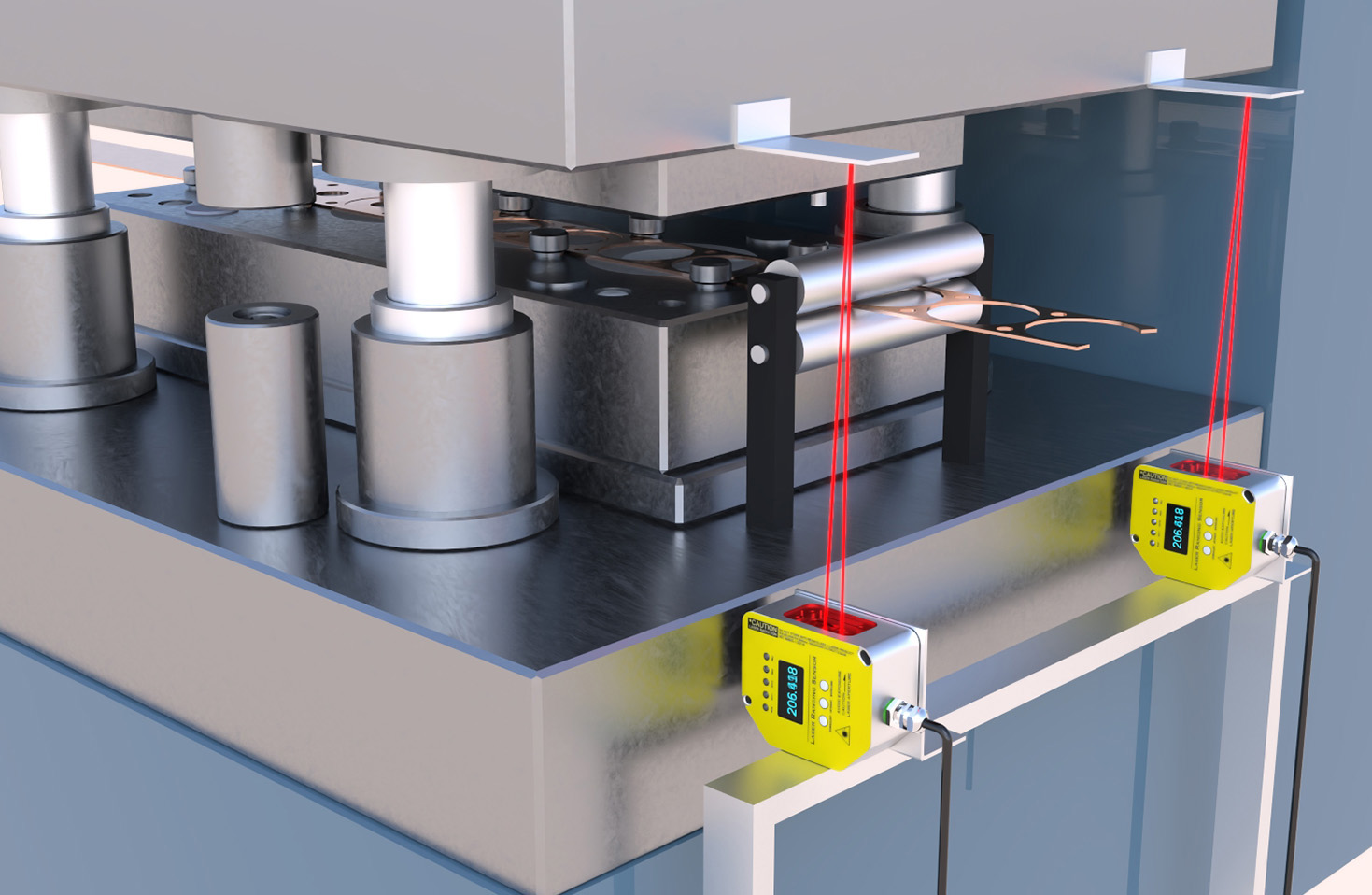
Laser sensors have revolutionized the way we measure distance, offering unparalleled accuracy, speed, and reliability across countless applications. At its core, laser distance measurement is based on a simple yet powerful principle: the time-of-flight (ToF) method. A laser diode emits a focused pulse of light towards a target. This pulse travels at the constant speed of light (approximately 300,000 kilometers per second), reflects off the target's surface, and returns to a detector within the sensor. An internal high-precision clock measures the elapsed time between the emission and the reception of the reflected pulse. By calculating the formula Distance = (Speed of Light × Time of Flight) / 2, the sensor determines the exact distance to the target with extraordinary precision, often down to millimeter or even sub-millimeter levels.
While ToF is the most common principle, another sophisticated method is phase-shift analysis. Here, the sensor emits continuous amplitude-modulated laser light. The phase difference between the emitted wave and the reflected wave is measured. Since the wavelength of the modulation is known, this phase shift directly correlates to the distance traveled. This method is exceptionally good for very high-accuracy measurements over shorter ranges and is less susceptible to certain interferences.
The advantages of laser sensors over traditional mechanical or ultrasonic methods are significant. Their non-contact nature means there is no wear and tear from physical touch, ensuring long-term stability and no risk of damaging delicate objects. The measurement is instantaneous, allowing for high-speed processes in dynamic environments like robotics or conveyor belts. Furthermore, the highly focused laser beam enables precise targeting of small objects or specific points, even in crowded settings, minimizing interference from background objects.
The applications of laser ranging sensors are vast and growing. In industrial automation, they are indispensable for positioning robotic arms, controlling material levels in silos, measuring part dimensions for quality control, and guiding automated guided vehicles (AGVs). In construction and surveying, handheld laser distance meters have replaced tape measures for calculating areas, volumes, and layouts with far greater speed and less error. They are integral to modern forestry for measuring tree height and stand density. Emerging fields like autonomous vehicles rely heavily on LiDAR (Light Detection and Ranging), a advanced form of laser scanning that creates detailed 3D maps of the environment for navigation and obstacle avoidance.

Selecting the right laser sensor requires careful consideration of several key parameters. The *measuring range* specifies the minimum and maximum distances the device can handle. The *accuracy* and *repeatability* define how close the reading is to the true value and how consistent repeated measurements are. The *laser class* (typically Class 1 or 2 for most industrial sensors) indicates the safety level, with Class 1 being inherently safe. Other factors include the *response time* (how quickly it outputs a reading), the *target surface properties* (dark or shiny surfaces can absorb or scatter light, affecting performance), and environmental conditions like ambient light, dust, or fog, which may require sensors with special filters or higher output power.
For optimal performance, proper installation and alignment are crucial. The sensor must be securely mounted to minimize vibration. The laser beam should be perpendicular to the target surface for the strongest return signal. For problematic surfaces, such as highly reflective materials, using a diffuse reflector or applying a matte coating can improve results. Regular maintenance, primarily keeping the lens clean from dust and debris, ensures consistent accuracy.
In conclusion, laser distance sensors are a foundational technology of modern precision measurement. By harnessing the properties of light, they deliver fast, accurate, and reliable data that drives efficiency, safety, and innovation in industries from factory floors to scientific research. As technology advances, we can expect these sensors to become even smaller, more robust, and more intelligent, further expanding their role in shaping an automated and data-driven world.