Laser cutting stands as a cornerstone of modern manufacturing, prized for its speed, versatility, and ability to produce intricate parts with exceptional edge quality. However, the very nature of the process—directing an intensely focused beam of light onto a material—creates a challenging environment for measurement and control. Physical contact with the workpiece or the cutting head is often impossible or detrimental. This is where non-contact sensors become indispensable, acting as the eyes and nervous system of the laser cutting machine, enabling unprecedented levels of precision, reliability, and automation.
The core challenge in laser cutting is maintaining the optimal focal point position relative to the material surface. Variations in material thickness, warping, or an uneven bed can cause the focal point to shift, leading to poor cut quality, increased dross, or even process failure. Non-contact capacitive or inductive displacement sensors are frequently employed for this critical task. Mounted on the cutting head, these sensors continuously measure the distance to the workpiece without touching it. By providing real-time feedback, the machine's control system can dynamically adjust the Z-axis, ensuring the laser beam remains perfectly focused throughout the entire job, regardless of surface irregularities. This capability is crucial for processing materials like wrinkled sheet metal or pre-formed parts.
Beyond height control, process monitoring is another vital area. The cutting process itself generates signatures—intense light, plasma emission, and sound—that contain valuable information about its health. Photodiodes or specialized CMOS sensors are used as non-contact process monitors. These sensors detect the light emitted from the cut kerf. A stable, bright signal typically indicates a good cut. A drop in intensity might signal a loss of penetration (incomplete cut), while an erratic signal could point to issues like contamination or incorrect parameters. By analyzing this optical feedback in real-time, the system can flag potential defects or even trigger automatic parameter adjustments, significantly reducing scrap rates and unplanned downtime.
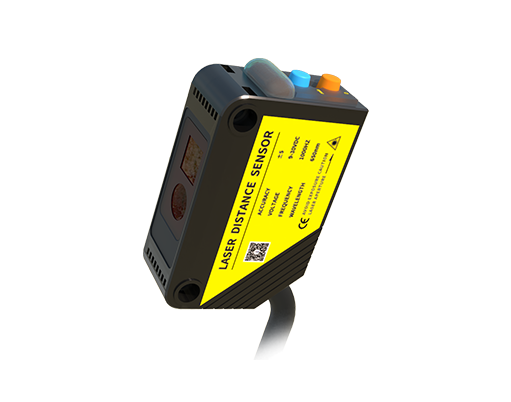
For applications involving reflective materials like copper or aluminum, another non-contact technology comes to the fore: laser triangulation sensors. While capacitive sensors can struggle with non-conductive or highly reflective surfaces, triangulation sensors project a visible or infrared laser line or spot onto the surface. A camera at a known angle captures the reflection's position. Any change in the workpiece height causes a measurable shift in the reflected spot's position on the camera's sensor, allowing for precise distance calculation. This method provides robust height tracking even for challenging materials, ensuring consistent cut quality.
The integration of non-contact sensors transforms a laser cutter from a passive tool into an intelligent, adaptive system. This intelligence enables several advanced functionalities. First, it allows for automated material profiling. Before cutting begins, the sensor can scan the surface to create a height map, which the CNC uses to adjust the cutting path in all three dimensions. Second, it facilitates part recognition and alignment. Vision systems, a form of non-contact optical sensor, can locate pre-existing features or fiducial marks on a blank, ensuring the cutting program aligns perfectly with the workpiece, which is essential for precision industries like electronics. Finally, post-cut inspection can be streamlined. Line scan cameras or similar vision sensors can immediately inspect the cut edge for defects like burrs or thermal distortion, providing instant quality assurance.
The benefits of implementing a robust non-contact sensing suite are tangible. Manufacturers experience a direct improvement in first-pass yield, as the process compensates for material inconsistencies automatically. There is a dramatic reduction in material waste and the labor associated with reworks or scrapped parts. Machine utilization increases because less time is spent on manual setup, trial cuts, and troubleshooting. Perhaps most importantly, it unlocks the potential for true lights-out manufacturing, where systems can run unattended with confidence, knowing that the sensors will monitor the process and compensate for expected variations or halt operations upon detecting a critical fault.
In conclusion, non-contact sensors are not merely optional accessories for modern laser cutting systems; they are fundamental components that bridge the gap between theoretical precision and real-world manufacturing variability. By providing continuous, accurate feedback on workpiece position and process health without physical interference, they empower laser cutters to achieve higher quality, greater efficiency, and more autonomous operation. As laser technology advances towards faster speeds and new materials, the role of sophisticated non-contact sensing in maintaining control and ensuring reliability will only become more central to successful fabrication.
