Laser dust sensors represent a significant advancement in air quality monitoring technology, offering high precision and reliability for detecting particulate matter (PM) concentrations in various environments. The structure of these sensors is meticulously designed to optimize performance, durability, and accuracy. At its core, a laser dust sensor comprises several key components that work in harmony to measure dust particles effectively.
The primary element is the laser diode, which emits a focused beam of light into a detection chamber. This laser source is typically a low-power, infrared or red laser, chosen for its stability and ability to illuminate particles without causing damage. The laser beam passes through a lens system that collimates and directs it into the sensing area, ensuring a consistent and uniform light path. This precision is crucial for minimizing errors and enhancing measurement consistency.
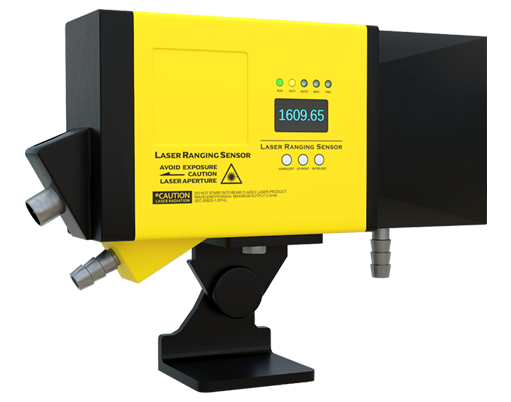
Within the detection chamber, air samples containing dust particles are drawn in through an inlet port, often facilitated by a small fan or pump to maintain a steady flow. As particles traverse the laser beam, they scatter light in multiple directions due to the Mie scattering principle, where light interacts with particles comparable in size to its wavelength. The scattered light is then captured by a photodetector, usually a photodiode or phototransistor, positioned at a specific angle to the laser beam—commonly at 90 degrees—to optimize signal detection while reducing background noise.
The photodetector converts the scattered light into electrical signals, which are amplified and processed by an integrated circuit (IC) or microcontroller. This processing unit analyzes the signal intensity and frequency to determine particle size and concentration, often categorizing results into PM1.0, PM2.5, and PM10 classifications based on particle diameter. Advanced sensors may include additional components, such as temperature and humidity sensors, to compensate for environmental factors that could affect readings, ensuring data accuracy across varying conditions.

The housing of a laser dust sensor is typically made from durable materials like ABS plastic or metal, providing protection against external interference and physical damage. It features ventilation holes or grilles to allow air intake while preventing large debris from entering. Internal shielding may be incorporated to block ambient light, which could otherwise interfere with the laser detection process. Connectors and wiring enable integration with external devices, such as air purifiers, HVAC systems, or data loggers, for real-time monitoring and control.
In summary, the structure of a laser dust sensor integrates optical, mechanical, and electronic components to deliver precise particulate matter measurements. Its design focuses on minimizing cross-sensitivity, enhancing longevity, and supporting applications in industrial, residential, and environmental settings. As air quality concerns grow globally, these sensors play a pivotal role in enabling informed decisions for health and safety.