The transportation industry is undergoing a transformative shift, driven by technological advancements that prioritize safety, efficiency, and operational intelligence. At the forefront of this evolution are laser sensors, sophisticated devices that are rapidly becoming indispensable for modern freight trucks. Unlike traditional mechanical or basic electronic systems, laser sensors—often referred to as LiDAR (Light Detection and Ranging) in advanced applications—provide a level of environmental perception that was once the domain of science fiction.
Fundamentally, a truck laser sensor emits pulsed laser light waves to measure distances with extraordinary precision. By calculating the time it takes for each pulse to bounce back from an object, the sensor creates a highly detailed, real-time, three-dimensional map of the vehicle's surroundings. This map, known as a point cloud, allows the truck's onboard computer systems to identify and classify objects such as other vehicles, pedestrians, lane markings, road edges, and stationary obstacles.

The primary application revolutionizing trucking is advanced driver-assistance systems (ADAS). For long-haul drivers facing fatigue and unpredictable road conditions, laser sensors act as an ever-vigilant co-pilot. They enable critical safety features like:
* Automatic Emergency Braking (AEB): The sensor can detect a sudden slowdown or stopped vehicle ahead, even in low-visibility conditions, and initiate braking faster than a human driver can react.
* Adaptive Cruise Control (ACC): This goes beyond standard cruise control by automatically adjusting the truck's speed to maintain a safe following distance from the vehicle ahead, reducing driver strain on highways.

* Blind Spot Detection (BSD) and Lane Keep Assist (LKA): Laser sensors provide 360-degree monitoring, alerting drivers to vehicles in hard-to-see zones and providing gentle steering corrections if unintended lane drift is detected.
Beyond immediate safety, the data harvested by laser sensors is a goldmine for fleet efficiency and management. By continuously analyzing following distances, braking patterns, and road geometry, these systems promote fuel-efficient driving habits. Fleet operators can use aggregated sensor data to identify risky routes, optimize maintenance schedules based on actual road stress, and improve overall logistics planning. This translates directly into lower operational costs, reduced carbon emissions, and enhanced asset utilization.
The path forward points toward increasing autonomy. While fully autonomous, driverless trucks on public roads are still a developing prospect, laser sensors are the foundational technology making it possible. They are a key component in building a reliable perception system for trucks operating in controlled environments like ports, mining sites, and dedicated freight corridors. The precision and reliability of laser data are crucial for a machine to make safe navigation decisions without human input.
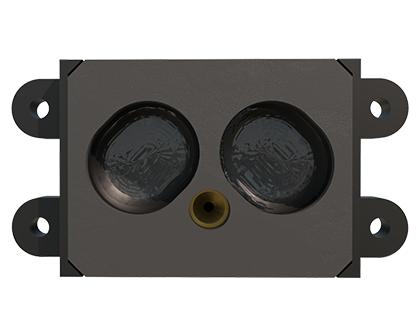
However, the integration of laser sensor technology is not without its challenges. The current cost of high-resolution, long-range LiDAR units can be significant, though prices are falling as adoption increases and manufacturing scales. Performance can also be affected by severe weather conditions like heavy rain, fog, or snow, though sensor fusion—combining laser data with radar and camera inputs—is effectively mitigating this limitation. Furthermore, the industry must navigate evolving regulatory frameworks and establish clear standards for performance and data security.
In conclusion, laser sensors are far more than just another automotive component; they are a pivotal enabling technology reshaping the trucking landscape. By providing unmatched situational awareness, they are dramatically reducing accident rates, protecting drivers and the public, and unlocking new levels of operational efficiency. As the technology matures and becomes more cost-effective, its adoption will become ubiquitous, paving the way for a safer, cleaner, and more intelligent future for freight transportation worldwide. The journey has already begun, and laser sensors are firmly in the driver's seat.