In the world of automation and electronic control, sensors act as the critical interface between the physical environment and digital systems. Among the diverse array of sensors, proximity sensors hold a unique and vital position. However, confusion often arises regarding how they differ from other broad sensor categories. This article clarifies these distinctions by examining operational principles, typical applications, and key characteristics.
At its core, a proximity sensor is a device that detects the presence or absence of an object within a specified range without any physical contact. The key term is "non-contact." These sensors emit a field or beam of electromagnetic radiation (like infrared light, radio waves, or an electromagnetic field) and look for changes in the field or the return signal. Common types include inductive (for metals), capacitive (for both metals and non-metals like liquids or plastics), ultrasonic (using sound waves), and photoelectric (using light beams).
The primary distinction from many other sensor types lies in this non-contact detection method and its typical output. A standard proximity sensor often provides a simple binary output: an object is either "present" or "not present" within its detection zone. It generally does not measure the precise distance, weight, temperature, or color of the object—it confirms existence. Some advanced versions, like certain ultrasonic or laser sensors, can provide analog distance data, blurring the line with other sensor families.
Now, let's contrast this with other major sensor categories:
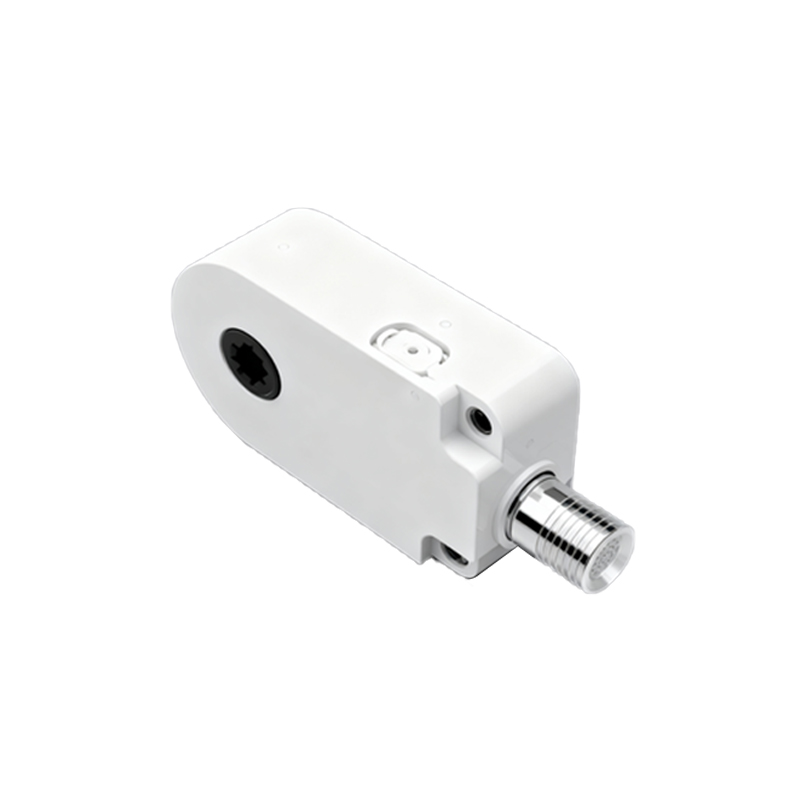
vs. Position/Location Sensors (e.g., Encoders, Potentiometers, LVDTs):
While proximity sensors detect presence, position sensors are designed to provide precise, continuous measurement of an object's linear or angular displacement. An optical rotary encoder on a motor shaft gives exact angular position. A Linear Variable Differential Transformer (LVDT) measures minute linear movements. Proximity sensors might trigger an event when an object reaches a point, but they do not continuously track its journey along a path like a position sensor does.
vs. Force/Pressure Sensors (e.g., Load Cells, Strain Gauges, Piezoelectric Sensors):
These sensors measure mechanical force, weight, or pressure. A load cell in a scale converts force into an electrical signal to determine mass. A proximity sensor cannot tell you how heavy an object is; it can only tell you that the object is there. Their domains are fundamentally different: one detects presence, the other measures a physical force or its effect.
vs. Temperature Sensors (e.g., Thermocouples, RTDs, Thermistors):
This distinction is clear. Temperature sensors measure thermal energy. A proximity sensor is completely insensitive to the temperature of a target object (unless extreme heat interferes with its electronics). It will detect a cold steel block and a hot steel block identically, based solely on its presence.
vs. Vision Sensors/Cameras:
Vision systems are far more complex. They capture an image and process it to extract data—presence, identity, position, orientation, color, size, or defects. A simple photoelectric proximity sensor might use a light beam to detect breakage, but it cannot recognize a part number, read a barcode, or inspect for cosmetic flaws like a vision system can. Vision sensors provide rich, multidimensional data, whereas a basic proximity sensor provides a single bit of information.
vs. Limit Switches (Mechanical Contact Sensors):
This is a crucial practical difference. A mechanical limit switch requires physical contact to actuate. An arm or plunger must be pressed. A proximity sensor performs the same "object-at-location" function without any touch, leading to less wear, higher reliability in dirty environments, and faster response times because there's no mechanical movement delay.
Application-Driven Selection:
Choosing between a proximity sensor and another type hinges on the required information.
Use a proximity sensor for: Object detection for counting, jam detection in conveyors, determining if a robot gripper has picked up a part, or sensing end-of-travel without contact.
Use a position sensor for: Precisely controlling the stroke of a hydraulic cylinder or the angle of a robotic joint.
Use a force sensor for: Monitoring clamping force in a press or measuring fill weight in packaging.
Use a vision sensor for: Verifying assembly completeness or guiding a robot to pick randomly oriented parts.
In summary, proximity sensors excel at reliable, non-contact detection of object presence. Their role is often that of a digital switch in the physical world. Other sensors are specialized tools for measuring specific physical properties like exact position, force, temperature, or visual characteristics. Understanding this fundamental divide—detection versus measurement—is key to selecting the right component for any industrial, automotive, or consumer application, ensuring both efficiency and system integrity.