Laser sensor communication represents a cutting-edge field that merges the precision of laser technology with the fundamental need for data transmission. Unlike traditional radio frequency (RF) communication, this method utilizes focused light beams, typically from lasers, to send and receive information. The core principle involves modulating a laser beam's properties—such as its intensity, phase, or frequency—to encode data. A photodetector or a specialized sensor at the receiving end then converts these modulated light signals back into electrical signals, effectively decoding the transmitted information.
The advantages of laser-based communication are significant, primarily due to the inherent properties of light. It offers exceptionally high bandwidth, enabling the transfer of vast amounts of data at speeds far surpassing conventional RF systems. This makes it ideal for applications where data density is crucial. Furthermore, laser beams are highly directional, creating a narrow communication beam. This directionality provides enhanced security, as interception is difficult without direct placement in the beam's path, and reduces interference with other systems. Laser communication is also largely free from the regulatory constraints and spectrum congestion associated with RF bands.

However, the technology is not without its challenges. The very precision that provides security and high bandwidth also demands stringent alignment between the transmitter and receiver. Maintaining this link, especially in dynamic environments or over very long distances, requires sophisticated tracking and pointing systems. Another primary limitation is susceptibility to atmospheric conditions. Fog, rain, snow, and even turbulence can scatter or absorb the laser light, leading to signal attenuation or complete loss of the link. This makes reliable long-range terrestrial communication a complex engineering problem.
Despite these hurdles, practical applications are growing rapidly. In space communications, laser sensors are revolutionizing data links between satellites and ground stations. NASA and other space agencies have successfully demonstrated high-speed data transmission from deep space probes and Earth-orbiting satellites, overcoming the vast distances with efficient, focused beams. For terrestrial use, free-space optical (FSO) communication is employed for high-speed links between buildings in urban areas, often as a fiber-optic extension where physical cabling is impractical.
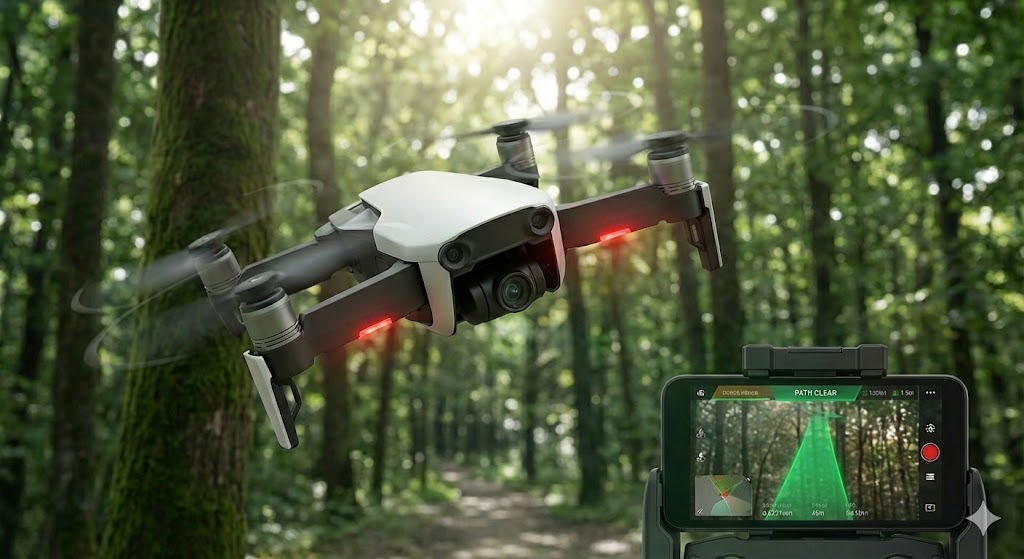
Another promising domain is in secure military and defense communications, where the low probability of intercept and detection is paramount. Underwater applications are also emerging, using specific blue-green laser wavelengths that penetrate water more effectively than radio waves, enabling communication with submarines and autonomous underwater vehicles. Furthermore, the advent of autonomous vehicles has spurred interest in laser-based LiDAR (Light Detection and Ranging) systems, which, while primarily for sensing and mapping, incorporate principles of pulsed laser communication for precise object detection and potential vehicle-to-vehicle data exchange.
The future trajectory of laser sensor communication points toward hybrid systems. Researchers are actively developing adaptive optics to compensate for atmospheric distortion and advanced modulation techniques to improve data integrity. Integration with existing RF networks is also a key focus, creating robust communication infrastructures where lasers handle high-bandwidth backbone links and RF provides fallback connectivity during adverse weather. As the demand for data continues to explode, laser sensor communication stands as a critical technology to unlock the next generation of high-speed, secure, and efficient information transfer across air, space, and sea.