In the realm of industrial automation, precision measurement is paramount. Among the diverse array of sensing technologies, the inclined laser sensor, often referred to as a diffuse-reflective or background suppression sensor, stands out for its unique operational principle and versatility. Unlike through-beam sensors that require a separate receiver or standard diffuse sensors that measure the intensity of reflected light, inclined laser sensors operate on a more sophisticated triangulation principle. This allows them to detect objects with high accuracy regardless of the target's color, material, or reflectivity, making them indispensable in complex applications.
The core working principle of an inclined laser sensor is based on optical triangulation. The sensor emits a focused laser beam at a specific angle onto the target surface. The light reflected from the surface is then captured by a receiving lens and focused onto a position-sensitive detector, typically a CCD or PSD element. The key differentiator is that the emitter and receiver are housed in the same unit but are arranged at an angle to each other. When an object is within the defined sensing range, the reflected light spot shifts position on the detector. The sensor's internal electronics analyze this positional shift rather than the intensity of the light. By calculating the angle of the reflected beam, the sensor can precisely determine the distance to the object. This method effectively "suppresses" the background, as objects beyond the set sensing distance will reflect light to a different point on the detector and are thus ignored. This background suppression capability is its most significant advantage.
This technology unlocks a wide spectrum of applications across industries. In packaging and logistics, these sensors excel at detecting transparent objects, such as glass bottles or plastic films, which are challenging for conventional sensors. They can reliably verify the presence of a label on a glossy bottle or count clear plastic caps on a conveyor. In the automotive sector, they are used for precise edge detection of metal sheets, gap measurement in assembly processes, and ensuring the correct placement of components regardless of their surface finish. Robotic guidance systems utilize them for accurate positioning and pick-and-place operations of variably shaped items. Furthermore, they play a critical role in quality control, identifying minute height differences, checking fill levels in opaque containers, and detecting warped or misaligned parts on production lines.
Selecting the right inclined laser sensor requires careful consideration of several parameters. The sensing range is fundamental and must match the application's distance requirements. Resolution and repeatability determine the sensor's precision—critical for measurement tasks. The spot size of the laser beam is important for detecting small features or edges. Response time must be fast enough to keep up with high-speed production. Environmental factors cannot be overlooked; sensors with high Ingress Protection (IP) ratings (like IP67) are necessary for dusty, humid, or washdown environments. The choice of housing material (often stainless steel or rugged plastic) and the availability of specialized models resistant to welding glare or extreme temperatures are also vital. Finally, output options (PNP/NPN, analog, IO-Link) and mounting flexibility must align with the existing control system.
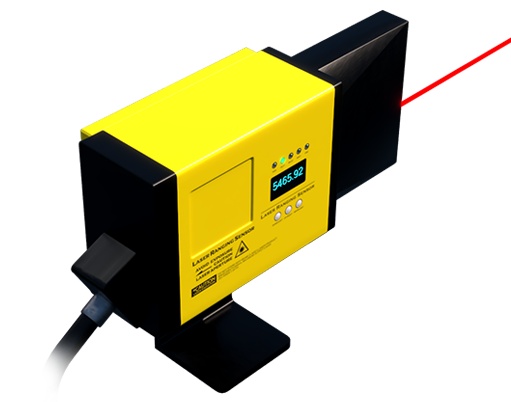
When integrating these sensors, best practices ensure optimal performance. Correct alignment is crucial; the laser beam must strike the target surface perpendicularly for the most accurate reflection. The sensing background should be as distant and non-reflective as possible to enhance suppression. Regular cleaning of the lens is necessary to prevent errors caused by dust or contamination. Understanding the sensor's taught-in or programming method for setting the reference distance is essential for calibration. For challenging surfaces like deep black or highly reflective materials, consulting the sensor's datasheet for specific performance curves is recommended, as extreme surfaces can still pose detection limits.
Looking ahead, the evolution of inclined laser sensors continues. Integration with Industrial Internet of Things (IIoT) platforms via smart communication protocols like IO-Link is becoming standard, providing diagnostic data, parameterization, and condition monitoring. Miniaturization allows for installation in tighter spaces, while enhanced algorithms improve stability on difficult surfaces. The convergence of laser measurement with vision sensor capabilities in compact units is also an emerging trend.
In conclusion, the inclined laser sensor is a powerful tool that solves complex detection and measurement challenges by leveraging intelligent optical triangulation. Its ability to ignore background interference and reliably sense objects independent of surface properties makes it a cornerstone of modern automated systems. By understanding its principles, applications, and selection criteria, engineers and technicians can effectively harness this technology to improve efficiency, ensure quality, and drive innovation in automated processes.
