In the world of industrial automation, robotics, and smart devices, sensors act as the critical sensory organs, providing essential data for control systems. Two fundamental types often discussed are proximity sensors and position sensors. While their names might suggest overlap, they serve distinct purposes based on the specific information they need to capture. Grasping the difference is key to selecting the right component for an application.
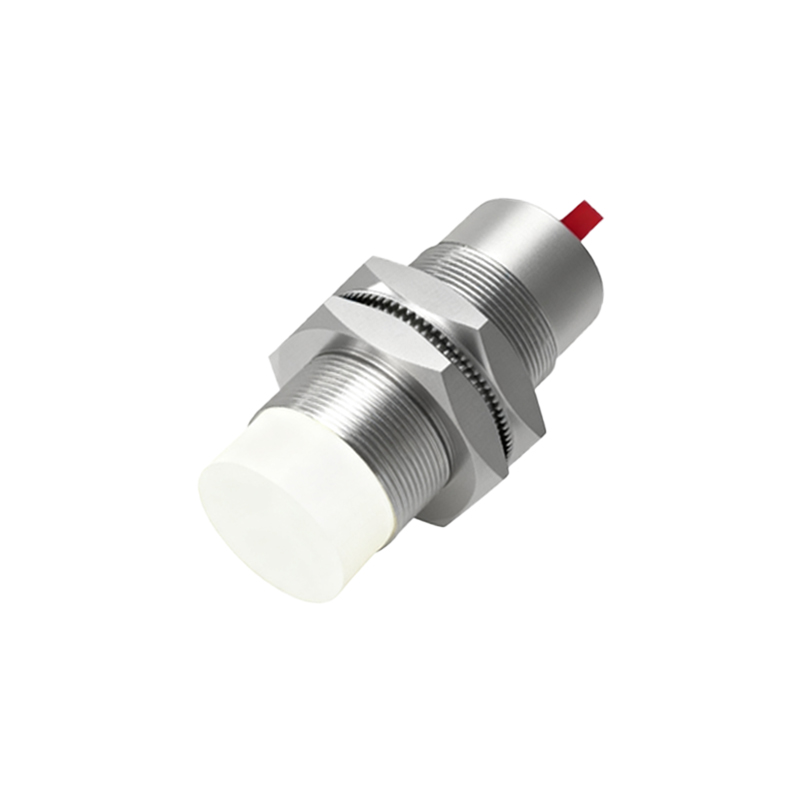
A proximity sensor is primarily designed to detect the presence or absence of an object within a defined range without any physical contact. Its core function is a simple binary question: "Is an object nearby or not?" These sensors are not typically concerned with the exact distance, orientation, or precise location of the object, only its presence within the detection field. They operate on various principles. Inductive proximity sensors detect metallic objects by creating an electromagnetic field. Capacitive sensors can detect both metallic and non-metallic materials by sensing changes in capacitance. Ultrasonic proximity sensors emit sound waves and measure the echo return time to detect objects, effective for a wider range of materials. Photoelectric sensors use a light beam (visible, infrared, or laser) and its interruption or reflection to sense presence. The output is usually a simple on/off signal.
Common applications of proximity sensors are abundant. On assembly lines, they count bottles or detect if a product is in place for the next operation. In smartphones, they deactivate the touchscreen when held to the ear. In automatic doors, they sense a person approaching. In machine safety, they can create a protective field to halt machinery if a hand breaches the zone. Their strength lies in robustness, fast response time, and reliability for detection tasks.
A position sensor, in contrast, is engineered to provide continuous and precise information about the linear or angular location of an object. It answers the question: "Exactly where is the object?" This involves measuring displacement, rotation, or tilt relative to a reference point. The output is not a simple switch but an analog signal (like voltage or current) or a digital value that varies proportionally with the position. Technologies here are also varied. Potentiometers provide a variable resistance output based on wiper position. Linear Variable Differential Transformers (LVDTs) offer highly accurate linear displacement measurement using electromagnetic induction. Encoders, both incremental and absolute, translate rotary motion into digital pulses to determine precise angle or speed. Hall-effect sensors detect the position of a magnet, often used in rotary applications. Laser displacement sensors use triangulation to measure distance with high accuracy.
The applications for position sensors are focused on control and feedback within motion systems. In a CNC machine, they precisely report the location of the cutting tool. In a robotic arm, they provide constant feedback on each joint's angle, enabling precise movement. In automotive systems, they measure throttle valve position, pedal position, or suspension travel. In aerospace, they monitor control surface positions like flaps and ailerons.
The choice between a proximity sensor and a position sensor hinges entirely on the application's requirements. If the need is to confirm presence, trigger an action, count objects, or provide a safety interlock, a proximity sensor is typically the efficient and cost-effective solution. It simplifies the control logic. If the system requires continuous monitoring of movement, precise control over location, velocity, or acceleration feedback, then a position sensor is indispensable. It provides the granular data necessary for closed-loop control systems to function accurately.
In many complex systems, both sensor types work in tandem. For example, in a automated guided vehicle (AGV), proximity sensors might detect obstacles for collision avoidance (presence detection), while position sensors, often coupled with inertial measurement units, continuously track the vehicle's exact location and orientation on the factory floor for navigation.
Understanding this distinction—detection of presence versus measurement of precise location—empowers engineers and designers to make informed decisions. It ensures the selected sensor not only performs its task reliably but also contributes to system efficiency, safety, and cost-effectiveness. As technology advances, the lines may blur with sensors offering both proximity detection and rough distance estimation, but the core functional divide remains a critical principle in sensor selection and application design.