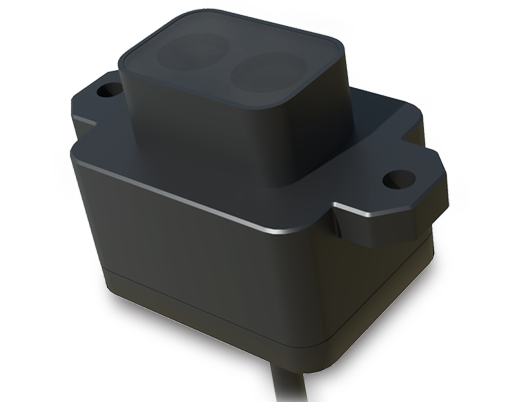
Laser sensor sampling represents a critical process in numerous technological domains, enabling precise measurement, detection, and data acquisition. This technique involves using laser beams to interact with a target, capturing the reflected or scattered light to gather information about the target's properties, such as distance, velocity, shape, or composition. The fundamental principle relies on the coherent and monochromatic nature of laser light, which allows for high accuracy and resolution compared to conventional methods.
The sampling process typically begins with a laser emitter generating a focused beam directed toward the target. Upon interaction, the light undergoes changes—such as modulation in phase, frequency, or intensity—depending on the target's characteristics. A photodetector then captures this altered light, converting it into electrical signals. These signals are processed through algorithms to extract meaningful data, often involving time-of-flight calculations, triangulation, or interferometry. For instance, in time-of-flight sampling, the system measures the time taken for a laser pulse to travel to the target and back, calculating distance with remarkable precision. This method is widely used in applications like LiDAR for autonomous vehicles, where rapid sampling rates are essential for real-time environmental mapping.
In industrial settings, laser sampling enhances quality control and automation. Manufacturing lines employ laser sensors for non-contact measurement of component dimensions, surface defects, or alignment, reducing human error and increasing throughput. The high sampling frequency—often reaching thousands of measurements per second—ensures that even minute variations are detected, facilitating immediate corrective actions. Additionally, in environmental monitoring, laser sensors sample atmospheric particles or pollutants by analyzing light scattering patterns, contributing to air quality assessments and climate research.

The advantages of laser sensor sampling include its non-invasive nature, high speed, and adaptability to various environments, from harsh industrial floors to outer space. However, challenges such as interference from ambient light, material transparency, or extreme temperatures must be addressed through calibration and filtering techniques. As technology advances, innovations like quantum cascade lasers and integrated photonic circuits are pushing the boundaries of sampling accuracy and miniaturization.
Ultimately, laser sensor sampling serves as a cornerstone in fields ranging from robotics and aerospace to healthcare and consumer electronics. Its ability to deliver reliable, high-fidelity data underpins the development of smart systems and the Internet of Things, driving progress toward more automated and data-driven solutions. By understanding its principles and applications, engineers and researchers can harness this technology to solve complex measurement challenges and foster innovation across industries.