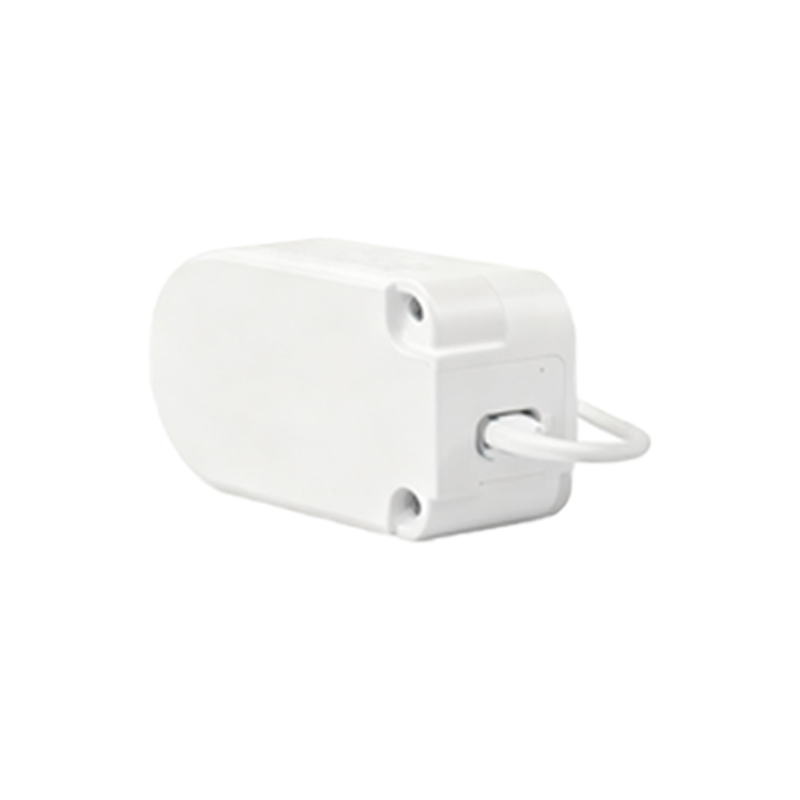
In today's rapidly evolving industrial landscape, off-the-shelf proximity sensors often fall short of addressing unique operational challenges. Custom proximity sensor solutions have emerged as a critical answer, providing precisely engineered sensing capabilities tailored to specific environmental conditions, spatial constraints, and performance requirements. Unlike standard models, a custom-built proximity sensor begins with a deep analysis of the application. Engineers consider factors such as the target material—whether it's metallic, non-metallic, or a specialized composite—and the required sensing distance, which can range from a few millimeters to several meters. The operating environment plays a pivotal role; sensors may need to withstand extreme temperatures, high pressure, corrosive chemicals, or constant exposure to water and dust. For instance, in food and beverage processing, sensors require specific housing materials and seals to meet hygiene standards, while in heavy machinery, they might need reinforced casings to resist vibration and mechanical shock.
The customization process extends to the electrical and output characteristics. Voltage requirements vary across different regions and machinery systems—some applications demand low-voltage DC sensors for safety in hazardous areas, while others integrate into high-voltage AC systems. Output signals can be tailored to interface seamlessly with existing programmable logic controllers (PLCs) or data acquisition systems, offering options like NPN, PNP, analog current (4-20mA), or digital IO-Link communication for advanced diagnostics and parameterization. Response time is another crucial factor; high-speed manufacturing lines, such as in automotive assembly or packaging, require sensors with millisecond-level switching speeds to maintain throughput without errors. Additionally, physical form factors are adapted to fit into confined spaces or unusual mounting configurations. This might involve designing miniature sensors for robotic grippers, elongated cylindrical sensors for deep tank level detection, or rectangular flat-pack sensors for conveyor system integration.
Material selection for both the housing and sensing face is meticulously chosen. Stainless steel housings are common for corrosion resistance, while PEEK or Teflon coatings might be applied in chemically aggressive environments. The sensing technology itself—inductive, capacitive, ultrasonic, or photoelectric—is selected based on the target's properties. Inductive sensors are customized for metal detection with specific sensing ranges, capacitive versions can detect liquids or non-metals through barriers, and ultrasonic sensors are tailored for precise distance measurement in challenging atmospheres.
Collaboration with a specialized manufacturer is essential. A reputable provider will engage in a consultative phase, often involving prototype development and rigorous testing in simulated real-world conditions. This ensures the final product not only meets specifications but also delivers long-term reliability. The benefits of such an approach are substantial: reduced false triggers, minimized downtime, enhanced system efficiency, and ultimately, a lower total cost of ownership. From semiconductor fabrication cleanrooms to rugged agricultural equipment, custom proximity sensors enable innovation by solving sensing problems that standard products cannot. By investing in a tailored solution, companies gain a competitive edge through optimized processes, improved product quality, and the flexibility to adapt to future technological shifts.