The 250 laser sensor represents a significant advancement in precision measurement and detection technology. Utilizing laser-based principles, this sensor offers high accuracy and reliability across various industrial and commercial applications. Operating at a specific wavelength, the 250 laser sensor emits a focused beam to detect objects, measure distances, or monitor processes with minimal interference from environmental factors such as light or dust.
In industrial automation, the 250 laser sensor plays a crucial role in quality control and assembly lines. Its ability to provide real-time data on object positioning, thickness, or presence enhances efficiency and reduces errors. For instance, in manufacturing, it ensures components are correctly aligned, while in logistics, it aids in inventory management by tracking items on conveyor belts. The sensor's robust design allows it to withstand harsh conditions, including high temperatures and vibrations, making it suitable for factories and outdoor installations.
The technology behind the 250 laser sensor involves advanced optics and electronics. It typically uses time-of-flight or triangulation methods to calculate distances. In time-of-flight systems, the sensor measures the time taken for a laser pulse to reflect off a target, enabling precise distance calculations. Triangulation methods, on the other hand, rely on geometric angles to determine position, offering high resolution for close-range applications. These mechanisms ensure the sensor delivers consistent performance, with some models achieving micrometer-level accuracy.
Applications extend beyond industry into fields like robotics, automotive, and healthcare. In robotics, the 250 laser sensor enables autonomous navigation by mapping environments and avoiding obstacles. Automotive systems use it for adaptive cruise control and collision avoidance, improving safety. In healthcare, it assists in medical imaging and surgical tools, where precision is paramount. Additionally, environmental monitoring benefits from its capability to detect pollutants or measure atmospheric conditions.
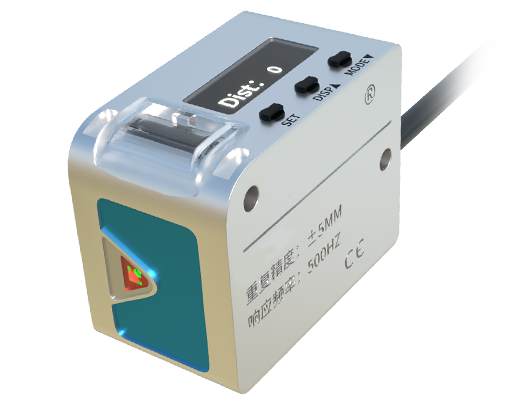
When selecting a 250 laser sensor, factors such as range, resolution, and response time must be considered. Models vary in specifications, with some optimized for long-range detection up to several meters, while others focus on high-speed responses for dynamic processes. Integration with digital interfaces, like USB or Ethernet, facilitates data communication with control systems, allowing for seamless automation. Maintenance is generally low, as the sensor has no moving parts, but regular calibration ensures long-term accuracy.
Future trends in 250 laser sensor technology include miniaturization and enhanced connectivity. With the rise of the Internet of Things (IoT), sensors are becoming smarter, capable of wireless data transmission and cloud-based analysis. Innovations in materials may also lead to more cost-effective and energy-efficient versions, broadening accessibility. As industries embrace digital transformation, the demand for reliable sensors like the 250 laser type is expected to grow, driving further research and development.

In summary, the 250 laser sensor is a versatile tool that enhances precision and automation across multiple sectors. Its adoption supports advancements in efficiency, safety, and innovation, making it a key component in modern technology systems. By understanding its principles and applications, users can leverage its full potential to solve complex challenges in an increasingly automated world.