Proximity switch sensors represent a critical category of non-contact detection devices widely utilized in industrial automation, automotive systems, and consumer electronics. Their design revolves around the fundamental principle of detecting the presence or absence of a target object without physical contact, thereby offering high reliability, long operational life, and minimal maintenance. The core design challenge lies in selecting the appropriate sensing technology tailored to specific application requirements, environmental conditions, and target material properties.
The primary sensing technologies employed in proximity switch design include inductive, capacitive, ultrasonic, and optical methods. Inductive proximity sensors are predominantly used for detecting metallic objects. Their design incorporates a coil energized by a high-frequency oscillating circuit. When a metallic target enters the electromagnetic field, it induces eddy currents, causing a change in the oscillation amplitude. This change is detected by the sensor's circuitry, triggering a switching output. Key design considerations for inductive sensors include sensing range, which is influenced by coil size and oscillator frequency, and the need for shielding to ensure directional sensitivity and reduce electromagnetic interference. Target material also plays a significant role; for instance, ferrous metals typically offer a longer detection range compared to non-ferrous metals like aluminum or copper.
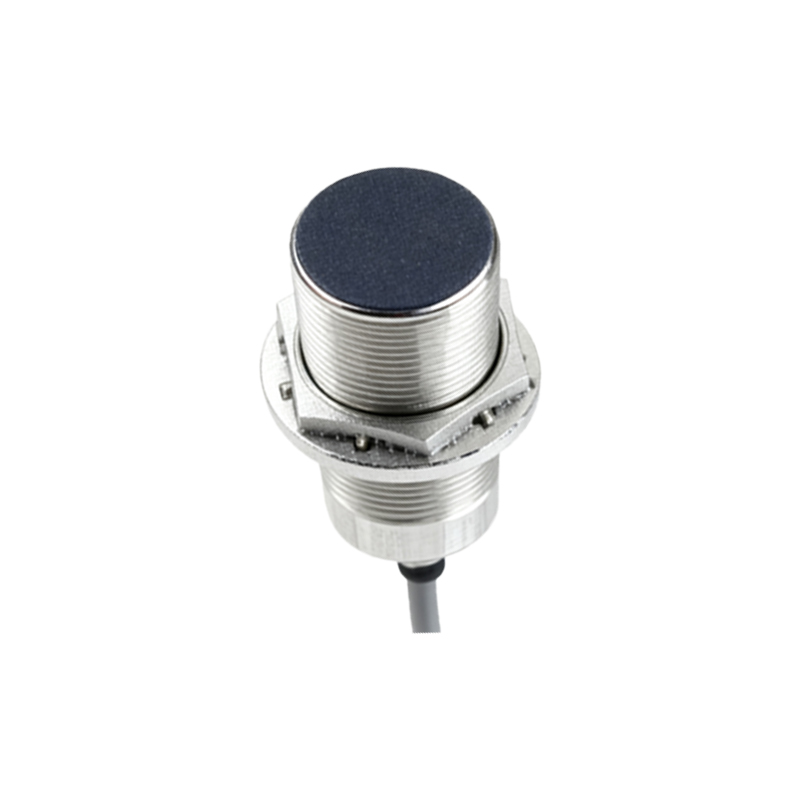
Capacitive proximity sensors, in contrast, can detect both metallic and non-metallic materials, including liquids, plastics, and wood. Their operation is based on changes in capacitance. The sensor forms one plate of a capacitor, with the target object acting as the other plate. As the target approaches, the capacitance increases, altering the oscillation in an RC or LC circuit. The design must carefully account for the dielectric constant of the target material and environmental factors such as humidity and temperature, which can affect capacitive coupling. Shielding is again crucial to prevent false triggering from non-target objects in the surrounding area. These sensors are ideal for applications like liquid level detection, material handling, and presence sensing of packaged goods.
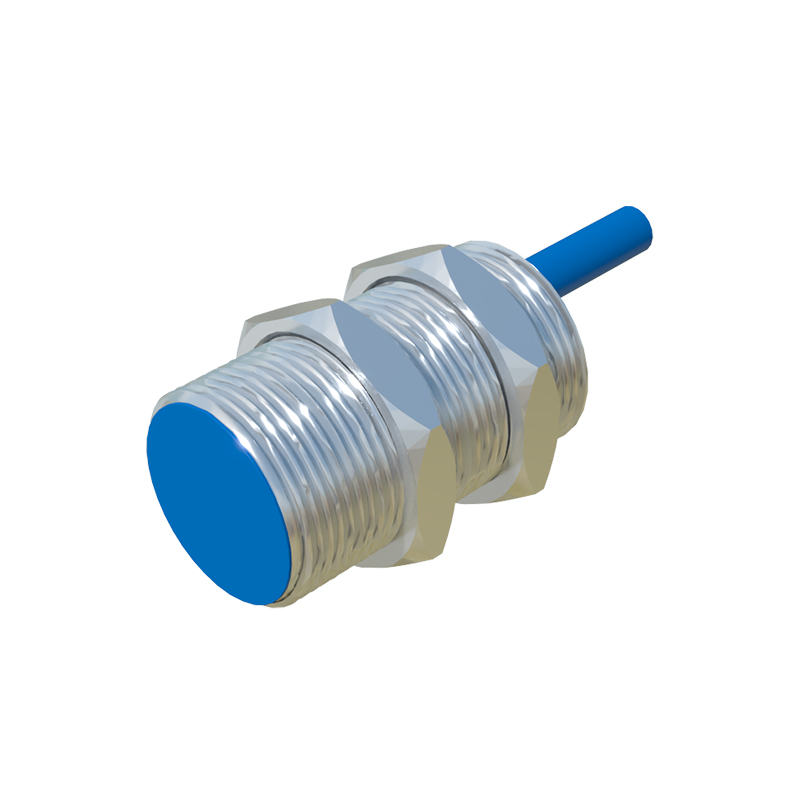
Ultrasonic proximity sensors operate by emitting high-frequency sound waves and measuring the time taken for the echo to return from a target object. This time-of-flight principle allows for precise distance measurement, making them suitable for both presence detection and ranging applications. Design complexities involve the transducer design for efficient sound wave generation and reception, compensation for temperature variations (as sound speed is temperature-dependent), and algorithms to filter out background noise. Their ability to detect objects regardless of color, transparency, or material makes them versatile, though they may be less effective with sound-absorbing materials.
Optical proximity sensors, often using infrared (IR) LEDs and phototransistors or photodiodes, function by either detecting the reflection of light from a target (reflective mode) or the interruption of a light beam (through-beam mode). Reflective designs integrate the emitter and receiver in a single housing, simplifying installation but limiting range and being susceptible to target reflectivity and ambient light. Through-beam designs, with separate emitter and receiver units, offer longer ranges and higher reliability but require precise alignment. Design efforts focus on modulating the emitted light to mitigate interference from ambient light sources and selecting appropriate lensing to shape the sensing field.
Beyond the core sensing element, the electronic design of a proximity switch is paramount. This includes the oscillator circuit for inductive/capacitive types, the receiver amplifier, signal conditioning filters, and the output stage. Modern designs increasingly incorporate microcontrollers for digital signal processing, enabling features like programmable sensing ranges, output delays, and diagnostic functions (e.g., short-circuit protection, overload indication). The output can be a simple digital switch (NPN/PNP transistor, solid-state relay) or an analog signal proportional to distance.
Housing and packaging design must ensure ingress protection (IP ratings) against dust and moisture, mechanical robustness to withstand vibration and shock, and thermal management for reliable operation across industrial temperature ranges. The choice of housing material (e.g., brass, stainless steel, PBT plastic) is dictated by the application environment, such as washdown areas in food processing or corrosive atmospheres.
In application, proper selection and installation are as vital as the design itself. Designers must specify sensors with an adequate nominal sensing range (Sn), considering safety factors for real-world conditions like target size, shape, and approach speed. Mounting in metal surfaces requires flush-mountable designs for inductive sensors to prevent side-effects. Regular functional testing is recommended to ensure long-term performance.
From assembly lines and robotic pick-and-place systems to elevator door safety and smartphone display management, the thoughtful design of proximity switch sensors enables seamless, efficient, and safe automation. Ongoing advancements in miniaturization, energy efficiency, and smart sensor networks with IO-Link communication continue to expand their capabilities and applications, solidifying their role as indispensable components in modern electronic and control systems.