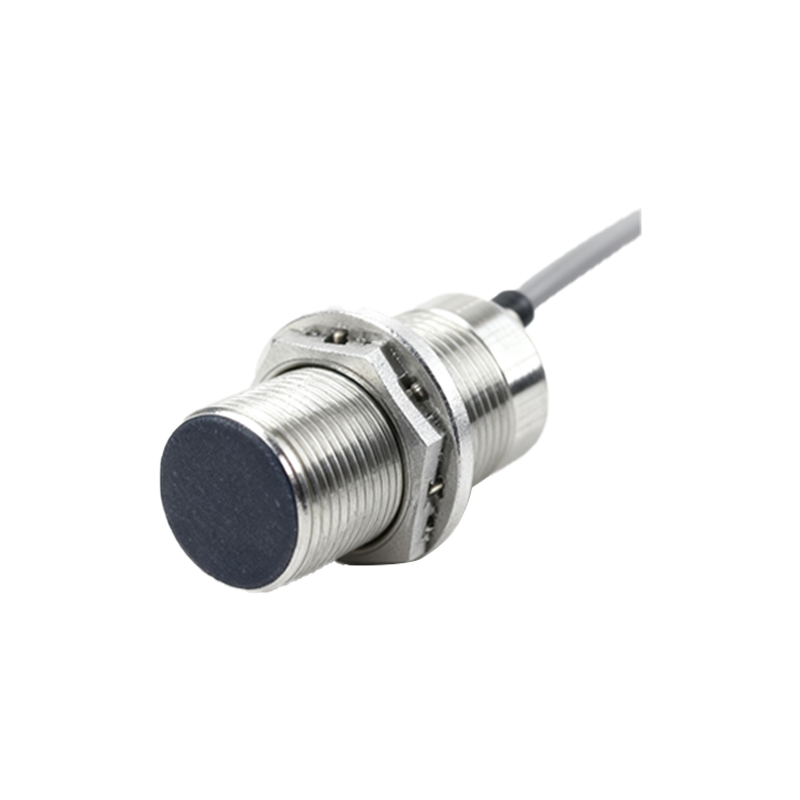
In the ever-evolving landscape of financial technology, the humble Automated Teller Machine (ATM) continues to be a critical touchpoint for millions of users worldwide. While advancements in digital banking are prominent, the physical security and operational efficiency of ATMs remain paramount. This is where a sophisticated yet often overlooked component plays a crucial role: the ATM proximity sensor, or human presence sensor.
Fundamentally, an ATM proximity sensor is a device designed to detect the presence of a person within a specific range of the machine without any physical contact. These sensors operate on various principles, with passive infrared (PIR) and microwave Doppler radar being among the most common technologies deployed. A PIR sensor detects changes in infrared radiation emitted by objects, effectively sensing body heat and movement. Microwave sensors, on the other hand, emit low-power electromagnetic waves and analyze the reflected signal; the disturbance caused by a moving person alters the wave's frequency (the Doppler effect), triggering detection.
The integration of these sensors serves multiple critical functions that extend far beyond simple detection. Primarily, they are a cornerstone of energy conservation and component longevity. Modern ATMs are designed to enter a low-power "sleep" or standby mode during periods of inactivity. The proximity sensor acts as the wake-up call. When a user approaches the machine, the sensor detects the motion and signals the main system to power up the display, the keypad, and other essential components. This seamless activation happens almost instantaneously, presenting a ready-to-use interface to the customer. Once the user completes the transaction and leaves the area, the sensor, after a predetermined delay confirming absence, signals the system to revert to its low-power state. This cycle significantly reduces energy consumption and minimizes wear and tear on mechanical parts like the display backlight, leading to lower operational costs and a reduced environmental footprint.
Beyond power management, these sensors are integral to security protocols. They can be configured to trigger specific security sequences. For instance, consistent loitering or suspicious movement patterns detected near the ATM fascia, without a transaction being initiated, can alert monitoring systems or on-site security. This acts as a deterrent against vandalism, card skimming device installation, or physical attacks on users. In some advanced implementations, the sensor data is integrated with video analytics, where the camera system is activated or prioritized based on human presence, ensuring efficient storage and review of relevant footage.

From a user experience perspective, the proximity sensor contributes to a perception of responsiveness and modernity. The machine appearing to "awaken" as one approaches feels intuitive and efficient, eliminating the need to touch a button to start the session. This touchless initiation also gained additional relevance in the context of public health concerns, minimizing physical contact points. Furthermore, it guides user flow; a sensor placed strategically can help ensure a user is positioned correctly for camera capture or is at an optimal distance from the screen and keypad.
The evolution of these sensors is leaning towards smarter, more context-aware systems. Future iterations may incorporate multi-technology sensor fusion, combining PIR, microwave, and even low-resolution thermal imaging to reduce false triggers from non-human objects like passing vehicles or animals. Advanced signal processing allows for better discrimination between a user intending to conduct a transaction and someone merely walking past. Integration with the ATM's software ecosystem could enable more personalized greetings or adjust UI elements based on detected user height or posture.
Deployment and calibration are key to their effectiveness. The detection zone must be carefully tuned—not so narrow that it misses approaching users, and not so broad that it activates for people on a distant sidewalk. Environmental factors like direct sunlight, extreme temperatures, or heavy rain can sometimes affect certain sensor types, necessitating proper housing and algorithmic compensation. Regular maintenance checks are essential to ensure the sensor lens is clean and unobstructed, guaranteeing reliable operation.
In conclusion, the ATM proximity sensor is a silent guardian and facilitator. It operates discreetly in the background, yet its impact is substantial. By enabling intelligent power management, enhancing physical security layers, and smoothing the customer interaction, this technology proves that even the smallest components are vital in building trustworthy, efficient, and user-friendly financial service infrastructure. As ATMs continue to adapt to new challenges, the role of precise, reliable human presence detection will only grow in importance, ensuring these machines remain secure, sustainable, and seamlessly integrated into our daily lives.