The global industrial automation and smart technology sectors are experiencing unprecedented growth, driven by advancements in robotics, autonomous vehicles, and precision manufacturing. At the heart of this transformation lies a critical enabling technology: the 3D laser sensor. These sophisticated devices use laser light to capture precise three-dimensional data of objects and environments, facilitating tasks ranging from quality inspection and logistics sorting to navigation and safety systems. For investors looking to capitalize on this high-growth niche, identifying the leading publicly-traded companies—often referred to as "龙头股" or bellwether stocks in investment contexts—is crucial. These market leaders typically possess strong technological moats, extensive patent portfolios, and significant partnerships across key industries.
One prominent player in this space is Keyence Corporation. Headquartered in Japan, Keyence is a global leader in sensor systems and factory automation. Its 3D laser profile sensors and scanners are renowned for ultra-high speed and accuracy, making them indispensable in electronics assembly and automotive manufacturing lines. The company's business model, which involves direct sales and intense R&D investment, has resulted in consistently high profitability and market share. Its financial performance often serves as a barometer for capital expenditure trends in advanced manufacturing worldwide.

Another formidable contender is Cognex Corporation, based in the United States. While Cognex is widely recognized for its machine vision systems, its 3D laser displacement sensors and vision software are pivotal for robotic guidance and dimensional gauging. Cognex's technology is deeply integrated into the logistics and e-commerce fulfillment centers of major retailers, where 3D laser sensing ensures precise package measurement and sorting. The company's strategic acquisitions have continuously expanded its 3D sensing capabilities, solidifying its position as a core supplier to the smart factory ecosystem.
In Europe, SICK AG, though privately held, has a significant presence through its innovative sensor solutions. For public market exposure, investors might look at larger industrial conglomerates with substantial 3D laser sensing divisions. Hexagon AB, a Swedish multinational, is a prime example. Through its Manufacturing Intelligence division, Hexagon provides high-end laser scanning and measurement systems used in metrology and large-scale industrial design. Its technology is critical for ensuring quality in aerospace and shipbuilding, where millimeter precision is non-negotiable.
The automotive sector, particularly the push towards autonomous driving, has created a massive new market for LiDAR (Light Detection and Ranging), a specific type of 3D laser sensor. Companies like Luminar Technologies and Innoviz Technologies are pure-play public companies in the automotive LiDAR space. While currently in a pre-profitability growth phase, their fortunes are tied to adoption timelines of major automakers. Their sensors create real-time 3D maps for vehicles, a foundational requirement for self-driving capabilities. The success of these firms depends heavily on securing design wins with OEMs and scaling production efficiently.
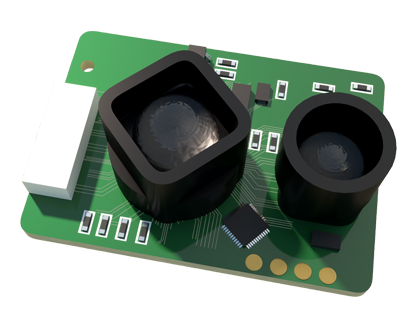
Beyond pure-play sensor makers, semiconductor companies are essential enablers. Texas Instruments and Analog Devices design and manufacture the specialized chips that power the laser control, data conversion, and processing within these sensors. Their growth is leveraged across the entire expanding universe of 3D sensing applications, offering a potentially less volatile investment angle on the same megatrend.
Investing in 3D laser sensor leaders requires a nuanced understanding of different market segments. Industrial automation stocks like Keyence and Cognex often offer stability and recurring revenue from established industries. In contrast, automotive LiDAR stocks present a higher-risk, higher-reward profile linked to the volatile adoption curve of autonomous vehicles. Macroeconomic cycles also play a role, as industrial capital investment can slow during downturns, affecting sensor sales.
The long-term outlook for this sector remains robust. Emerging applications in healthcare, agriculture, and consumer electronics continue to surface. The leaders today are those investing heavily not just in hardware, but in the accompanying software and artificial intelligence that turn raw 3D point cloud data into actionable insights. For a portfolio focused on the future of automation and measurement, a strategic allocation to the pioneers of 3D laser sensing technology provides a direct conduit to some of the most transformative trends in modern industry.