In the world of industrial automation and precise measurement, a class of devices operates silently yet indispensably, detecting the presence or position of metallic objects without any physical contact. These are inductive sensors, fundamental components that have revolutionized control and monitoring systems across countless sectors. Their operation is rooted in a simple yet profound principle of electromagnetism, offering reliability where other sensing technologies might falter.
At its core, an inductive sensor generates an oscillating electromagnetic field from a coil wound around a ferrite core. When a conductive metal object enters this active field, eddy currents are induced on the object's surface. These currents draw energy from the sensor's oscillator, resulting in a measurable change—typically a reduction in amplitude. The sensor's electronics detect this change and trigger a solid-state switch, sending a clear signal to a programmable logic controller (PLC) or other control unit. This entire process happens in milliseconds, enabling real-time detection.
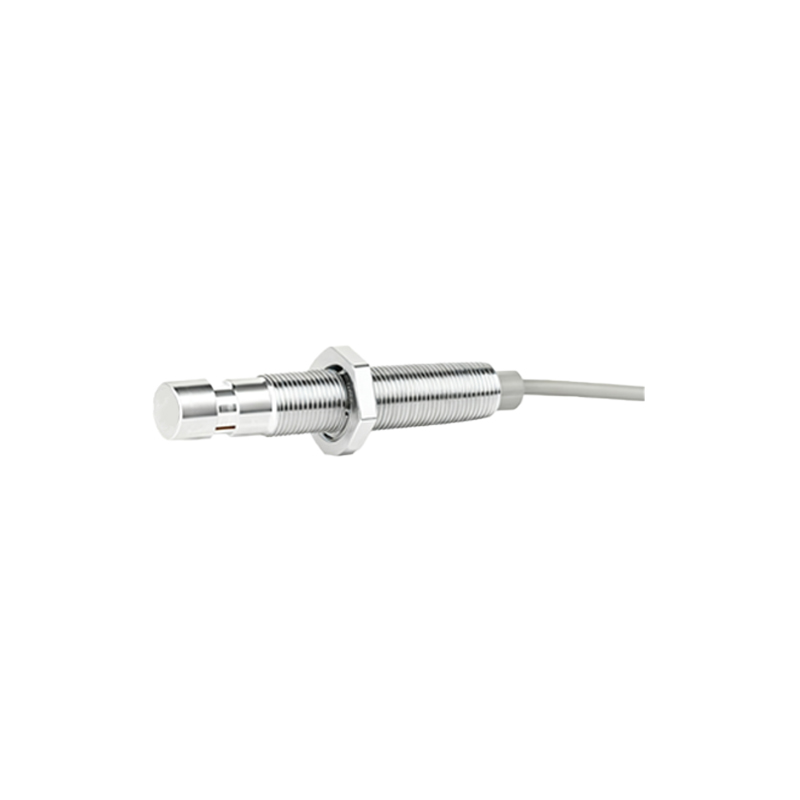
The advantages of this technology are numerous. The lack of physical contact means there is no wear and tear on the sensor from the target object, leading to exceptionally long service life and minimal maintenance. They are inherently robust, often housed in rugged metal or polymer casings with high ingress protection (IP) ratings, making them resistant to dust, dirt, moisture, oils, and coolants. This makes them perfectly suited for harsh industrial environments like machine shops, assembly lines, and foundries. Furthermore, they are immune to ambient light conditions and can detect objects through certain non-metallic materials like plastic or paint, depending on the application.
Inductive sensors are not a one-size-fits-all solution; they come in various types tailored for specific needs. The standard proximity sensor is the most common, used for simple presence detection. Factor 1 cylindrical designs are ubiquitous for general purposes. Then there are specialized variants like analog inductive sensors, which provide a continuous output signal proportional to the distance to the target, enabling precise position measurement. Ferrous sensors are tuned specifically for detecting iron and steel, offering extended range, while non-ferrous sensors are optimized for metals like aluminum, copper, or brass. For challenging applications requiring very small sensing ranges or detection of tiny parts, miniaturized sensors are available.
The applications are as diverse as industry itself. They are used to count metal parts on a conveyor, confirm the position of a cylinder rod in hydraulic or pneumatic systems, monitor rotational speed by detecting gear teeth, ensure proper closure of metal doors or guards, and verify the presence of a drill bit in a machining center. In automotive manufacturing, they verify component placement. In packaging, they control filling levels by detecting metal containers.
Selecting the right inductive sensor requires careful consideration of several parameters. The sensing distance, or nominal range, is critical and is typically specified for a standard mild steel target. The target material significantly affects this range; for instance, aluminum may reduce the effective sensing distance by roughly 40%. The sensor's housing style—cylindrical, rectangular, or ring-shaped—must fit the mechanical installation. Electrical characteristics are equally important: operating voltage (e.g., 10-30V DC or 20-250V AC), output type (PNP/NPN switching, normally open/closed), and connection method (pre-wired cable or quick-disconnect). Environmental factors like temperature extremes and potential exposure to chemicals must also be accounted for to ensure long-term reliability.
Installation and setup are generally straightforward, but certain best practices ensure optimal performance. Maintaining the correct mounting distance between sensors prevents mutual interference when they are installed in close proximity. Users must also be mindful of the sensing field's shape and size to avoid false triggers from nearby metal structures like machine frames or brackets, a consideration known as "shielding."
While inductive sensors are stalwarts for metal detection, understanding their limitations is key. They cannot detect non-metallic materials like plastic, wood, glass, or liquids. For those applications, capacitive or photoelectric sensors are the appropriate choice. Additionally, different metals affect the sensing range differently, so application testing with the actual target material is always recommended.
From simple presence detection to enabling complex positional feedback in servo systems, inductive sensors form the tactile interface between the physical movement of machinery and the digital world of control. Their durability, speed, and consistency make them an irreplaceable component in the push for greater automation, efficiency, and safety. As technology advances, we see the integration of more advanced diagnostics, IO-Link communication for parameterization and data exchange, and even smaller form factors pushing the boundaries of where this reliable technology can be applied. For engineers and technicians, a solid grasp of inductive sensor principles is not just useful—it is essential for designing and maintaining the automated systems that drive modern industry.