Laser displacement sensors, particularly models like the Laser Displacement Sensor 50, represent a cornerstone of modern precision measurement and automation. These non-contact devices operate on the principle of triangulation or time-of-flight measurement to determine the distance, position, or profile of a target object with exceptional accuracy. The core mechanism involves emitting a focused laser beam onto the target surface. The reflected light is then captured by a receiving element, such as a CCD or PSD. By calculating the angle or the time difference between the emitted and reflected light, the sensor's internal processor computes the exact displacement value.
The "50" in a typical sensor model often denotes a specific performance characteristic, such as a 50mm measuring range, a 50µm resolution, or a reference to a series. For instance, a Laser Displacement Sensor 50 might offer a standard measuring range of 50mm with a linear output corresponding to distance changes. Key performance parameters include resolution, which can be in the micron or sub-micron range; repeatability; linearity error; and sampling speed, often reaching kilohertz rates. This combination allows for the detection of minute variations, high-speed vibration analysis, and precise thickness monitoring.
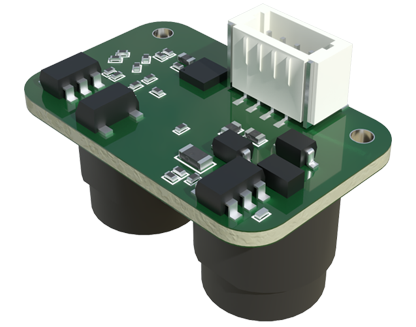
The applications for a high-performance laser displacement sensor are vast and cross-industrial. In automotive manufacturing, these sensors are indispensable for measuring critical gaps and flushness between body panels, inspecting brake disc thickness, and ensuring the precise positioning of engine components. The electronics industry relies on them for wafer warpage inspection, solder paste height measurement, and coplanarity checks on Ball Grid Array (BGA) packages. Furthermore, in metal processing, they monitor roll gap distances and sheet flatness, while in pharmaceutical packaging, they verify fill levels and cap placement without physical contact, maintaining sterility.
Selecting the right Laser Displacement Sensor 50 requires careful consideration of several factors beyond just the model number. First, define the application's primary need: is it for precise height measurement, vibration analysis, or profile scanning? The measuring range must comfortably encompass the expected target movement, including any potential overtravel. Resolution and repeatability specifications must meet or exceed the tolerance requirements of the measurement task. The target surface properties are crucial; a diffuse white surface provides ideal reflection, whereas shiny, transparent, or black surfaces can pose challenges. Many modern sensors, however, feature built-in algorithms and special modes to handle difficult surfaces effectively.
Environmental conditions cannot be overlooked. Industrial settings may involve ambient light interference, temperature fluctuations, dust, or vibrations. Sensors with robust housings (often IP67 rated), stable temperature compensation circuits, and modulated laser light to reject ambient noise are essential for reliable operation. The output interface is another key decision point. Common options include analog voltage (0-10V) or current (4-20mA) outputs for simple integration with PLCs, as well as digital interfaces like Ethernet/IP, PROFINET, or RS-422 for high-speed data transmission and networking.
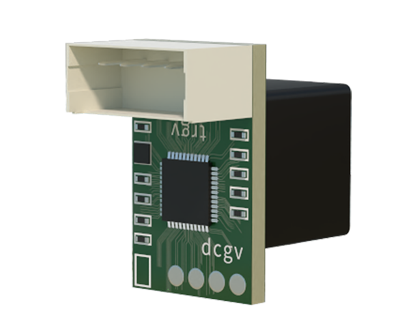
Installation and alignment are critical final steps for optimal performance. The sensor should be mounted securely to minimize external vibration. The laser beam must be perpendicular to the target surface within the sensor's specified allowable angle to prevent cosine error. For challenging surfaces, techniques like using a fixed-angle bracket or applying a matte spray can improve signal stability. Regular calibration against a known standard, such as gauge blocks, ensures long-term measurement integrity.
In summary, a Laser Displacement Sensor 50 exemplifies the advanced capabilities available for non-contact metrology. By understanding its operating principles, meticulously matching its specifications to the application's demands, and following proper installation practices, engineers and technicians can unlock new levels of quality control, process automation, and research capability. As technology advances, these sensors continue to become faster, more accurate, and more adaptable, solidifying their role as essential tools in the pursuit of precision engineering.