Laser sensors have become indispensable components across numerous industries, from manufacturing and automation to robotics and medical devices. At the heart of their reliable operation lies a critical, yet often overlooked, element: the power supply. The performance, accuracy, and longevity of a laser sensor are intrinsically tied to the quality and suitability of its power source. This guide delves into the essential considerations for selecting and applying the correct power supply for laser sensor systems, ensuring optimal functionality and system integrity.
Unlike standard electronic components, laser sensors, particularly those used for precision measurement, alignment, or detection, demand highly stable and clean electrical power. Voltage fluctuations or electrical noise (ripple) can directly translate into measurement inaccuracies, false triggers, or even damage to the laser diode itself. Therefore, the primary requirement for a laser sensor power supply is voltage regulation and low noise output. Most industrial laser sensors operate on DC voltages, with 12V DC and 24V DC being the most common standards. It is paramount to match the power supply's output voltage precisely to the sensor's specified input voltage range.
Current rating is another crucial factor. The power supply must be capable of delivering current equal to or greater than the sensor's maximum consumption, often listed as inrush or peak current. Under-sizing a power supply can lead to voltage drops during sensor activation, causing erratic behavior. A good practice is to select a power supply with a continuous current rating at least 20-30% higher than the total load of all connected sensors, allowing a safety margin and accommodating future expansions.
In industrial environments, electrical noise from motors, solenoids, and other equipment is pervasive. A switched-mode power supply (SMPS), while efficient and compact, can sometimes introduce high-frequency noise back into the AC line or into its own DC output. For sensitive laser sensors, especially those with analog outputs or high-resolution digital interfaces, a linear power supply or a high-quality SMPS with excellent filtering and low output ripple is recommended. Additionally, ensuring proper grounding and using shielded cables for both power and signal lines are vital steps to mitigate electromagnetic interference (EMI).
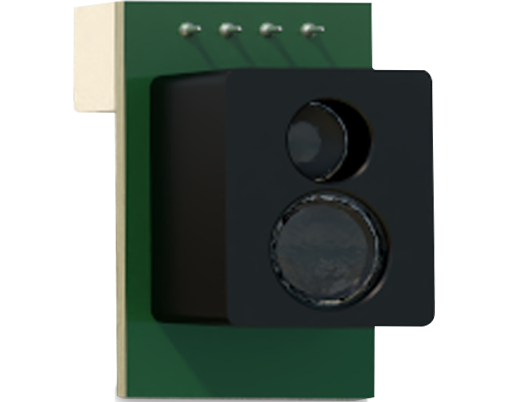
Protection features within the power supply safeguard both the supply unit and the connected laser sensors. Look for units with over-voltage protection (OVP), over-current protection (OCP), and short-circuit protection. These features prevent damage from wiring errors or fault conditions. For applications where sensor data is critical, consider a redundant or uninterruptible power supply (UPS) system to maintain operation during brief mains power failures.
The physical installation environment also dictates power supply selection. For harsh environments with dust, moisture, or wide temperature variations, choose a power supply with an appropriate Ingress Protection (IP) rating and a wide operating temperature specification. DIN-rail mountable power supplies are the standard for industrial control panels, offering neat installation and easy maintenance.
Beyond the basic DC power supply, some laser sensor systems may require specialized configurations. For instance, sensors with programmable logic controllers (PLCs) or those integrated into complex networks might need a power supply that is part of a managed system, allowing for remote monitoring of voltage and current. Furthermore, the trend towards Industry 4.0 and the Industrial Internet of Things (IIoT) is driving the adoption of smart power supplies that can communicate diagnostic data, enhancing predictive maintenance strategies.

In conclusion, selecting the right power supply for laser sensors is not a mere afterthought but a fundamental design decision. By prioritizing voltage stability, adequate current capacity, noise immunity, and robust protection, engineers and system integrators can ensure that their laser sensing applications perform with the precision and reliability required. Always consult the sensor manufacturer's datasheet for specific power requirements and consider the total system environment to make an informed choice that guarantees long-term, trouble-free operation.