In the world of industrial automation and machinery, the ability to detect the presence or absence of an object without physical contact is crucial. This is where inductive proximity sensors come into play. These robust and reliable devices are a cornerstone of modern manufacturing, logistics, and countless other sectors. But what exactly are they, and how do they function?
At its core, an inductive proximity sensor is a non-contact electronic device designed to detect metallic objects. The fundamental principle behind its operation is electromagnetic induction. The sensor generates an oscillating electromagnetic field from its active face, which is typically a coil wound around a ferrite core. When a metallic object enters this field, eddy currents are induced on the surface of the target. These eddy currents create their own magnetic field, which opposes the original field generated by the sensor. This opposition results in a measurable change in the oscillation amplitude or frequency within the sensor's circuit. The sensor's internal electronics detect this change and trigger a switching action, sending an output signal.
A key characteristic of these sensors is that they only react to conductive materials, primarily metals. The sensing distance, however, is not uniform for all metals. It is standardized based on mild steel, which has a reference factor of 1.0. For metals with higher conductivity, like copper or aluminum, the effective sensing range is reduced. This reduction factor must be considered during installation and setup. The typical sensing range varies from a few millimeters up to about 60 millimeters for larger, shielded models.
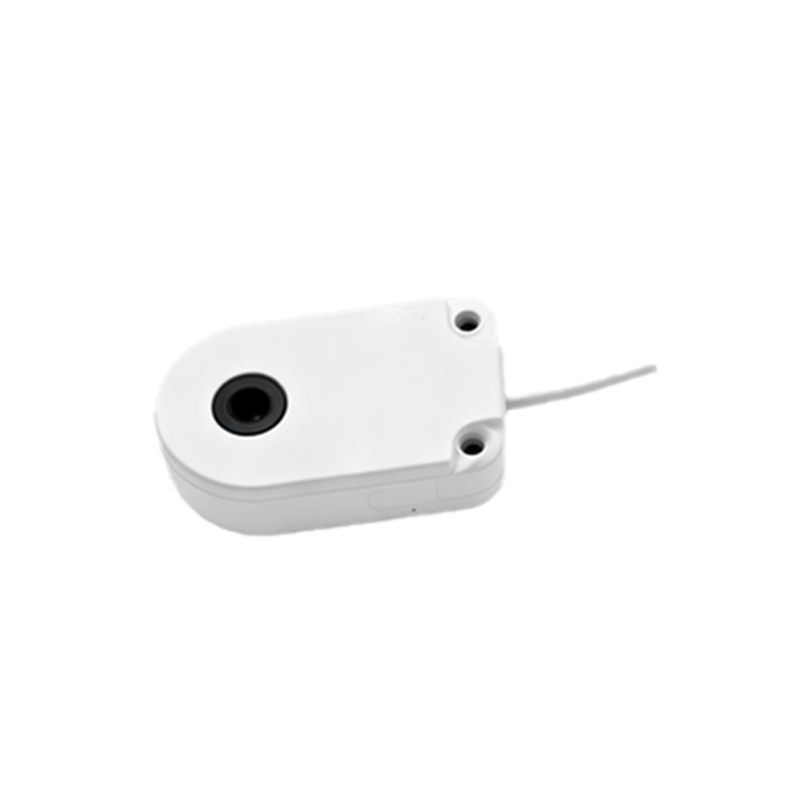
Inductive sensors are prized for their durability and resilience. Since there is no physical contact with the target, there is no mechanical wear on the sensor itself. They are often housed in robust metal or high-grade plastic casings, making them resistant to dust, dirt, oils, and coolants. Many are available with high IP (Ingress Protection) ratings, such as IP67 or IP69K, allowing them to perform reliably in harsh wash-down environments common in food and beverage or pharmaceutical industries.
The output from an inductive proximity sensor is typically a discrete on/off signal. The two main output types are NPN (sinking) and PNP (sourcing), which describe the transistor configuration used to switch the load. The choice between NPN and PNP depends on the control system's requirements, such as a PLC's input card type. Furthermore, sensors can be 2-wire, 3-wire, or even 4-wire (with analog or IO-Link capabilities). Two-wire sensors are simpler to install but may have a small residual current when off. Three-wire sensors are the most common, offering clear wiring for power, ground, and signal.
Applications for inductive proximity sensors are virtually endless in automation. They are used for simple object detection on conveyor lines, such as counting bottles or detecting a metal part. They serve as precise position sensors to verify if a cylinder is fully extended or retracted. In machine tools, they ensure a workpiece is correctly clamped before a machining operation begins. They are also used for end-of-travel detection, speed monitoring on rotating shafts using a gear tooth as a target, and in safety systems as part of interlock switches.
When selecting an inductive proximity sensor, several factors must be evaluated. First, determine the required sensing distance and the material of the target object. Next, consider the physical size and shape of the sensor—common forms include cylindrical barrels (e.g., M8, M12, M18, M30 threaded barrels) and rectangular block styles. The housing material should be compatible with the environment (e.g., stainless steel for corrosive settings). The electrical specifications, including operating voltage (commonly 10-30V DC) and output type (NPN/PNP), must match the control system. Finally, for demanding applications, special features like weld-field immunity (for use near welding equipment) or extended temperature ranges may be necessary.
In summary, inductive proximity sensors offer a perfect blend of simplicity, reliability, and toughness for metallic object detection. Their non-contact nature ensures long service life, while their solid-state design provides fast, bounce-free switching signals. By understanding their working principle, key specifications, and application needs, engineers and technicians can effectively integrate these indispensable sensors to enhance the efficiency, safety, and intelligence of any automated system.