In industrial automation and machinery control, position sensor proximity switches play a critical role in detecting the presence or absence of an object without physical contact. These devices are fundamental components for ensuring safety, precision, and efficiency in countless applications. Unlike mechanical limit switches that require direct touch to actuate, proximity switches operate on the principle of sensing changes in an electromagnetic field or other physical phenomena when a target object enters their detection range. This non-contact operation eliminates mechanical wear and tear, leading to higher reliability and longer service life.
The core working principle of most industrial proximity switches is based on electromagnetic induction, primarily for detecting metallic objects. An oscillator circuit within the sensor generates a high-frequency electromagnetic field that radiates from the sensing face. When a conductive metal target enters this field, eddy currents are induced on the surface of the target. These eddy currents draw energy from the oscillator, causing a reduction in its amplitude. A subsequent circuit monitors this amplitude change and triggers a solid-state output switch when the change reaches a predetermined threshold. This output can be in the form of a digital signal (ON/OFF), commonly using PNP or NPN transistor configurations, which interfaces seamlessly with programmable logic controllers (PLCs) and other control systems.
Several key types of proximity switches dominate the market, each suited for specific materials and environments. Inductive proximity sensors, as described, are exclusively for detecting metals. Their sensing range varies but is typically short, from a few millimeters up to about 60 millimeters for larger models. The sensing distance can be influenced by the type of metal; for instance, steel is detected at the nominal range, while non-ferrous metals like aluminum or copper may reduce the effective sensing distance. Capacitive proximity sensors, on the other hand, can detect both metallic and non-metallic materials, including liquids, powders, and plastics. They work by sensing changes in capacitance between the sensor's electrode and the ground when a material with a different dielectric constant enters the sensing field. This makes them ideal for applications like level detection in tanks or presence detection of glass or wood.
Ultrasonic proximity sensors use sound waves beyond human hearing. They emit ultrasonic pulses and measure the time it takes for the echo to return from a target. These are effective for detecting objects of virtually any material, over longer distances, and are less affected by color or transparency. However, they can be influenced by temperature variations and sound-absorbing materials. Finally, photoelectric sensors use a beam of light (visible, infrared, or laser) and detect its interruption or reflection. While often categorized separately, they function as non-contact proximity switches for long-range detection and are excellent for small or fast-moving objects.
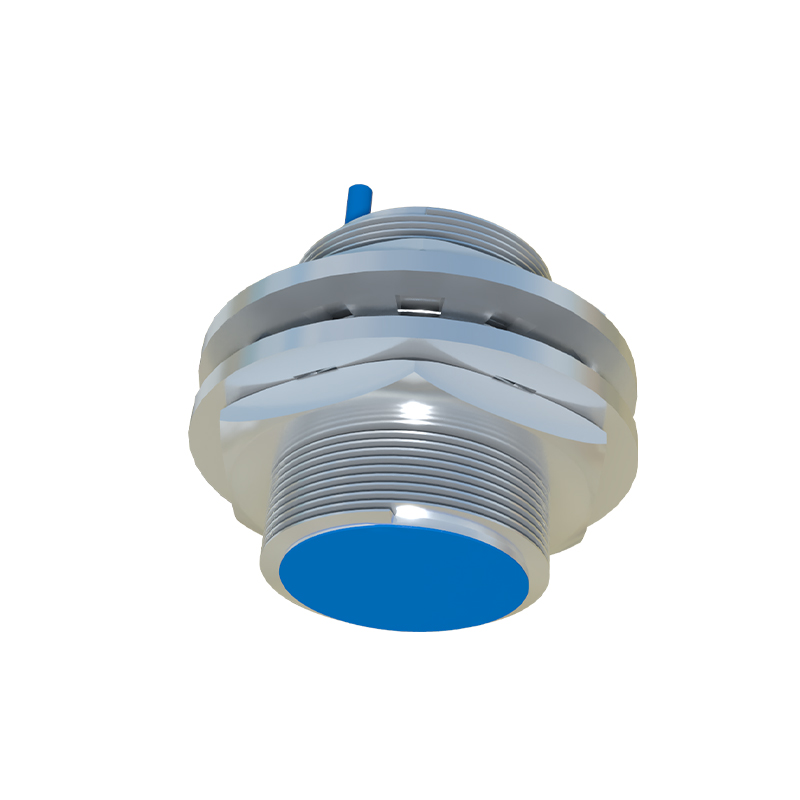
The selection of the right proximity switch depends on numerous application factors. The material of the target object is paramount: inductive for metals, capacitive for a wider range, and ultrasonic or photoelectric for specialized needs. The required sensing distance, switching frequency (how fast it can detect objects passing by), environmental conditions (presence of dust, moisture, oils, or extreme temperatures), and the required output type are all critical considerations. Housing material is also important, with stainless steel or nickel-plated brass being common for harsh industrial environments, while plastic housings are used in less demanding settings.
Applications for position sensor proximity switches are vast. In manufacturing, they are used for part counting, jam detection on conveyor belts, end-of-travel detection for robotic arms, and verifying the presence of components in an assembly fixture. In automated packaging lines, they ensure products are correctly positioned for sealing or boxing. They provide vital safety functions as part of machine guarding systems, detecting if a protective door is closed before allowing machinery to operate. In the automotive industry, they are ubiquitous for position feedback in actuators and for verifying the placement of parts during assembly.
Installation and maintenance are relatively straightforward but require attention to detail. Proper mounting, ensuring adequate clearance from surrounding metal (to prevent false triggering), and correct wiring according to the datasheet are essential for reliable operation. Most modern proximity switches feature LED indicators that show power status and output activation, aiding in setup and troubleshooting. Their solid-state design means they are largely maintenance-free, though the sensing face should be kept clean from buildup that could attenuate the sensing field.
In conclusion, the position sensor proximity switch is a versatile, robust, and indispensable tool in modern industrial control. By providing reliable, non-contact detection, it enhances system automation, improves safety, and increases operational efficiency. Understanding the different technologies, their principles, and application requirements is key to selecting and implementing the right sensor for any given task, ensuring optimal performance and longevity in demanding industrial environments.