In modern printing and packaging industries, film laminating machines play a crucial role in enhancing product durability, aesthetics, and functionality. A key component that ensures precision and efficiency in these machines is the laser sensor. This technology has revolutionized laminating processes by providing accurate, non-contact measurement and control capabilities.
Laser sensors in film laminating machines primarily function to detect material presence, thickness, alignment, and edge position. Unlike traditional mechanical or optical sensors, laser-based systems utilize focused light beams to capture real-time data with micron-level accuracy. The working principle involves emitting a laser beam towards the target surface—such as paper, film, or composite materials—and analyzing the reflected signal. Variations in reflection time, intensity, or beam deflection are processed to determine parameters like distance, thickness, or misalignment. This allows for immediate adjustments in film feeding, tension control, and cutting mechanisms.
One of the standout advantages of laser sensors is their ability to operate in challenging environments. Dust, humidity, and temperature fluctuations common in industrial settings have minimal impact on laser performance. Additionally, their non-contact nature eliminates wear and tear, reducing maintenance needs and downtime. For instance, in high-speed laminating lines, laser sensors ensure consistent film application without physical interference, preventing material damage or production halts.

Applications of laser sensors extend across various laminating machine types, including cold laminators, hot laminators, and digital finishing systems. In cold laminating, sensors monitor film roll diameter and web alignment to avoid wrinkles or bubbles. For hot laminating processes, they regulate temperature zones by measuring film thickness variations that could affect heat transfer. In digital packaging, laser sensors assist in precise sheet registration, crucial for achieving flawless graphic alignment on laminated products.
Integration with automation systems further enhances the value of laser sensors. Modern laminating machines often incorporate programmable logic controllers (PLCs) or industrial PCs that receive sensor data to optimize workflows. For example, if a laser sensor detects an irregularity in film thickness, it can trigger automatic recalibration of roller pressure or speed. This closed-loop control minimizes waste and improves output quality. Moreover, data from laser sensors can be logged for analytics, enabling predictive maintenance and process optimization over time.
Despite their benefits, selecting the right laser sensor requires consideration of factors like wavelength, beam type, and environmental ratings. Common choices include diffuse-reflective sensors for general detection and through-beam sensors for high-precision tasks. Installation positioning and calibration are also critical to avoid interference from ambient light or reflective surfaces. Regular cleaning of sensor lenses and periodic verification of accuracy ensure long-term reliability.
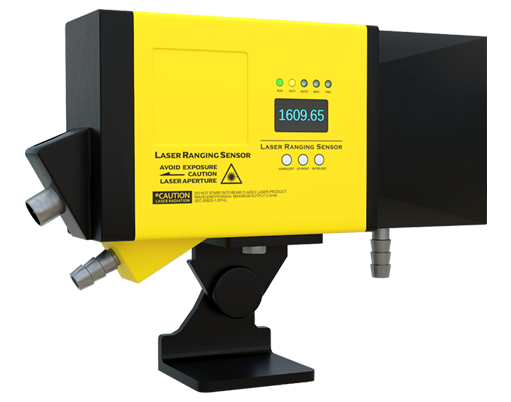
Looking ahead, advancements in laser sensor technology continue to emerge. Innovations such as blue laser sensors offer improved resolution for thinner materials, while smart sensors with embedded IoT capabilities enable remote monitoring and diagnostics. As sustainability gains emphasis in packaging, laser sensors contribute by reducing material waste through precise control—aligning with eco-friendly production goals.
In summary, laser sensors are indispensable in modern film laminating machinery, driving efficiency, quality, and adaptability. Their ability to deliver accurate, real-time feedback transforms laminating processes into streamlined, intelligent operations. For businesses seeking competitive edges in printing and packaging, investing in laser-equipped laminating systems proves to be a strategic move toward future-ready manufacturing.
