In the realm of industrial automation and smart technology, sensors act as the essential sensory organs, providing critical data for systems to interact with their environment. Among the most prevalent and versatile types are proximity sensors and photoelectric sensors. While their names are often mentioned together, they operate on distinct principles and are suited for different applications. Understanding their differences, strengths, and optimal use cases is key to selecting the right component for any project.
Proximity sensors are devices that detect the presence or absence of an object within a specific range without any physical contact. They are primarily categorized based on their detection technology. The most common types include inductive, capacitive, and magnetic proximity sensors. Inductive proximity sensors are the workhorses of metal detection. They generate an electromagnetic field and detect changes caused by metallic objects entering this field. They are incredibly robust, resistant to environmental factors like dust and oil, and are ideal for counting metal parts, determining position in machinery, or as safety interlocks. Capacitive proximity sensors, on the other hand, can detect both metallic and non-metallic materials—liquids, plastics, wood, and even granular substances. They work by sensing changes in capacitance when an object enters their electrostatic field. This makes them perfect for level detection in tanks, material handling, and detecting non-metallic objects on a conveyor belt.
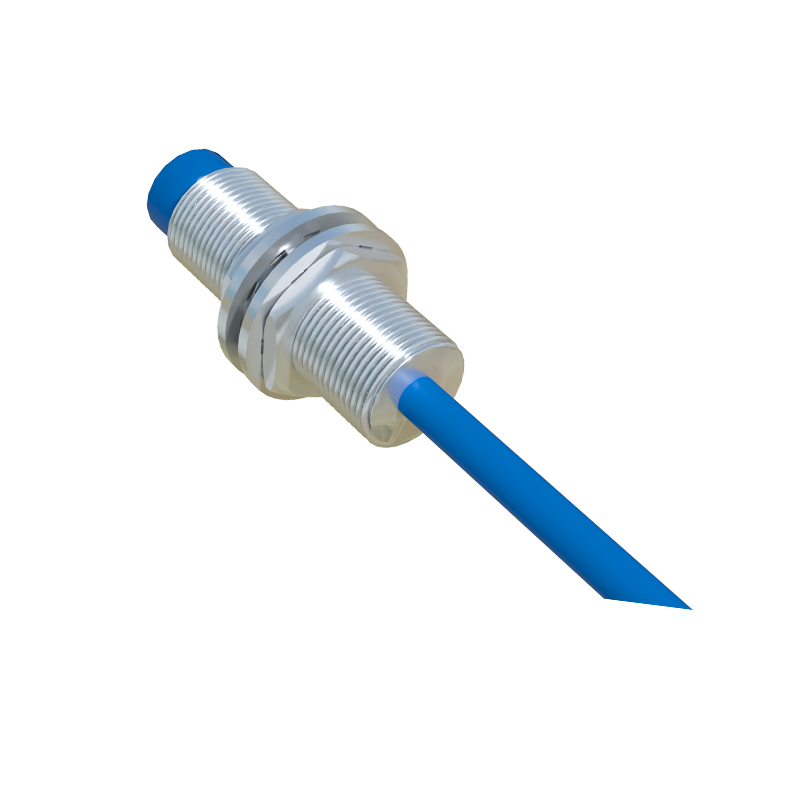
Photoelectric sensors, a subset of proximity sensors, function on an entirely different principle: light. They consist of a light emitter (usually an LED) and a receiver. They detect objects by interpreting changes in the received light signal. This category is further divided into three main operating modes, each with unique advantages. Through-beam sensors, also known as opposed-mode sensors, have separate emitter and receiver units placed opposite each other. An object is detected when it breaks the light beam. This mode offers the longest sensing ranges and high reliability, excellent for precise object counting or detecting small objects over large distances. Retro-reflective sensors house both emitter and receiver in the same unit, using a reflector to bounce the light beam back. Detection occurs when an object interrupts the beam to the reflector. They provide a good balance of range and ease of installation, commonly used in packaging and door control systems. Diffuse reflective sensors, or proximity-mode sensors, also have a single housing. They detect an object when the emitted light reflects off the object's surface back to the receiver. The sensing distance depends on the object's color, reflectivity, and surface texture. They are compact and ideal for short-range detection, such as in material handling or robotic pick-and-place operations.
The choice between a standard proximity sensor (inductive/capacitive) and a photoelectric sensor hinges on several factors. Detection Target is paramount. For metallic objects only, especially in harsh industrial environments, an inductive sensor is often the simplest and most durable choice. For a wider variety of materials, including glass, liquid, or plastic, either capacitive or photoelectric sensors are necessary. Sensing Distance is another critical factor. Photoelectric sensors, particularly through-beam types, generally offer much longer ranges—from a few centimeters up to several hundred meters. Inductive and capacitive sensors typically have shorter ranges, from a few millimeters to about 60 millimeters. Environmental Conditions heavily influence the decision. Inductive sensors are champions in dirty, dusty, or oily conditions where photoelectric lenses might become obscured. Photoelectric sensors can be affected by ambient light, steam, or highly reflective backgrounds, though many modern models feature modulated LED light to combat interference. Finally, Speed and Precision matter. Photoelectric sensors can detect objects at very high speeds and are capable of sensing extremely small objects, down to fractions of a millimeter. Proximity sensors are generally very fast but may have limitations with very small or fast-moving non-metallic items.
In practice, these sensors are ubiquitous. An inductive proximity sensor might be used to confirm the position of a metal piston in a hydraulic cylinder. A capacitive sensor could monitor the fluid level inside a plastic chemical tank. A through-beam photoelectric sensor might count boxes on a high-speed conveyor, while a diffuse sensor could ensure a bottle is present before a filling nozzle activates. The evolution of these technologies continues, with trends leaning towards miniaturization, increased intelligence with IO-Link communication for diagnostics and parameter setting, and enhanced resistance to environmental challenges.
In conclusion, both proximity sensors and photoelectric sensors are indispensable in modern automation. There is no universally "better" option; only the most appropriate one for a given set of conditions. By carefully evaluating the material of the target object, the required sensing distance, the operating environment, and the needed precision, engineers and technicians can reliably select the sensor that ensures optimal performance, efficiency, and reliability for their specific application.