In the realm of industrial automation and precision measurement, OGD laser sensors have emerged as a cornerstone technology. These sensors utilize laser light to perform non-contact, high-speed, and highly accurate detection of objects, providing critical data for process control, quality assurance, and machine guidance. The fundamental principle behind an OGD laser sensor involves emitting a focused beam of coherent light towards a target. The sensor then analyzes the properties of the reflected or scattered light, such as its intensity, position, or time-of-flight, to determine specific characteristics like distance, presence, height, or profile of the object.
The core advantage of OGD laser sensors lies in their non-contact nature. Unlike mechanical probes or tactile switches, they do not physically touch the measured object. This eliminates issues of wear and tear on the sensor itself and prevents potential damage to delicate or sensitive surfaces. This feature is invaluable in industries like electronics manufacturing, where components are often fragile, or in food and pharmaceutical packaging, where hygiene and contamination avoidance are paramount. Furthermore, the absence of physical contact allows for measurement at extremely high speeds, enabling real-time inspection on fast-moving production lines that would be impossible with contact methods.

Another significant benefit is their exceptional precision and resolution. Modern OGD laser sensors can achieve micrometer-level accuracy, making them suitable for demanding applications such as verifying component dimensions, checking coplanarity of semiconductor leads, or monitoring the thickness of applied coatings. This level of detail supports stringent quality control protocols, helping manufacturers reduce waste and ensure every product meets specification. The laser spot can be precisely focused, allowing for measurement of very small features or objects.
OGD laser sensors are highly versatile and come in various types tailored for different tasks. Common variants include through-beam sensors, where an emitter and receiver are separate units detecting interruption of the beam; diffuse reflective sensors, which house both emitter and receiver in one unit and detect light reflected directly from the target; and background suppression sensors, which use triangulation to measure distance by calculating the angle of the reflected beam, effectively ignoring the object's color or reflectivity to a large degree. More advanced models employ time-of-flight (ToF) or phase-shift principles for long-range distance measurement.
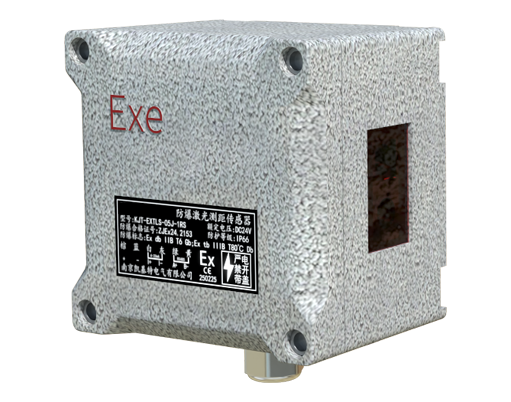
The applications of OGD laser sensors span virtually every manufacturing sector. In the automotive industry, they are used for robot guidance, weld seam tracking, and part presence verification on assembly lines. In logistics and material handling, they detect package sizes on conveyor belts for sorting and control the fill levels in silos. In the printing and paper industry, they monitor web tension, detect edge positions, and control roll diameters. Their robustness allows them to perform reliably in harsh environments with dust, vibration, or varying temperatures, often housed in ruggedized enclosures with high Ingress Protection (IP) ratings.
Integration into modern industrial networks is seamless. Most OGD laser sensors offer digital outputs (like PNP/NPN) or analog outputs (4-20 mA, 0-10 V) for simple connectivity. Increasingly, they feature IO-Link communication, a point-to-point serial protocol that enables detailed parameter setting, real-time diagnostic data transmission, and easier device replacement without manual recalibration. This connectivity is a key component of Industry 4.0 and smart factory initiatives, where sensor data feeds into larger control systems for predictive maintenance and optimized production flow.

When selecting an OGD laser sensor for a specific application, several factors must be considered. The required sensing range, the size and reflectivity of the target, the desired response speed, and the environmental conditions are primary decision drivers. The sensor's housing material, beam type (visible red or invisible infrared), and output configuration must align with the mechanical and electrical setup of the machinery. Proper installation and alignment are also crucial for optimal performance, as misalignment can lead to false readings or missed detections.
In summary, OGD laser sensors represent a critical enabling technology for modern automation. Their ability to deliver precise, reliable, and non-contact measurement drives efficiency, quality, and flexibility in manufacturing and beyond. As technology advances, these sensors continue to become faster, more intelligent, and more integrated, solidifying their role as essential eyes for industrial systems.