Proximity sensors designed for human detection are critical components in modern automation, security, and interactive systems. These sensors detect the presence or approach of a person without physical contact, enabling a wide range of applications from automatic doors and lighting control to advanced robotics and touchless interfaces. Selecting the correct sensor model is paramount for achieving reliable performance, energy efficiency, and user safety. This guide explores the primary types, key specifications, and selection criteria for human proximity sensors.
The most common technologies used in human proximity sensing include capacitive, infrared (IR), ultrasonic, and microwave (radar) sensors. Each operates on a distinct physical principle and is suited to different environments and detection needs.
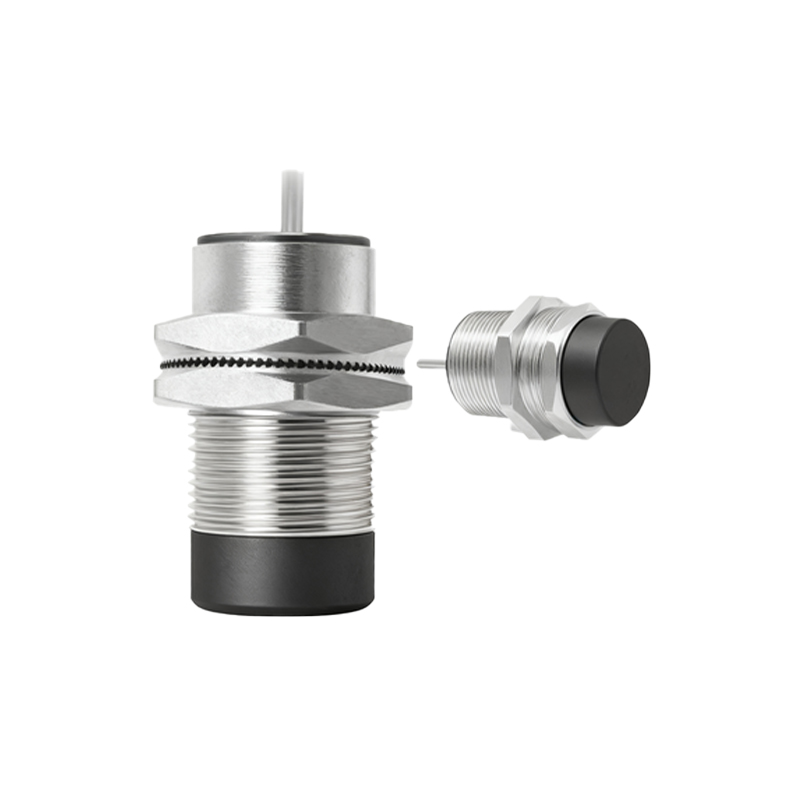
Capacitive proximity sensors detect changes in an electrostatic field. When a human body, which is conductive and has a dielectric constant, enters the sensing field, it alters the capacitance, triggering the sensor. These models are excellent for detecting humans through non-metallic materials like wood or plastic, making them ideal for applications like touchless faucets, elevator call buttons, or embedded in furniture. However, their sensing range is typically short (a few centimeters to tens of centimeters) and they can be sensitive to environmental factors like humidity.
Infrared (IR) sensors, particularly Passive Infrared (PIR) sensors, are ubiquitous in motion-activated lighting and security systems. PIR sensors detect changes in infrared radiation emitted by warm bodies. They do not emit energy but sense the heat signature of a moving person. Their range can vary from a few meters to over ten meters. Active IR sensors, which emit an infrared beam and detect its reflection, can also be used for presence detection but are less common for simple human detection due to higher complexity.
Ultrasonic sensors emit high-frequency sound waves and measure the time for the echo to return. The presence of a person alters the echo pattern or time-of-flight. These models are effective in harsh environments where dust, smoke, or varying light conditions might interfere with optical sensors. They offer a medium sensing range (from centimeters to several meters) and can detect stationary objects, which is an advantage over basic PIR sensors. They are often used in automatic hand dryers or toilet flushers.
Microwave (Radar) sensors emit continuous or pulsed radio waves and detect frequency shifts or reflections caused by moving objects. Doppler radar sensors are highly sensitive to motion and can detect even subtle movements like breathing, making them suitable for advanced presence detection in smart buildings or healthcare monitoring. They can penetrate non-metallic materials, offering installation flexibility, but are generally more expensive and can be prone to interference from other electronic devices.
When choosing a sensor model, several technical specifications must be evaluated. The sensing range is the maximum distance at which reliable detection occurs. For a hallway light, a 5-10 meter range might be needed, while for a touchless switch, 5-15 cm suffices. The detection field or pattern (e.g., conical, hemispherical, curtain-shaped) must match the application area. Output type is crucial for integration; common outputs include digital (NPN/PNP transistor), analog (0-10V, 4-20mA), or IO-Link for smart sensors. Response time determines how quickly the sensor reacts to a presence, critical for safety applications. Environmental ratings like IP (Ingress Protection) for dust/water resistance and operating temperature range ensure reliability in the intended location, whether indoors or outdoors.
Furthermore, immunity to interference is vital. Sensors installed in industrial settings must resist electromagnetic interference (EMI), while those in homes should not be falsely triggered by pets or heating vents. Modern sensor models increasingly incorporate advanced features like adjustable sensitivity, time-delay functions, and background suppression to ignore static objects.
In conclusion, there is no single "best" model for all human detection scenarios. A capacitive sensor is perfect for a discreet, short-range touchless control panel. A PIR sensor offers a cost-effective solution for occupancy-based lighting in an office. An ultrasonic sensor provides reliable performance for a public restroom fixture, and a microwave radar sensor enables sophisticated presence analytics in a smart room. Understanding the core technologies and carefully matching the sensor's specifications to the application's requirements—considering range, environment, required output, and potential sources of interference—is the key to a successful and durable implementation. Always consult the specific model's datasheet and consider real-world testing during the selection process.