Proximity sensors are fundamental components in modern automation, robotics, and countless electronic devices. Their primary function is to detect the presence or absence of an object within a specified range without any physical contact. This non-contact detection capability is the cornerstone of their reliability and widespread use. The monitoring principle varies significantly depending on the underlying technology, each suited to specific applications and environmental conditions.
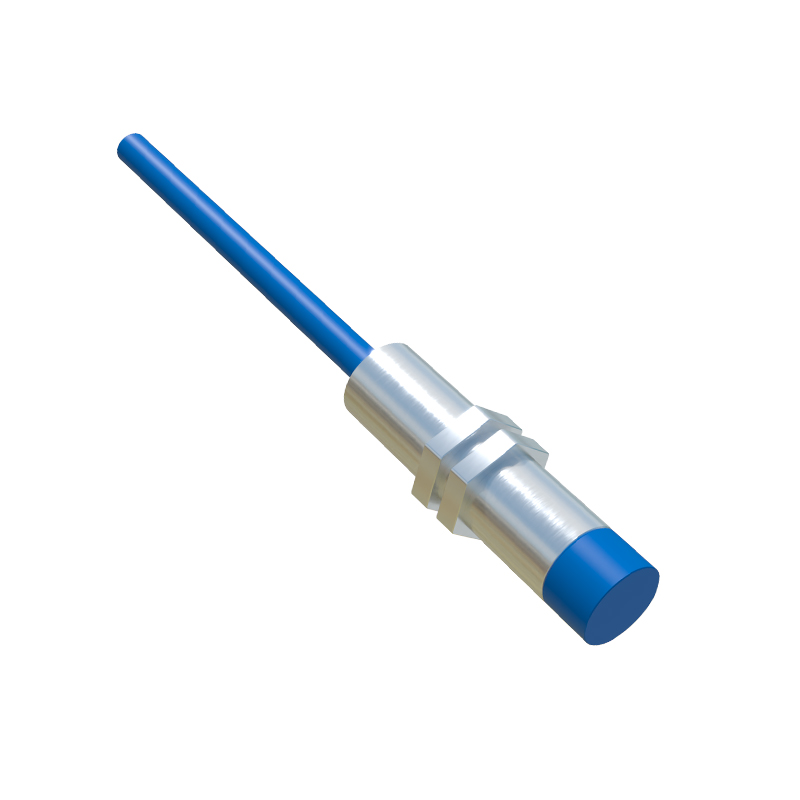
One of the most common types is the inductive proximity sensor. Its operating principle is based on electromagnetic induction. The sensor contains a coil that generates a high-frequency oscillating electromagnetic field. When a metallic object enters this field, eddy currents are induced on the object's surface. These currents draw energy from the sensor's oscillator, causing a reduction in the oscillation amplitude. An internal circuit monitors this amplitude change and triggers a switching action, signaling the object's presence. Inductive sensors are exceptionally reliable for detecting metals and are widely used in industrial settings for tasks like counting metal parts, determining position limits, and ensuring machine safety.
In contrast, capacitive proximity sensors can detect both metallic and non-metallic objects, including liquids, powders, plastics, and wood. They operate by generating an electrostatic field. The sensor acts as one plate of a capacitor, with the target object acting as the other plate. As an object approaches the sensor, it alters the capacitance of this system. The sensor's circuitry is tuned to a specific threshold; when the capacitance change exceeds this threshold, the sensor activates. This makes capacitive sensors ideal for applications like liquid level detection, material handling, and presence detection of non-metallic materials.
Another prevalent technology is the photoelectric sensor, which uses light to detect objects. It consists of a light emitter (usually an LED) and a receiver. There are three main configurations: through-beam, retro-reflective, and diffuse reflective. In the through-beam setup, the emitter and receiver are separate units. An object is detected when it breaks the light beam between them. Retro-reflective sensors have both units in one housing, bouncing light off a reflector; detection occurs when the beam is interrupted. Diffuse sensors detect light reflected directly from the target object itself. Photoelectric sensors offer long detection ranges and can sense virtually any material, making them versatile for packaging, conveyor systems, and object counting.
Ultrasonic proximity sensors employ sound waves beyond the human hearing range. They contain a transducer that emits high-frequency ultrasonic pulses and then listens for the echo. By calculating the time difference between the pulse emission and the echo reception, the sensor can determine the distance to an object. This time-of-flight principle allows for precise distance measurement, not just presence detection. Ultrasonic sensors are effective in challenging environments with dust, smoke, or moisture, where optical sensors might fail, and are used in level monitoring, collision avoidance, and parking assistance systems.
Magnetic proximity sensors, often called reed switches or Hall-effect sensors, detect the presence of a magnetic field. Reed switches contain two ferromagnetic reeds sealed in a glass tube. When a magnet approaches, the reeds attract and close the electrical circuit. Hall-effect sensors produce a voltage difference (the Hall voltage) when exposed to a magnetic field, which is processed by an integrated circuit. These sensors are highly reliable for detecting the position of moving parts, such as in cylinder position sensing or door/window security contacts.
The choice of sensor technology hinges on several factors: the nature of the target material (metallic, non-metallic, liquid), the required sensing distance, environmental conditions (dust, humidity, temperature), response speed, and cost. For instance, an inductive sensor is perfect for a high-speed metal part counter on a dirty factory floor, while a capacitive sensor is necessary for monitoring plastic granulate levels in a hopper.
In practice, the monitoring signal from these sensors is typically a discrete on/off (digital) output, though analog outputs proportional to distance are also common, especially with ultrasonic and some inductive/capacitive models. This output is fed into a controller like a PLC (Programmable Logic Controller), which processes the information to make decisions within a larger automated system.
Understanding these core principles is essential for selecting the right sensor. It ensures robust system design, minimizes false triggers, and enhances operational efficiency. From smartphones that turn off their screens when held to the ear, to complex assembly lines and autonomous vehicles, the silent, reliable operation of proximity sensors is a testament to the elegant application of fundamental physical phenomena in engineering.