In the world of industrial automation and machinery, the ability to detect the presence or absence of an object without physical contact is fundamental. Among the various technologies enabling this, the cylindrical proximity sensor stands out for its reliability, robustness, and widespread use. This article delves into the workings, types, key specifications, and practical applications of these essential components, providing a comprehensive guide for engineers and technicians.
A cylindrical proximity sensor is a non-contact sensing device housed in a typically metallic, cylindrical body. Its primary function is to detect the presence of a target object within its sensing range, triggering an electrical signal output. The core principle involves generating an electromagnetic field or beam from the sensor's face. When a target object enters this field, it causes a detectable change—such as a shift in oscillation amplitude, capacitance, or magnetic field strength—which the sensor's internal circuitry converts into a switched output signal.
Several sensing technologies are employed within the cylindrical form factor, each suited to different target materials and environments. The most common type is the inductive proximity sensor. These sensors generate an oscillating electromagnetic field and are designed to detect metallic objects, primarily ferrous metals like steel and iron. When a metal target enters the field, it induces eddy currents, damping the oscillation and triggering the output switch. They are immune to non-metallic substances like dust, oil, or water, making them ideal for harsh industrial settings.
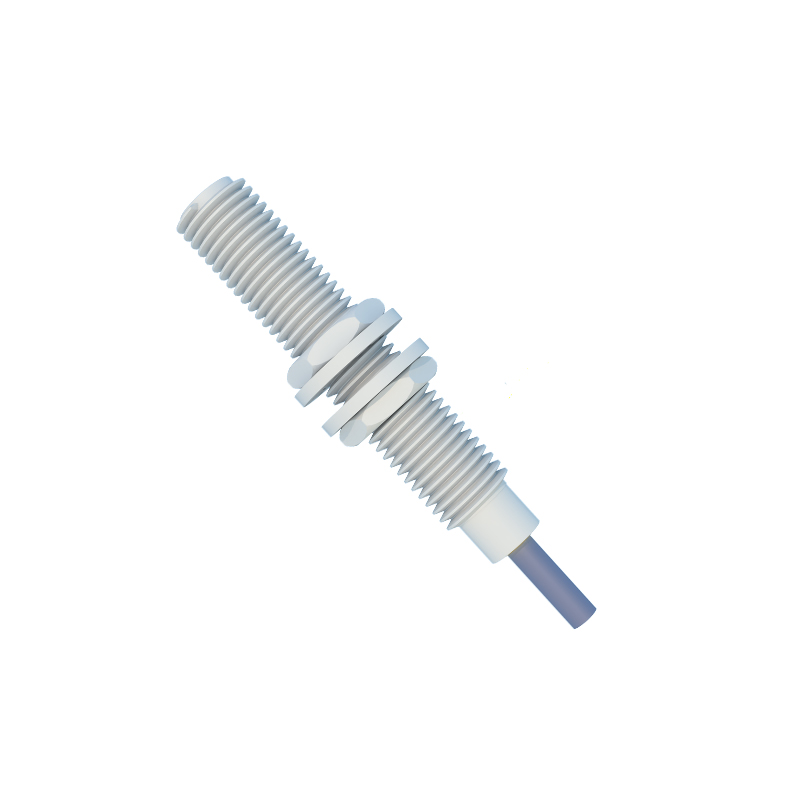
For detecting non-metallic objects, capacitive proximity sensors are the go-to choice. They function by generating an electrostatic field and can sense materials such as plastics, glass, liquids, wood, and granular substances. The presence of any object with a dielectric constant different from air alters the capacitance of the sensor's circuit, prompting a state change. These sensors are often used in level detection, material handling, and packaging applications.
While less common in a purely cylindrical housing, photoelectric sensors with cylindrical bodies are also prevalent. They operate by emitting a beam of light (visible, infrared, or laser) and detecting its reflection or interruption. These are excellent for long-range detection and can sense virtually any material, but their performance can be affected by environmental factors like dust, fog, or ambient light.
Key specifications define the performance and suitability of a cylindrical proximity sensor. The sensing range, typically a few millimeters to several tens of millimeters, indicates the maximum distance at which the sensor can reliably detect a standard target. The housing material, usually nickel-plated brass or stainless steel, determines its resistance to corrosion and physical impact. The electrical output is another critical factor, with common types being NPN (sinking) or PNP (sourcing) transistor outputs for DC sensors, and two-wire AC/DC variants. The output configuration can be normally open (NO) or normally closed (NC). Environmental ratings, particularly the Ingress Protection (IP) code (e.g., IP67), specify the sensor's resilience against dust and water ingress, which is crucial for washdown areas or outdoor use.
The applications for cylindrical proximity sensors are vast and span nearly every industry. In manufacturing and assembly lines, they are used for part presence verification, counting, and end-of-travel detection on cylinders. In automotive plants, they monitor robotic arm positions and detect components on conveyor belts. Within packaging machinery, they ensure correct bottle cap placement or carton flap position. Their robust design makes them perfect for machine tools, where they serve as limit switches to prevent over-travel of slides and tables. In material handling, they control the filling levels in silos or detect the position of pallets on conveyors.
Selecting the right cylindrical proximity sensor requires careful consideration of several parameters. First, identify the target material—metal or non-metal—to choose between inductive and capacitive types. Next, determine the required sensing distance, ensuring you account for any installation tolerances. The operating environment is paramount; consider factors like temperature extremes, potential chemical exposure, and the need for washdown capabilities to select the appropriate housing material and IP rating. Finally, match the sensor's electrical characteristics—supply voltage, output type (NPN/PNP), and current rating—with the control system's input module (e.g., a PLC).
Proper installation is key to reliable operation. Ensure the sensor is mounted securely to avoid vibration-induced errors. For inductive sensors, be mindful of the "flush-mountable" or "non-flush-mountable" designation. Flush-mounted sensors can be installed embedded in metal without affecting their sensing range, whereas non-flush types require a clearance zone around the sensing face. Always maintain a sufficient distance between multiple sensors to prevent mutual interference. Regular maintenance, though minimal, involves keeping the sensing face clean from debris, metal chips, or buildup that could diminish performance.
In conclusion, the cylindrical proximity sensor is a versatile and indispensable workhorse in modern automation. Its simple, rugged design bel