In the bustling landscape of modern automation and smart devices, a silent, unseen workforce operates tirelessly. These are proximity sensors, the fundamental components that enable machines to "sense" the presence or absence of nearby objects without any physical contact. Their operation is a marvel of applied physics, translating intangible phenomena into actionable digital signals that form the backbone of countless systems we interact with daily.
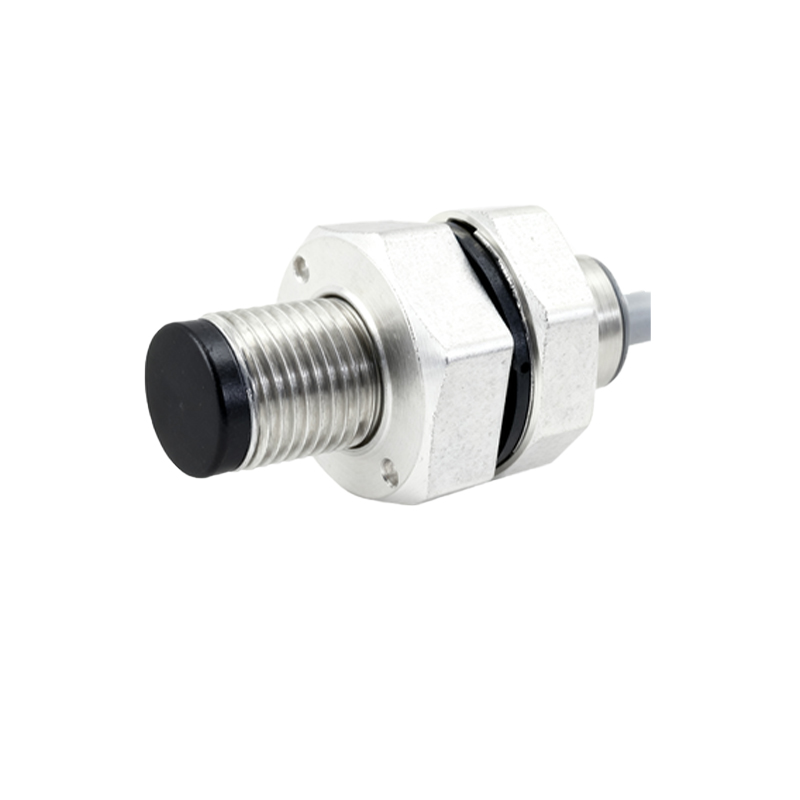
At their core, proximity sensors function by emitting a field or beam of electromagnetic radiation, such as infrared light, laser, or ultrasonic sound waves, and then looking for changes in the field or the return signal. The specific technology dictates their capabilities and typical applications. Inductive sensors, for instance, generate an oscillating electromagnetic field and detect the eddy current losses caused when a metallic object enters this field. This makes them exceptionally reliable in harsh industrial environments for tasks like counting metal parts on a conveyor belt or determining the position of a robotic arm. Capacitive sensors, on the other hand, can detect both metallic and non-metallic materials—liquids, plastics, wood, and even granular substances—by measuring changes in capacitance. You'll find these in applications ranging from liquid level detection in tanks to touch-sensitive buttons on elevator panels.
The most familiar type to the average consumer is likely the infrared (IR) proximity sensor. This technology is the star of smartphone screens that dim during a phone call to save power and prevent accidental touches. It works by emitting an IR LED beam; when an object (like your ear) is close enough, the light reflects back to a photodiode receiver, triggering the system response. Ultrasonic sensors, which calculate distance based on the time-of-flight of sound waves, are the "eyes" of many robotic vacuum cleaners and parking assist systems in vehicles.
The advantages of using proximity sensors are manifold. Their non-contact nature means no wear and tear from mechanical touching, leading to exceptional longevity and reliability. They can operate at high speeds, detecting objects in milliseconds, which is crucial for fast-paced manufacturing lines. Furthermore, they are largely unaffected by surface conditions like color or texture (especially inductive types), and many are designed to withstand extreme environments involving dust, moisture, or temperature variations.
The applications are staggeringly diverse. In the automotive sector, they are integral to parking sensors, blind-spot monitoring, and automatic braking systems, enhancing safety. In consumer electronics, they manage display states in smartphones, laptops, and tablets. Industrial automation relies on them for precise positioning, object counting, and ensuring machine safety by detecting if a guard door is open. Even in the mundane, they control automatic faucets and hand dryers in public restrooms, promoting hygiene.
Looking forward, the evolution of proximity sensing is intertwined with the growth of the Internet of Things (IoT) and smarter automation. Sensor fusion, where data from proximity sensors is combined with inputs from cameras, LiDAR, and other sensors, is creating more nuanced and context-aware systems. Miniaturization continues, allowing these sensors to be embedded in ever-smaller wearable devices and medical instruments. The development of more sophisticated and energy-efficient variants, like time-of-flight (ToF) sensors, is enabling new features in mobile devices and robotics, from improved portrait-mode photography to precise gesture control.
In essence, proximity sensors are the indispensable invisible detectives of the technological world. They provide the basic, yet critical, situational awareness that allows machines to interact intelligently and safely with their surroundings. From the factory floor to the palm of your hand, their silent vigilance makes our automated world more efficient, safe, and responsive. As technology advances, their role will only become more profound, continuing to bridge the gap between the physical and digital realms.