In the vast landscape of industrial automation and electronic control, sensing technology forms the critical link between the physical and digital worlds. Among the diverse array of sensors available, reed proximity sensors stand out for their simplicity, reliability, and cost-effectiveness. These devices, based on a decades-old principle, continue to play a vital role in modern applications where robust and contactless detection is required.
At its core, a reed proximity sensor operates using a hermetically sealed reed switch. This switch consists of two thin, ferromagnetic nickel-iron reed blades enclosed within a small glass tube. The tube is filled with an inert gas, such as nitrogen, to prevent corrosion and arcing. The key to its function is magnetism. When a permanent magnet or an electromagnet approaches the sensor within a specified range, the magnetic field causes the two reed blades to become magnetically polarized. This polarization creates an attractive force, bending the blades until they make physical contact, thereby closing an electrical circuit. Once the magnetic source is removed, the natural spring tension of the reeds forces them apart, breaking the circuit. This binary action—open or closed—provides a clear signal for detection.
This fundamental operating principle grants reed sensors several distinct advantages. First is their exceptional reliability and long operational life, often rated for hundreds of millions of cycles. Because the contacts are sealed in glass, they are immune to contamination from dust, oil, and moisture, making them suitable for harsh environments. They require no external power to operate the switching element itself, though an external circuit is needed to interpret the signal. Their response is fast, and they can switch low-power signals effectively. Furthermore, they are physically compact and relatively inexpensive to manufacture.
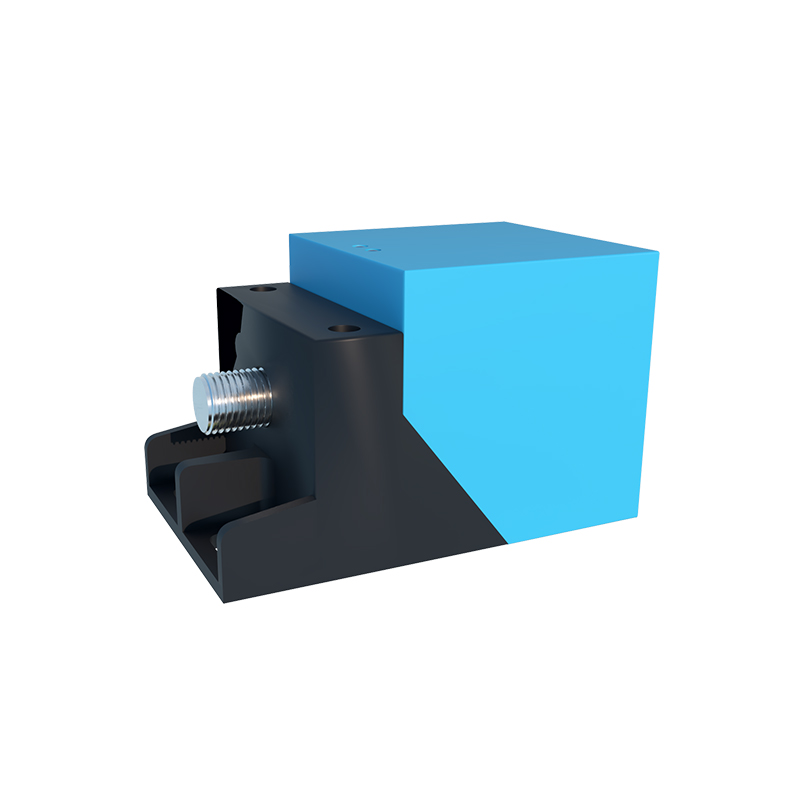
The applications for reed proximity sensors are extensive and varied. A classic example is in security systems, where they are ubiquitously used as door and window contact sensors. In the automotive industry, they detect the position of brake pedals, gear selectors, and seat belts. Liquid level sensing in tanks often employs a float with an embedded magnet that moves past a fixed reed sensor. Within consumer electronics, they can be found in laptops and flip phones to detect whether the lid or cover is open or closed. Industrial machinery utilizes them for position sensing of cylinders, end-of-travel limits on actuators, and RPM detection by counting rotations of a magnet-equipped shaft.
When selecting a reed proximity sensor for a specific application, several key parameters must be considered. The most critical is the operating distance, or "switching distance," which defines how close the magnet must be to activate the switch. This is highly dependent on the strength and size of the magnet used. Engineers must also consider the sensor's electrical ratings: the maximum switching voltage (AC or DC) and the current-carrying capacity. Exceeding these ratings can weld the contacts closed or cause premature failure. The mechanical form factor—such as tubular, surface-mount, or leaded—must fit the design constraints. For environments with strong stray magnetic fields, shielded or magnetically biased versions are available to prevent false triggering.
While solid-state alternatives like Hall-effect sensors offer advantages in precision and wear-free operation, reed sensors maintain a strong position. They provide a physically isolated switch, offering excellent signal integrity and protection against voltage transients. Their purely mechanical action within a sealed environment makes them inherently resistant to many electrical disturbances that can affect semiconductor-based sensors.
In conclusion, the reed proximity sensor is a testament to elegant engineering. Its straightforward magnetic actuation and sealed construction deliver a level of durability and environmental resistance that remains highly valuable. From safeguarding a home to ensuring the precise operation of complex industrial equipment, these sensors perform a silent, crucial duty. Understanding their working principle, strengths, and ideal applications allows designers and engineers to leverage this timeless technology effectively, creating systems that are both robust and reliable.